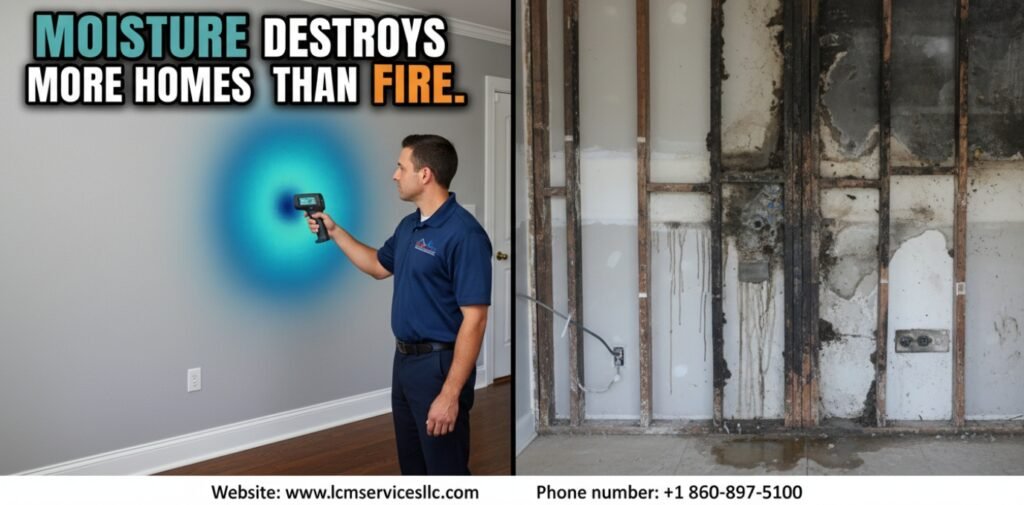
Most homeowners worry about visible damage—cracked tiles, peeling paint, or an aging roof. But the most expensive home problem rarely announces itself. It doesn’t knock, drip loudly, or demand immediate attention.
It works quietly.
Moisture is responsible for more long-term damage than fire, pests, or structural movement combined. At LCM Services LLC, we consistently find that moisture—not neglect—is the root cause behind the costliest repairs homeowners face.
This guide explains why moisture is so destructive, where it hides, how it spreads, and why ignoring it almost always leads to major financial consequences.
Why Moisture Is More Dangerous Than It Looks
Moisture doesn’t just damage surfaces—it weakens systems.
Unlike sudden disasters, moisture works slowly:
- It spreads invisibly
- It damages multiple materials at once
- It compounds over time
By the time homeowners notice symptoms, repairs are rarely simple.
⚠️ Moisture attacks:
- Wood framing
- Insulation
- Drywall
- Electrical components
- Indoor air quality
And it does so without warning.
How Moisture Gets Into Homes (Even Without Leaks)
Many homeowners assume moisture problems only happen when there’s a visible leak. In reality, moisture enters homes through dozens of hidden pathways.
Common Moisture Entry Points
- Roofing gaps and flashing failures
- Window and door seal breakdowns
- Poorly ventilated bathrooms
- Crawlspaces and basements
- Foundation cracks
- Condensation from temperature changes
Moisture doesn’t need a flood—it needs opportunity.
The Silent Spread of Moisture Damage
Once moisture enters a home, it rarely stays in one place.
Water travels through:
- Framing cavities
- Insulation layers
- Flooring systems
- Structural joints
🔍 At LCM Services LLC, we often find moisture damage far from its original source, confusing homeowners and delaying repairs.
Why Moisture Costs More Than Any Other Home Problem
1. Moisture Never Damages Just One Thing
Fire damages fast—but in a limited area.
Moisture damages slowly—but everywhere.
A single moisture source can impact:
- Structural integrity
- Electrical safety
- Indoor air quality
- Energy efficiency
That’s why moisture-related repairs are almost always multi-system repairs.
2. Moisture Creates Structural Damage Over Time
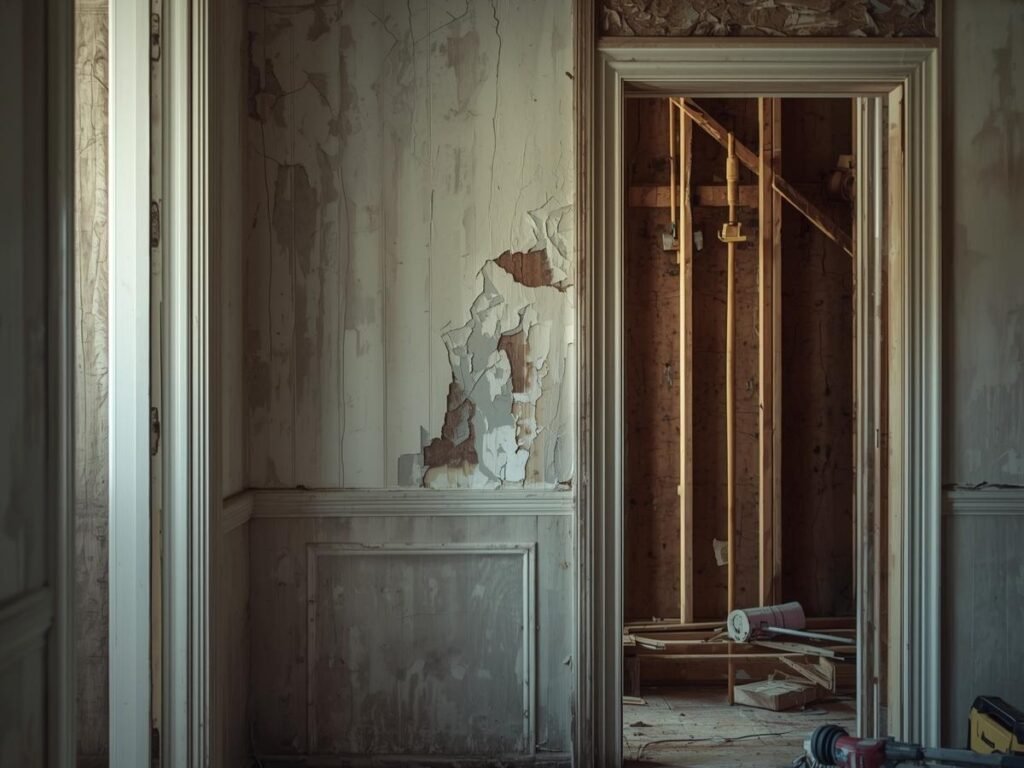
Wood absorbs moisture. Over time, this leads to:
- Rot
- Warping
- Loss of load-bearing strength
By the time structural weakness becomes visible, repair costs skyrocket.
💸 What could have been sealing or ventilation often becomes framing replacement.
3. Mold Is a Financial Multiplier
Moisture creates the perfect environment for mold.
Mold remediation adds:
- Testing costs
- Containment requirements
- Specialized removal
- Air quality treatment
And it often requires tearing out finished spaces.
Moisture and Energy Loss: The Hidden Expense
Wet insulation loses effectiveness.
That means:
- Higher heating bills
- Higher cooling bills
- Uneven temperatures
- Overworked HVAC systems
📈 Many homeowners don’t connect rising energy bills to moisture—but the connection is direct.
Areas Where Moisture Causes the Most Damage
Roof Systems
- Small flashing failures
- Nail penetrations
- Aging shingles
Roof moisture often appears inside walls or ceilings, not below the roofline.
Bathrooms
Bathrooms generate daily moisture. Without proper:
- Waterproofing
- Ventilation
- Drainage
They become long-term moisture traps.
Basements and Crawlspaces
Ground moisture migrates upward through:
- Concrete
- Foundation walls
- Slab joints
Basement moisture is often the starting point for whole-home humidity problems.
Windows and Doors
Failed seals allow moisture to:
- Enter wall cavities
- Rot framing
- Damage finishes
This damage often stays hidden for years.
Why Moisture Problems Are Missed During Walkthroughs
Moisture damage doesn’t always show stains.
Instead, inspectors look for:
- Soft materials
- Odors
- Temperature variations
- Humidity levels
Homeowners rarely detect moisture until secondary damage appears.
The Cost Difference: Early Detection vs Delayed Repair
| Moisture Stage | Typical Cost |
| Early sealing or ventilation fix | Low |
| Localized material repair | Moderate |
| Mold remediation + rebuild | High |
| Structural replacement | Extremely High |
💡 Moisture rewards early action and punishes delay.
Why Older Homes Face Greater Moisture Risks
Older homes often have:
- Outdated materials
- Previous patch repairs
- Limited vapor barriers
- Poor drainage design
Connecticut’s seasonal weather accelerates moisture movement—making early detection essential.
How LCM Services LLC Identifies Moisture Before It Spreads
At LCM Services LLC, moisture detection is a core part of our inspections and repair planning.
We focus on:
✔ Entry points
✔ Ventilation efficiency
✔ Material condition
✔ Moisture migration paths
✔ Long-term prevention
We don’t just fix what’s visible—we address what’s about to fail.
Preventing Moisture Damage: What Actually Works
✅ Proper roof and flashing inspections
✅ Bathroom and attic ventilation upgrades
✅ Sealing windows, doors, and penetrations
✅ Basement moisture control
✅ Drainage and grading corrections
Moisture control isn’t one fix—it’s a system.
The Real Financial Risk of Ignoring Moisture
Moisture damage:
- Lowers home value
- Complicates insurance claims
- Triggers repeated repairs
- Creates health concerns
Most expensive home repairs start with moisture—even if moisture isn’t what homeowners notice first.
Final Thoughts
Moisture is quiet, patient, and destructive.
It doesn’t demand attention—until it demands money.
Homeowners who understand moisture early protect:
- Their home
- Their health
- Their finances
If you want to avoid the most expensive problem your home can develop, moisture detection and prevention must be a priority—not an afterthought. LCM Services LLC helps homeowners stop moisture damage before it becomes a financial burden.
Moisture affects multiple systems at once, often requiring structural repairs, mold remediation, and material replacement.
Yes. Moisture often enters through condensation, failed seals, or ventilation issues without obvious signs.
Absolutely. Wet insulation and humid air reduce efficiency and increase heating and cooling costs.
Yes. Older construction methods and materials are more susceptible to moisture intrusion.
LCM Services LLC evaluates entry points, ventilation, materials, and moisture movement to identify problems before they spread.