

Many Waterbury homeowners are shocked when ants appear in the kitchen, mice show up in the basement, or wasps nest near the roofline—especially when the home looks perfectly fine from the street.
The truth is unsettling:
Most pest problems don’t start inside your home. They start with tiny exterior gaps you never noticed.
At LCM Services LLC, we frequently find that pest entry points are caused by subtle exterior failures that develop slowly—sometimes over years—before homeowners ever realize there’s a problem.
Why Exterior Gaps Are So Easy to Miss
Exterior gaps rarely look dramatic. In fact, most are:
- Smaller than a coin
- Hidden behind trim or siding
- Located above eye level
- Covered by shadows or landscaping
To a homeowner, the house appears solid. To insects and rodents, it’s an open invitation.
The Most Common Places Gaps Form on Waterbury Homes
Older and newer homes alike develop gaps, but Waterbury’s housing stock, much of it decades old, is especially vulnerable.
Common Problem Areas:
- Siding seams and corners
- Trim boards around windows and doors
- Fascia boards along roof edges
- Soffit panels and vent openings
- Where decks or porches attach to the house
- Utility line entry points
These areas move, settle, and age differently—creating openings pests can exploit.
Material Aging Is the Primary Culprit
Exterior materials are not permanent.
Over time:
- Caulk dries, shrinks, and cracks
- Wood trim subtly warps or separates
- Vinyl siding loosens or shifts
- Fasteners back out
These changes don’t happen overnight. They happen slowly enough that homeowners adapt visually—and stop noticing them.
Moisture Makes Gaps Worse (Without Flooding or Leaks)
Moisture exposure plays a major role in gap formation.
Even without visible leaks:
- Wood swells and contracts
- Sealants lose elasticity
- Small separations widen
In Waterbury, frequent rain and damp conditions accelerate this process—especially on shaded or poorly ventilated sides of homes.
Structural Movement Happens More Than Homeowners Realize
Homes are not static structures.
Over time:
- Foundations settle slightly
- Framing shifts by millimeters
- Additions pull against original construction
These movements are normal—but they create stress points where materials separate.
Pests only need a fraction of an inch.
Landscaping Can Hide Serious Entry Points
Shrubs, vines, and mulch often conceal the very areas pests use to get inside.
At LCM Services LLC, we regularly uncover:
- Gaps behind bushes
- Rotting trim hidden by ivy
- Openings near mulch lines
- Deck connections buried by soil
Out of sight truly becomes out of mind.
Why Pests Find Gaps Before You Do
Pests are incredibly efficient at locating weaknesses.
Insects and Rodents:
- Follow air movement
- Detect moisture and food smells
- Explore edges and seams instinctively
While homeowners see a wall, pests see entry routes.
Different Pests Use Different Gaps
Not all gaps attract the same intruders.
| Pest Type | Typical Entry Point |
| Ants | Siding seams, foundation cracks |
| Mice | Gaps near fascia, utility lines |
| Wasps | Soffit gaps, roof edges |
| Spiders | Window trim separations |
| Carpenter ants | Damp wood and rot |
This is why sealing just one area often doesn’t solve the problem.
Why Interior Pest Control Alone Fails
Many homeowners respond by calling pest control first.
While treatments may help temporarily:
- Entry points remain open
- New pests continue entering
- Problems return seasonally
Without exterior repairs, pest control becomes an endless cycle.
Real Waterbury Example
A homeowner near Atwood Ave contacted LCM Services LLC after repeated mouse sightings.
Inspection revealed:
- A ½-inch gap behind warped fascia
- Dried-out caulking near soffits
- Loose siding near a deck ledger
No interior damage was visible yet—but pests were already inside.
Exterior sealing solved the problem permanently.
Why Older Waterbury Homes Are Especially Vulnerable
Many older homes:
- Lack modern air barriers
- Use wood trim extensively
- Have multiple renovations layered over time
Each renovation introduces new seams—and new opportunities for gaps.
Common Homeowner Mistakes
❌ Assuming pests “just happen”
❌ Ignoring small cracks
❌ Relying only on pest sprays
❌ Sealing indoors instead of outdoors
❌ Waiting until infestation is severe
The earlier gaps are addressed, the cheaper the solution.
How Professionals Identify Hidden Gaps
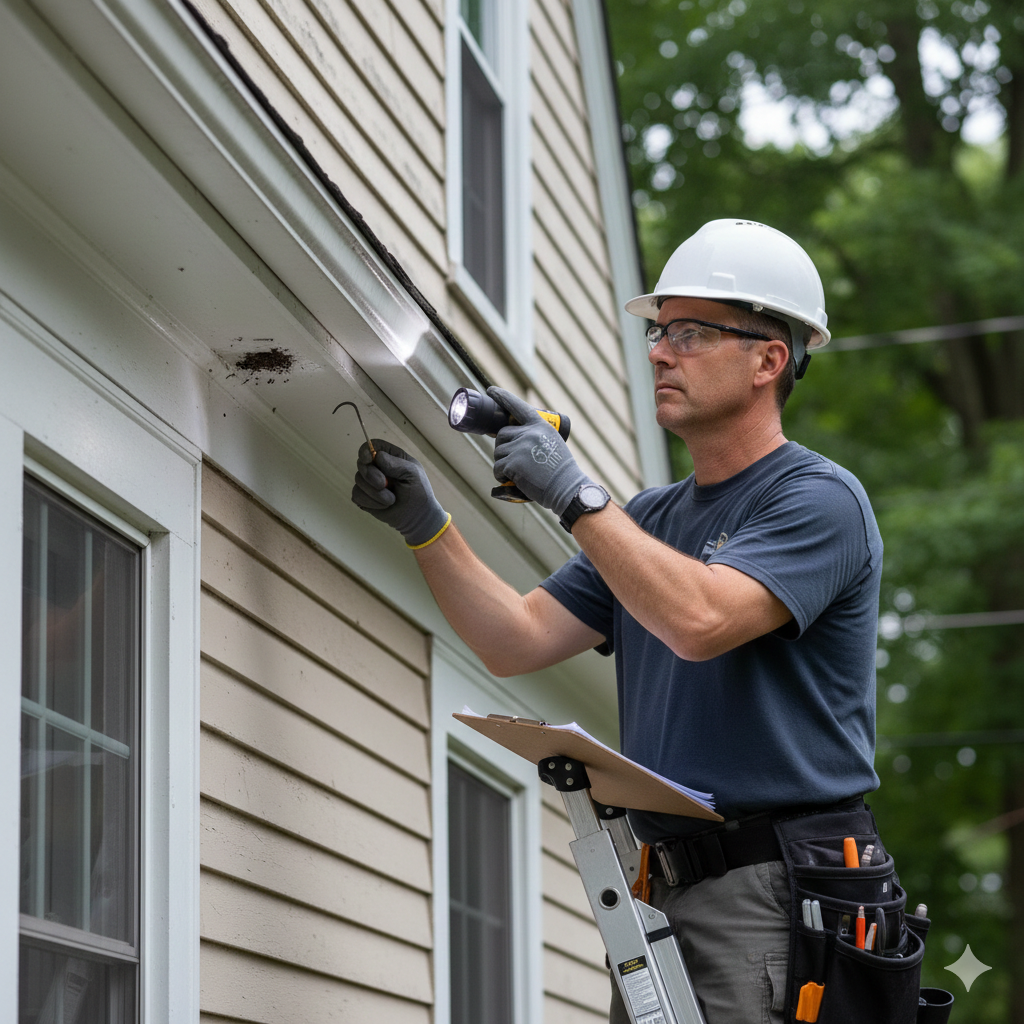
At LCM Services LLC, we don’t just look—we evaluate.
Our inspections include:
- Exterior perimeter checks
- Trim and siding movement analysis
- Fascia and soffit integrity checks
- Moisture-prone area inspection
- Deck and porch attachment points
Why Gaps Lead to Bigger Problems Than Pests
Pests are often the first sign of a deeper issue.
Unsealed gaps also allow:
- Moisture intrusion
- Air leakage
- Energy loss
- Wood rot development
What starts as a pest issue often becomes a structural one.
Early Repair vs Infestation
| Scenario | Typical Cost |
| Exterior gap sealing | Low |
| Repeat pest treatments | Medium |
| Interior damage repair | High |
| Structural wood replacement | Very High |
Prevention is always cheaper.
Prevention Tips for Waterbury Homeowners
✔ Inspect Exterior Seams Annually
Pay attention to corners, joints, and attachments.
✔ Maintain Caulking and Sealants
If caulk looks cracked or brittle, it’s already failing.
✔ Keep Landscaping Away from the House
Maintain visible clearance around siding and trim.
✔ Address Moisture Early
Damp areas accelerate material breakdown.
Safety Considerations
⚠️ Climbing ladders increases fall risk
⚠️ Disturbing nests can cause stings
⚠️ Rodents may carry health risks
Professional exterior work reduces danger.
When to Call a Professional in Waterbury, CT
You should contact a professional if:
- Pests keep returning
- You notice recurring interior entry points
- Trim or siding looks separated
- Caulk fails repeatedly
- Gaps appear near roof edges
These signs indicate exterior vulnerability.
Why Choose LCM Services LLC for Exterior Sealing in Waterbury
At LCM Services LLC, we understand how small exterior gaps turn into major home problems.
What Sets Us Apart
✔ Local Waterbury expertise
✔ Exterior-first solutions
✔ Long-term sealing methods
✔ Honest inspections
✔ Repair-focused pest prevention
We fix the cause, not just the symptom.
Service Areas
We proudly serve:
- Waterbury, CT
- Atwood Ave
- Town Plot
- Oakville
- East End
- Surrounding Connecticut communities
Every neighborhood has unique exterior challenges.
Final Thoughts
If pests are getting in, your home is telling you something.
👉 Contact LCM Services LLC today for a professional exterior inspection in Waterbury, CT.
Stop pests at the source—before small gaps become big repairs.
FAQs
Through tiny exterior gaps in siding, trim, and fascia.
Yes, even gaps smaller than a coin allow entry.
Yes, due to aging materials and renovations.
Yes, when done correctly at the exterior.
A contractor should address entry points first.