
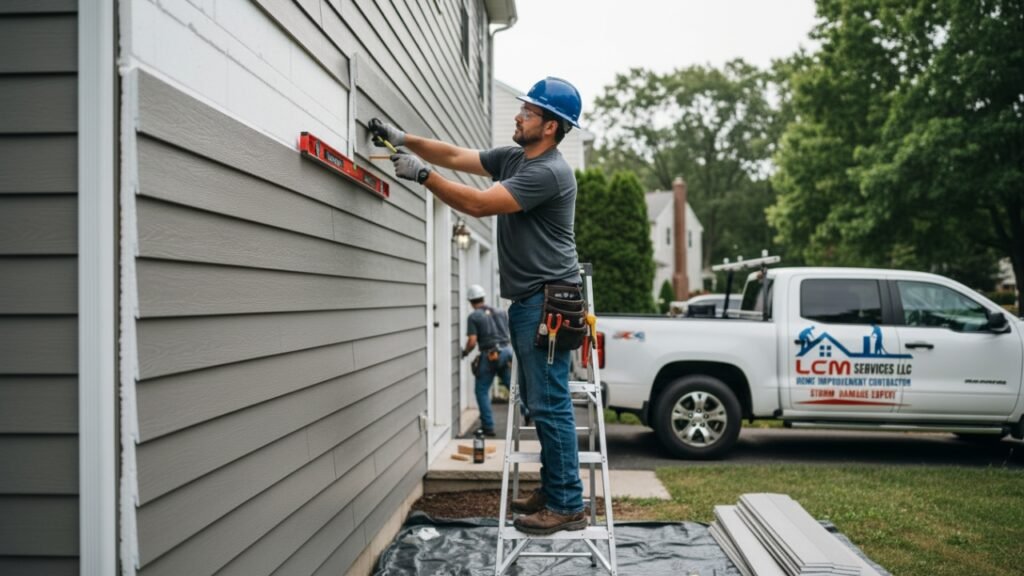
Hey there, I’m part of the team at LCM Services LLC, a locally owned exterior restoration company proudly serving Waterbury, CT and surrounding communities. This is one of the most common questions Waterbury homeowners ask us every spring and summer:
“Why does one section of my siding look lighter — when it’s on the same wall?”
From the street, the siding may still look acceptable. But when you get closer, you start noticing the differences:
- One panel noticeably brighter than the next
- Patchy color loss in certain areas
- Faded sections directly under windows
- Darker or chalky areas near corners, downspouts, or roof edges
This uneven fading isn’t usually a manufacturing defect or poor installation. It’s the natural result of how Waterbury homes interact with intense sunlight, heat reflection, moisture, and seasonal temperature swings over many years.
In this very long and detailed guide, we’ll explain exactly why uneven fading happens on the same wall, why Waterbury homes are especially prone to it, and what practical steps you can take to slow it down or prevent it in the future.
Understanding Vinyl Siding Fading (The Basics)
Vinyl siding fades primarily because of:
- UV rays breaking down the pigments in the material
- Heat accelerating chemical aging and oxidation
- Moisture and pollutants affecting the surface finish
- Temperature fluctuations causing micro-expansion and contraction
What surprises most Waterbury homeowners is how uneven this fading process can be — even on a single flat wall. One section can look almost new while another section just a few feet away appears significantly lighter or chalkier.
Why Uneven Fading Happens on the Same Wall
Here are the main reasons we see in Waterbury homes:
1. Sun Exposure Is Not Uniform Even on what looks like a straight wall, sunlight hits different sections differently throughout the day.
Factors that create uneven exposure include:
- Roof overhangs and eaves
- Window placement and size
- Nearby trees and landscaping
- House orientation (south- and west-facing walls get the most intense afternoon sun)
A section that receives full afternoon sun will fade much faster than a shaded portion of the same wall.
2. Heat Reflection from Windows and Nearby Surfaces Windows, especially those with Low-E glass, act like mirrors and bounce intense heat onto the siding below or beside them.
Common reflection sources in Waterbury:
- Large picture windows
- Sliding glass doors
- Light-colored driveways or concrete
- Parked vehicles
- Metal flashing or gutters
This reflected heat can raise the surface temperature of the siding by 20–30°F, dramatically speeding up fading and sometimes causing warping in those specific areas.
3. Moisture Exposure Varies Across the Wall Waterbury’s climate includes frequent rain, snow, ice, and freeze-thaw cycles. Moisture affects how siding ages.
Areas that stay wetter longer (near downspouts, hose bibs, or roof edges) develop different surface conditions than drier sections. This creates visible color differences over time.
4. Shade Patterns Create Contrasting Aging Shaded areas stay damper and collect more organic debris (pollen, leaves, mildew), which can cause slower but different types of aging. Sunny areas fade faster from UV exposure. The contrast between these zones creates the patchy appearance many homeowners notice.
5. Installation Factors and Panel Age If different sections of siding were installed at different times, from different batches, or in varying temperatures, they can age at slightly different rates. This is especially common in homes with additions, partial repairs, or older installations.
Why Waterbury Homes Are Especially Prone to Uneven Fading
Waterbury’s specific environment makes this issue more noticeable than in many other cities:
- Mature Tree Coverage — Tree-lined streets in neighborhoods like Town Plot, Oakville, East Mountain, and the East End create dramatic shade patterns.
- Older Housing Stock — Many homes built in the 1950s–1980s have deep eaves, multiple additions, and complex wall planes that break up sunlight.
- Seasonal Extremes — Hot, humid summers followed by cold winters with freeze-thaw cycles accelerate aging at different rates.
- Elevation Changes — Hillside homes experience varying wind and sun patterns across different elevations of the same wall.
Real Waterbury Example: Same Wall, Dramatically Different Colors
One homeowner on Atwood Avenue contacted us because the front of their house looked patchy. The siding under the large living room window had faded significantly, while the section near the corner remained much darker.
Our inspection revealed:
- Strong afternoon sun reflecting off the large window
- A nearby downspout directing water along one section
- A large maple tree shading the left side of the wall
The siding itself was still structurally sound — it was simply aging unevenly due to environmental exposure.
Common Homeowner Misconceptions About Fading
• “It must be a defect in the siding”
• “The installer did a bad job”
• “All siding on the same wall should fade at the same rate”
In reality, environmental factors are almost always the main cause. Understanding this helps homeowners make better decisions about maintenance and repairs.
How Uneven Fading Develops Over Time (Step-by-Step)
- Sunlight and heat hit certain areas more intensely
- Reflected heat from windows increases surface temperature
- Moisture patterns vary across the wall
- Pigments break down at different rates
- Visible color differences become noticeable after 5–10 years
Fading is gradual, but once it starts, it tends to accelerate in the most exposed areas.
Cosmetic vs Structural Issues
| Issue | Severity | Typical Cost Level | Recommended Action |
|---|---|---|---|
| Minor uneven fading | Cosmetic | Low | Cleaning + monitoring |
| Moderate patchy fading | Cosmetic | Moderate | Panel replacement on affected areas |
| Warping or buckling | Structural | Moderate to High | Professional evaluation required |
| Widespread fading | Cosmetic | High | Full re-siding may be best |
Early attention to cosmetic fading can prevent the need for more expensive structural repairs later.
Can Uneven Fading Be Fixed?
Yes — several options exist:
- Targeted panel replacement (best for early-stage issues)
- Professional soft washing to remove surface oxidation
- High-quality UV protectant coatings (limited long-term benefit)
- Strategic landscaping to balance sun exposure
- Full re-siding with newer, more fade-resistant materials
Note: Painting vinyl siding is generally not recommended without professional guidance, as it can trap moisture and cause further problems.
10 Practical Prevention Tips for Waterbury Homeowners
- Trim trees and shrubs to balance sunlight across walls
- Install reflective window films or exterior shades
- Improve downspout drainage away from the foundation
- Gently wash siding once or twice per year
- Avoid harsh chemical cleaners that strip protective layers
- Ensure proper attic and wall ventilation
- Choose high-quality, fade-resistant siding for future replacements
- Match replacement panels from the same manufacturer batch
- Avoid parking vehicles close to siding for long periods
- Schedule professional exterior inspections every 2–3 years
Small preventive steps can significantly slow down uneven fading.
Safety & Maintenance Warnings
• Pressure washing can damage vinyl siding — use soft washing instead
• Harsh chemicals accelerate fading and surface degradation
• DIY panel replacement often leads to poor matching and water intrusion
• Ignoring moisture issues behind siding can lead to rot and mold
Professional care protects both appearance and the long-term integrity of your home.
When to Call a Professional in Waterbury, CT
Call a qualified exterior specialist if you notice:
- Rapidly worsening fading
- Warping, buckling, or cracking panels
- Moisture collecting behind siding
- You’re planning to sell or make major renovations
Local expertise matters when matching materials and addressing Waterbury-specific exposure conditions.
Why Choose LCM Services LLC for Your Vinyl Siding Needs in Waterbury
At LCM Services LLC, we understand how Waterbury’s unique environment affects exterior surfaces. What sets us apart:
- Deep local knowledge of Waterbury neighborhoods and micro-climates
- Honest assessments of whether fading is cosmetic or structural
- Expert panel matching and color blending
- Professional installation and repair techniques
- Focus on long-term appearance and value
We help Waterbury homeowners make siding look better for longer.
FAQs
Yes, it’s common due to uneven exposure.
Yes, UV exposure is the primary factor.
Yes, reflected heat accelerates fading.
Yes, it influences surface aging.
Only if appearance or performance is affected.
Newer formulations are more fade-resistant, but proper installation and maintenance still matter.
We are local Waterbury experts who provide honest assessments, quality workmanship, and solutions tailored to our local climate.