
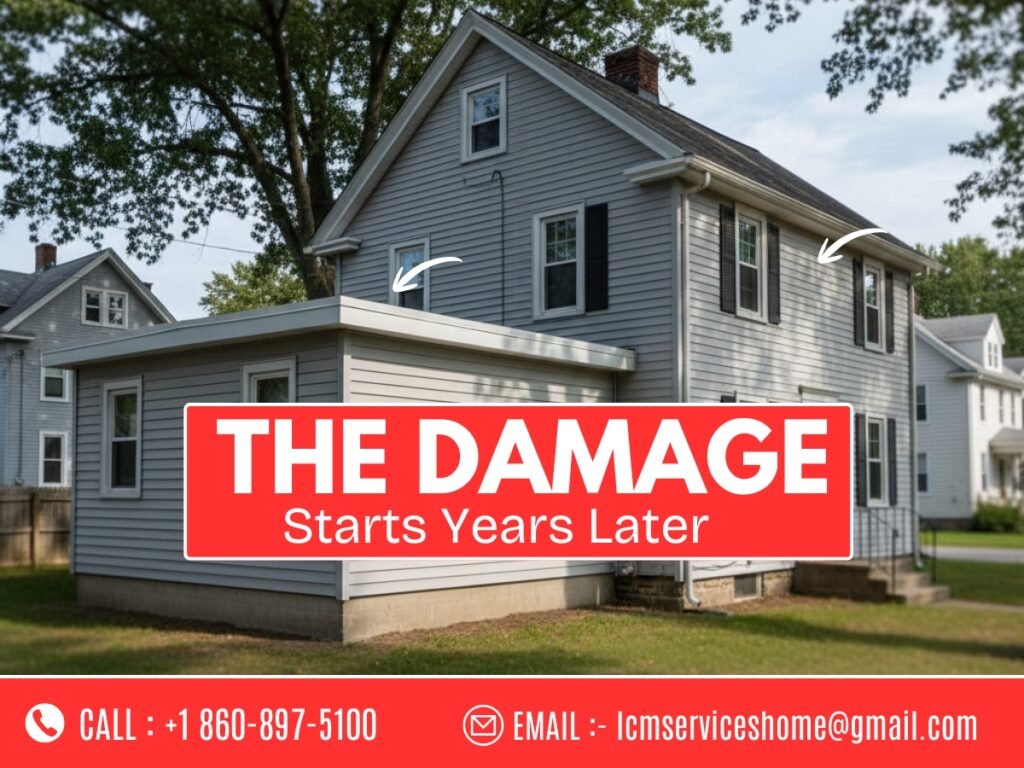
At first glance, a house addition feels like nothing but a win. More space. More light. More functionality. A growing family finally has room to breathe, or a once-cramped home gains a new bedroom, sunroom, or expanded kitchen. From the inside, everything feels new and improved.
But outside—behind the siding—something very different often begins to happen.
Many homeowners in older cities like Waterbury are surprised to learn that years after a house addition is completed, siding problems begin appearing on the original portion of the home. Panels loosen. Seams open. Moisture sneaks in. Paint bubbles. Repairs keep coming back.
The addition didn’t fail—but it quietly changed how the original house behaves.
This blog explains why house additions create hidden stress on original siding systems, how that stress develops slowly over time, and why the damage often shows up far away from the addition itself.
Why Siding Systems Are More Sensitive Than Homeowners Realize
Siding isn’t just decorative cladding. It’s a system, designed to manage:
- Structural movement
- Moisture drainage
- Air flow
- Thermal expansion and contraction
When a home is built, the siding is installed with the assumption that the structure underneath will behave in a specific, predictable way.
A house addition disrupts that balance.
Even when an addition is built correctly, it introduces new loads, new movement patterns, and new environmental exposure that the original siding system was never designed to handle.
The siding doesn’t fail immediately—but it begins adjusting under stress.
The Structural Shift That Happens After an Addition
When a house addition is attached, the original structure experiences changes in:
- Weight distribution
- Load paths
- Foundation pressure
- Framing flex patterns
The new structure may settle differently than the original home. Even a small difference in settling—fractions of an inch—can create stress where old and new framing meet.
That stress travels.
Siding panels that once sat evenly begin absorbing movement they were never meant to handle. Over time, fasteners loosen, overlaps shift, and protective seams begin to open.
The siding becomes a silent indicator of structural tension.
Why Stress Often Appears Far From the Addition
One of the most confusing aspects for homeowners is where siding problems appear.
Cracks, gaps, or loose panels often show up:
- On the opposite side of the house
- Near corners not connected to the addition
- Around windows that weren’t touched
This happens because stress follows the path of least resistance.
Rigid points—corners, window openings, transitions between materials—absorb movement first. These areas act like hinges, concentrating stress over time until visible damage appears.
The siding isn’t randomly failing. It’s responding exactly where it’s weakest.
Differential Movement Between Old and New Structures
No matter how well an addition is built, it will move differently than the original home.
Reasons include:
- New lumber drying and shrinking
- Different foundation depth or soil compaction
- Variations in wall height and roof load
- Different insulation levels affecting thermal movement
Original siding was installed assuming uniform movement across the structure. Once that assumption breaks, siding joints and overlaps begin to take the strain.
This is why older siding near an addition often loosens first—even if it looks untouched.
How Temperature Amplifies the Problem
In climates like Waterbury’s, seasonal temperature swings add another layer of stress.
Siding expands in heat and contracts in cold. When part of the home moves differently due to an addition, temperature changes amplify the mismatch.
Over time:
- Expansion gaps close completely
- Panels begin to bow or ripple
- Fasteners tear through elongated nail slots
- Locking edges weaken
These changes don’t happen in one season. They build year after year until failure becomes visible.
Moisture Paths Change After an Addition
One of the most damaging—and least obvious—effects of house additions is how they change water behavior.
Additions often alter:
- Roof runoff patterns
- Gutter discharge locations
- Wind-driven rain exposure
- Drainage slopes
Water that once drained harmlessly away from original siding may now be redirected toward it.
Even small increases in moisture exposure can overwhelm older siding systems that lack modern drainage planes or moisture barriers.
The siding begins to absorb stress from water as well as movement.
Trapped Moisture Behind Original Siding
When additions connect to existing walls, flashing details become critical—and they’re often imperfect.
If flashing fails or is incomplete:
- Moisture becomes trapped behind original siding
- Wood sheathing swells
- Fasteners loosen
- Panels warp or separate
The damage may stay hidden for years, slowly degrading the siding from behind.
By the time visible signs appear, the problem has already matured.
Why Patch Repairs Rarely Solve the Problem
Homeowners often respond to siding issues with spot repairs:
- Re-securing loose panels
- Caulking open seams
- Replacing small sections
These repairs may improve appearance temporarily, but they don’t address the underlying cause: structural stress created by the addition.
Without relieving or accommodating that stress, the siding will continue to move—and the same failures will return.
This leads to a frustrating cycle of repeated repairs.
Older Siding Systems Are Especially Vulnerable
Homes built decades ago were not designed with future additions in mind.
Common vulnerabilities include:
- Shorter nail slots
- Tighter panel locking systems
- Minimal expansion allowances
- No drainage plane behind siding
When additions are added to these homes, the siding simply has no room to adapt.
Modern siding systems are more forgiving—but original siding often bears the brunt of the change.
The Hidden Role of Framing Connections
Where an addition connects to the original house, framing transitions matter.
If the connection is rigid rather than flexible:
- Movement transfers directly into exterior walls
- Siding absorbs the stress instead of the structure
- Damage accelerates during seasonal changes
These connection points are hidden inside walls, making siding the first visible casualty.
Why Problems Often Appear Years Later
Homeowners often ask:
“Why did everything look fine for years?”
Because stress damage is cumulative.
Each season adds:
- Slight movement
- Minor moisture intrusion
- Small fastener fatigue
Eventually, the system reaches a tipping point. What looks like sudden failure is actually the final stage of a long process.
The siding didn’t suddenly fail—it finally ran out of tolerance.
Common Warning Signs Homeowners Miss
Early indicators are subtle and easy to overlook:
- Hairline gaps between panels
- Slight rippling in certain lighting
- Caulk separating near corners
- Panels that sound hollow when tapped
These signs often appear long before major damage becomes obvious.
Recognizing them early can prevent extensive repairs later.
Why Siding Fails Before Structural Damage Appears
Siding is designed to be the sacrificial layer.
It absorbs movement and moisture before framing or interior finishes are affected. That’s good news structurally—but bad news for homeowners who ignore siding damage.
By the time interior signs appear, exterior systems have usually been struggling for years
How Professional Evaluations Look Beyond the Surface
A proper assessment doesn’t just examine damaged panels. It looks at:
- Movement patterns across walls
- Roof and gutter changes caused by the addition
- Moisture paths and flashing transitions
- Expansion allowances in the original siding
This broader view is essential to identifying why damage is occurring—not just where.
Why Some Homes Need System-Level Adjustments
In many cases, the solution isn’t replacing all the siding.
It may involve:
- Adding expansion relief points
- Improving drainage behind siding
- Reworking flashing transitions
- Selectively upgrading stressed sections
These adjustments allow the siding system to coexist with the addition instead of fighting it.
The Cost of Ignoring Hidden Siding Stress
When siding stress is left unaddressed, it can lead to:
- Rotting sheathing
- Mold development
- Pest intrusion
- Interior wall damage
- Increased energy loss
What begins as cosmetic wear can quietly become structural decay.
Why Every Addition Changes the Original Home Forever
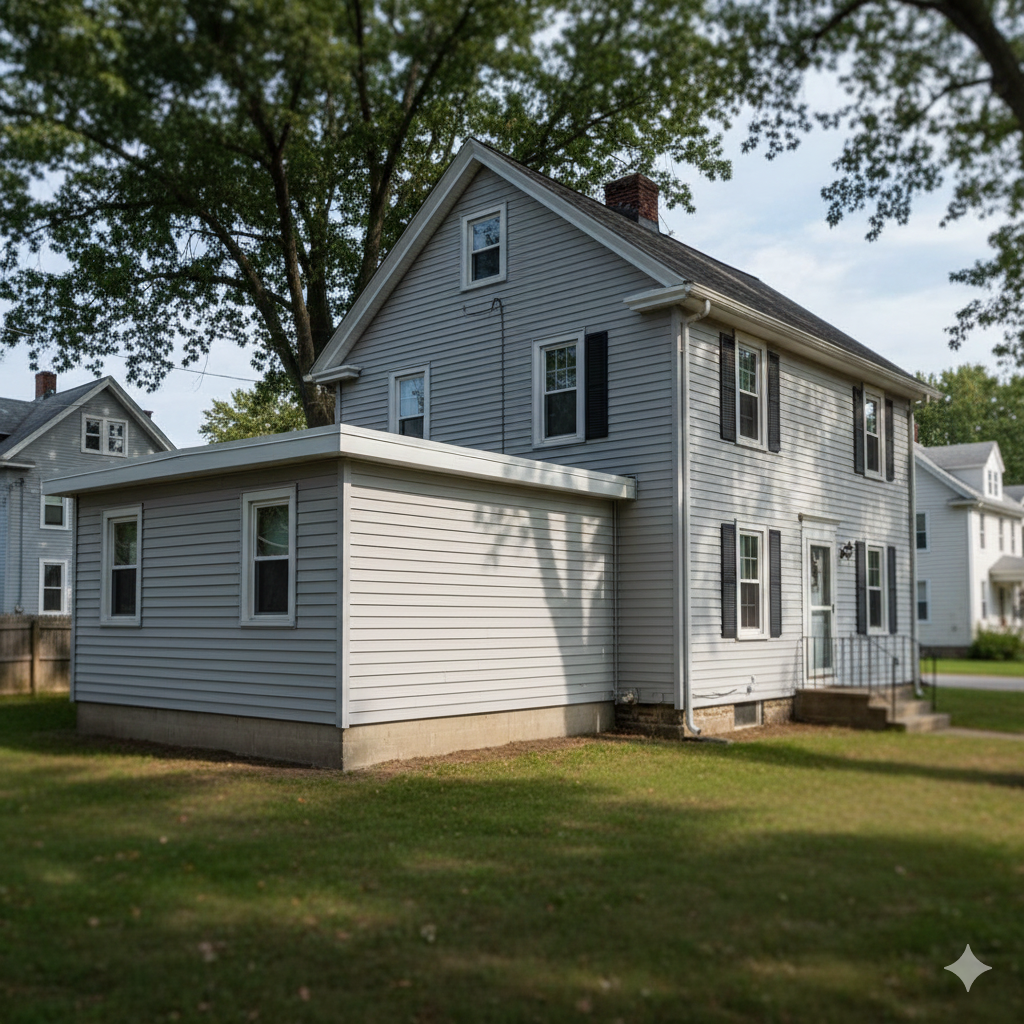
Even the best-built addition permanently alters how a home behaves.
That doesn’t mean additions are bad—but it does mean the original house must be evaluated as a new system, not an old one with extra space.
Siding systems are often the first place that imbalance shows.
Final Thoughts
When siding begins to fail years after a house addition, it’s not bad luck or poor materials. It’s a sign that the home is responding to new stresses it was never designed for.
Understanding that relationship allows homeowners to:
- Stop chasing surface repairs
- Address root causes
- Protect the home long-term
House additions don’t just add space—they change how a home lives, moves, and ages. And the siding, quietly and patiently, reflects every one of those changes.
FAQs
Yes. Additions change structural movement, moisture flow, and load distribution, which can stress original siding systems over time.
Because stress builds gradually through seasonal movement, settling, and moisture exposure until the siding reaches a breaking point.
Not necessarily. Even well-built additions change how the original home behaves structurally and environmentally.
Yes. Stress often travels to corners, window openings, and rigid points away from the addition itself.
Professional evaluations, proper flashing, drainage improvements, and stress-relief adjustments can significantly reduce long-term damage.