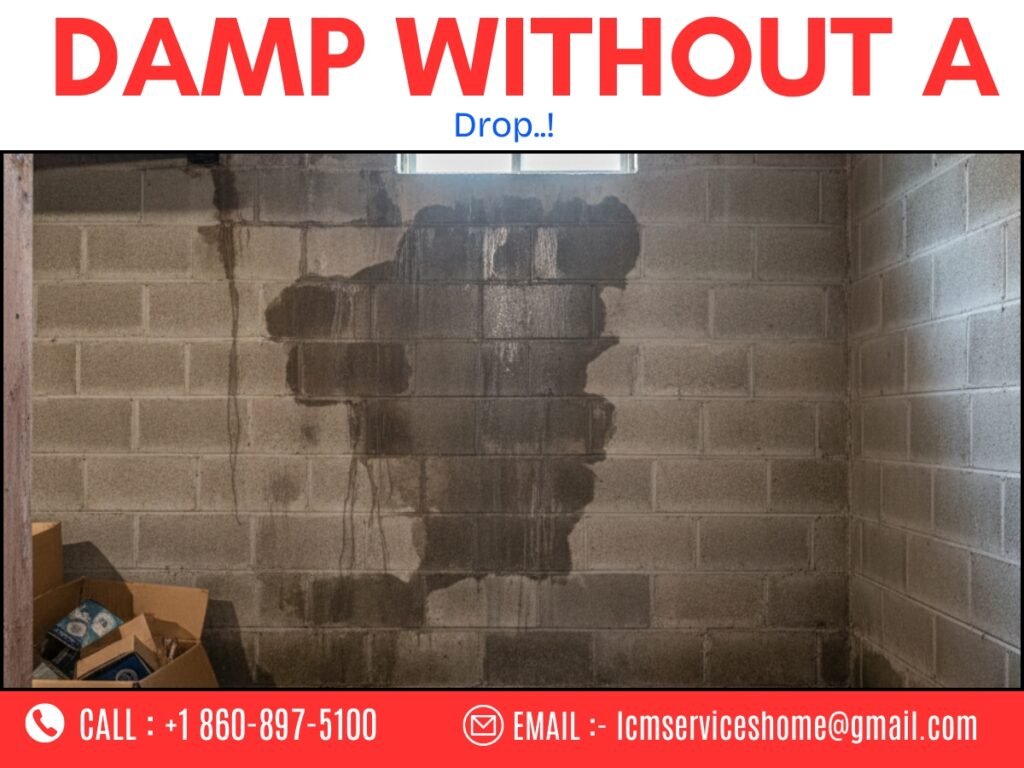
Many homeowners in Waterbury, CT say the same thing:
“There’s no standing water, but the basement always feels damp.”
No puddles.
No obvious leaks.
Yet the basement smells musty, feels humid, and never truly dries out.
This is one of the most misunderstood home issues in Waterbury, and it’s far more common than basement flooding. Damp basements quietly damage homes over time—often without homeowners realizing it until mold, rot, or structural problems appear.
Let’s break down why this happens, why Waterbury homes are especially vulnerable, and what it really means for your house.
Damp vs Flooded: Understanding the Difference
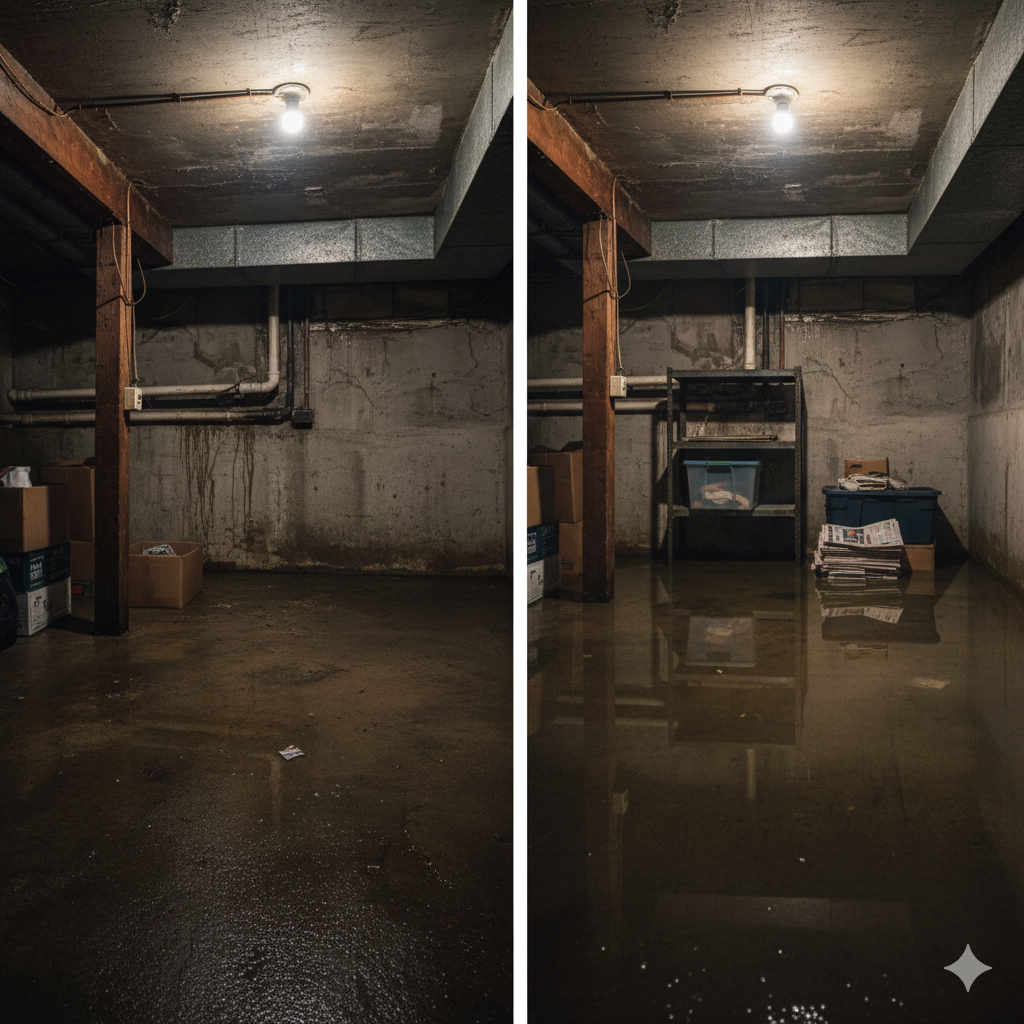
A flooded basement is obvious.
A damp basement is subtle and ongoing.
Damp Basement Defined
A damp basement has:
- Persistent humidity
- Moist or cool surfaces
- Musty odors
- Condensation on walls or floors
💧 Dampness doesn’t require visible water.
Why Waterbury Basements Are Prone to Dampness
1. Porous Concrete Foundations in Older Homes
Many Waterbury homes were built decades ago using:
- Poured concrete
- Concrete block
- Stone foundations
These materials are naturally porous.
That means:
- Moisture moves through them
- Water vapor seeps inward
- Walls “breathe” moisture
Even without leaks, moisture constantly migrates inside.
2. High Water Table in Certain Neighborhoods
Areas near Atwood Ave, Town Plot, East End, and parts of Oakville often sit on soil that retains moisture.
When groundwater levels rise:
- Soil stays saturated
- Pressure increases against foundation walls
- Moisture slowly enters basements
No flooding—just continuous dampness.
3. Capillary Action: Moisture Wicking Upward
Concrete acts like a sponge.
Capillary action pulls moisture:
- From the soil
- Through the foundation
- Into basement walls and floors
This process happens 24/7, rain or shine.
🧠 This is why basements feel damp even during dry weeks.
4. Poor Exterior Drainage
Many Waterbury homes suffer from:
- Short downspouts
- Clogged gutters
- Negative grading
When water pools near the foundation, moisture pressure increases—even without visible leaks.
5. Trapped Humidity Inside the Basement
Basements often have:
- Limited airflow
- Minimal ventilation
- Cooler surfaces
Warm, humid air hits cool basement walls → condensation forms.
💨 Moisture doesn’t need to come from outside—it can form inside.
Why Dampness Gets Worse in Spring & Summer
Spring and summer bring:
- Snowmelt
- Heavy rain
- Higher humidity
This combination:
- Saturates soil
- Raises humidity levels
- Slows basement drying
That’s why many homeowners notice dampness increasing during warmer months.
Real Waterbury Example: No Flood, Big Problem
A homeowner near Atwood Ave reported:
- Musty smell
- Rusting tools
- Peeling paint on basement walls
No leaks. No flooding.
Inspection revealed:
- Moisture vapor entering through block foundation
- Poor gutter drainage
- High indoor humidity
Once moisture was controlled, the smell disappeared.
Common Homeowner Misconceptions
❌ “If there’s no water, it’s fine”
❌ “All basements are damp”
❌ “A dehumidifier fixes everything”
❌ “It’s just an old house issue”
Dampness is not harmless—it’s a warning sign.
What Damp Basements Actually Damage Over Time
Structural Damage
- Wood rot in framing
- Rusted metal supports
- Weakening foundation materials
Health Concerns
- Mold growth
- Dust mites
- Poor indoor air quality
Energy Loss
- Higher heating and cooling costs
- Inefficient insulation
Property Value
- Inspection red flags
- Buyer hesitation
💸 Dampness quietly lowers home value.
How Moisture Enters Basements (Step-by-Step)
- Soil becomes saturated
- Moisture presses against foundation
- Water vapor moves through concrete
- Condensation forms inside
- Humidity remains trapped
This process repeats daily.
Why Dehumidifiers Alone Are Not Enough
Dehumidifiers:
✔ Reduce air moisture
❌ Do not stop moisture entry
❌ Do not relieve foundation pressure
❌ Do not fix drainage issues
They manage symptoms—not causes.
Cost Comparison: Prevention vs Repair
| Issue | Early Cost | Delayed Cost |
| Drainage fixes | Low–Moderate | High |
| Moisture sealing | Moderate | Very High |
| Mold remediation | — | Very High |
| Structural repair | — | Extremely High |
Early action always costs less.
Damp Basement Trends Nearby
Watertown & Wolcott
- Better elevation
- Faster runoff
Oakville
- Similar soil issues
- Slightly improved drainage
Cheshire & Middlebury
- Newer homes
- Modern moisture barriers
Waterbury’s older construction increases dampness risk.
Warning Signs You Shouldn’t Ignore
⚠️ Musty odor
⚠️ Condensation on walls
⚠️ Peeling paint
⚠️ Rusting metal
⚠️ Damp cardboard or wood
These indicate ongoing moisture exposure.
Prevention Tips for Waterbury Homeowners
✔ 10 Expert Recommendations
- Extend downspouts away from foundation
- Clean gutters regularly
- Improve yard grading
- Seal foundation penetrations
- Use vapor barriers
- Improve basement ventilation
- Control indoor humidity
- Inspect foundation annually
- Address exterior cracks
- Schedule professional moisture inspections
Prevention protects structure, health, and value.
Safety & Health Warnings
⚠️ Mold spores affect air quality
⚠️ Moisture weakens structural materials
⚠️ Damp basements attract pests
Ignoring dampness can impact the entire home.
When to Call a Professional in Waterbury, CT
Call a professional if:
- Dampness persists year-round
- Odors worsen
- Mold appears
- Foundation cracks develop
- Dehumidifiers don’t help
Local expertise matters.
Why Choose Us for Basement & Moisture Solutions in Waterbury, CT

At LCM Services LLC, we understand Waterbury’s soil, climate, and older construction.
What Sets Us Apart
✔ Local experience
✔ Moisture-focused diagnostics
✔ Whole-home approach
✔ Honest solutions
✔ Long-term protection
We don’t guess—we identify root causes.
Final Thoughts
If your Waterbury basement stays damp even without flooding, don’t wait for visible damage.
👉 Contact LCM Services LLC today for a professional moisture inspection and protect your home before small issues become expensive repairs.
FAQs
Moisture enters through porous concrete and humidity buildup.
Yes, especially in older neighborhoods.
Yes, persistent moisture encourages mold growth.
No, they manage symptoms but not causes.
Yes, saturated soil increases moisture pressure.
Absolutely—buyers and inspectors notice it.