Vinyl siding is often sold as a long-term solution.
Low maintenance. Weather resistant. Built to last.
So when Waterbury homeowners begin noticing warped panels, loose sections, moisture problems, or fading much sooner than expected, the reaction is usually the same:
“This siding shouldn’t be failing already.”
And they’re right — it shouldn’t.
In many cases, the premature failure of vinyl siding in Waterbury homes has less to do with the material itself and more to do with how local conditions, home construction, and installation practices interact over time.
At LCM Services LLC, we regularly inspect vinyl siding systems that look acceptable from the street but are quietly failing beneath the surface. The damage isn’t always obvious — until it becomes expensive.
The Biggest Myth About Vinyl Siding
One of the most common misconceptions homeowners have is that vinyl siding is waterproof.
It isn’t.
Vinyl siding is a shedding system, not a sealed barrier. Its job is to deflect rain — not stop it entirely. That means everything behind the siding matters just as much as the panels you see.
When vinyl siding fails early, it’s usually because:
- Water is getting behind it
- Airflow is restricted
- Expansion space was ignored
- Flashing was poorly installed
Once these issues exist, failure becomes a matter of when, not if.
Why Waterbury Homes Are Especially Vulnerable
Vinyl siding behaves differently depending on location. Waterbury’s environment creates a unique set of challenges that accelerate wear and failure.
Local Conditions That Stress Vinyl Siding
❄️ Repeated freeze–thaw cycles
🌧️ Wind-driven rain during storms
🌬️ Rapid temperature swings between seasons
🏠 Older homes with uneven framing and retrofits
Many Waterbury homes — especially near Atwood Ave and surrounding neighborhoods — were built long before vinyl siding became common. When siding is added decades later, it’s often installed over surfaces that were never designed for it.
That mismatch creates long-term problems.
Expansion and Contraction: Vinyl’s Biggest Weakness
Vinyl siding expands in heat and contracts in cold. This movement is normal — but only if the siding was installed correctly.
When installers:
- Nail panels too tightly
- Ignore expansion gaps
- Cut corners around trim
…the siding loses its ability to move.
What Happens Next
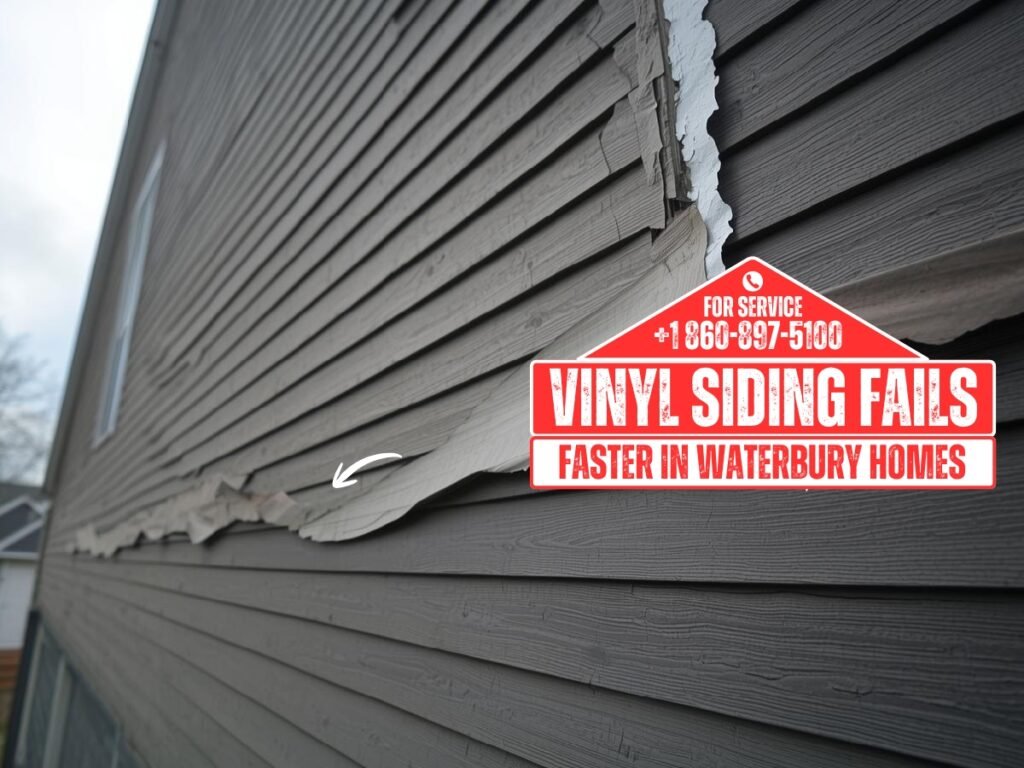
- Panels warp or ripple
- Corners crack
- Fasteners pull through
- Siding buckles during summer heat
In Waterbury, where winter cold and summer heat are both intense, improper installation shows up fast.
Moisture Problems Start Behind the Siding, Not On It
When homeowners notice siding issues, they often focus on what they can see:
- Loose panels
- Discoloration
- Surface damage
But vinyl siding failures almost always start behind the panels.
Common Hidden Issues
- Missing or damaged house wrap
- Improper flashing around windows and doors
- Trapped moisture with no drainage path
- Wet sheathing that can’t dry
Once moisture is trapped, it begins affecting:
- Wall sheathing
- Framing
- Insulation
- Indoor air quality
Vinyl siding doesn’t rot — but everything behind it can.
Why Vinyl Siding Looks “Fine” While Failing
One of the most dangerous aspects of vinyl siding failure is how subtle it can be.
From the outside, a home may look perfectly maintained. Inside, homeowners may notice:
- Drafts
- Higher energy bills
- Musty odors
- Minor interior wall staining
By the time exterior symptoms appear, damage has often been developing for years.
This is why inspections matter — especially in Waterbury’s older housing stock.
Installation Shortcuts That Cause Early Failure
Vinyl siding is only as good as the system supporting it.
At LCM Services LLC, we frequently see premature failures caused by:
- No proper drainage plane
- Improper starter strip alignment
- Incorrect flashing installation
- Skipped weather barriers
- Rushed retrofits over old siding
These shortcuts save time upfront — but they drastically shorten the siding’s lifespan.
How Older Waterbury Homes Add Complexity
Many Waterbury homes have:
- Settled foundations
- Uneven wall planes
- Multiple exterior renovations over decades
Vinyl siding doesn’t forgive uneven surfaces. When it’s installed over walls that aren’t properly prepped, panels flex and stress unevenly.
Over time, this leads to:
- Gaps opening at seams
- Fastener fatigue
- Wind-related loosening
The siding isn’t defective — it’s reacting to what’s underneath it.
The Energy Efficiency Myth
Vinyl siding is often associated with energy efficiency, but siding alone doesn’t insulate a home.
When vinyl siding fails early, it’s often because:
- Insulation wasn’t upgraded
- Air sealing was ignored
- Moisture compromised thermal performance
Wet insulation loses effectiveness quickly. In Waterbury winters, this translates into higher heating costs and colder interior walls.
Why Patch Repairs Don’t Work for Vinyl Siding
Homeowners often try to fix siding issues by:
- Replacing individual panels
- Re-nailing loose sections
- Sealing visible gaps
These fixes are usually temporary.
Why?
Because the problem is systemic — not isolated.
Without addressing moisture management, airflow, and installation errors, new panels often fail the same way the old ones did.
Seasonal Damage Patterns in Waterbury
Vinyl siding issues often follow a seasonal pattern:
- Winter: contraction, cracking, fastener stress
- Spring: moisture intrusion becomes visible
- Summer: heat causes warping and buckling
- Fall: wind loosens already stressed panels
Each season compounds the damage started in the previous one.
When Vinyl Siding Failure Becomes Structural
Left unchecked, siding problems can escalate into structural issues.
Potential outcomes include:
- Rotted wall sheathing
- Framing damage
- Mold growth inside wall cavities
- Costly interior repairs
At that point, siding replacement becomes part of a much larger project.
How Professional Evaluation Makes the Difference
A professional vinyl siding evaluation looks beyond appearance.
It considers:
- Moisture behavior
- Wall assembly performance
- Flashing and drainage design
- Compatibility with the home’s structure
This is where LCM Services LLC brings value — understanding how Waterbury homes age, shift, and respond to exterior systems over time.
Why Proper Installation Extends Vinyl Siding Life
When vinyl siding is installed correctly:
- Panels move freely
- Moisture drains safely
- Walls dry properly
- Structural components stay protected
That’s how vinyl siding reaches its intended lifespan — even in harsh climates.
Final Thoughts
Vinyl siding doesn’t usually fail because it’s low quality.
It fails because:
- Local conditions weren’t considered
- Installation details were skipped
- Moisture management was overlooked
- The home wasn’t properly prepared
In Waterbury, where climate and construction history matter, vinyl siding success depends on expertise — not shortcuts.
Understanding why siding fails is the first step toward making it last.
FAQs
Properly installed vinyl siding can last 30–40 years, even in Connecticut climates.
Most warping is caused by improper nailing or lack of expansion space.
Yes, if drainage, flashing, or house wrap is improperly installed.
It depends on whether the issue is isolated or systemic.
Absolutely — moisture and air leaks can reduce energy efficiency and comfort.