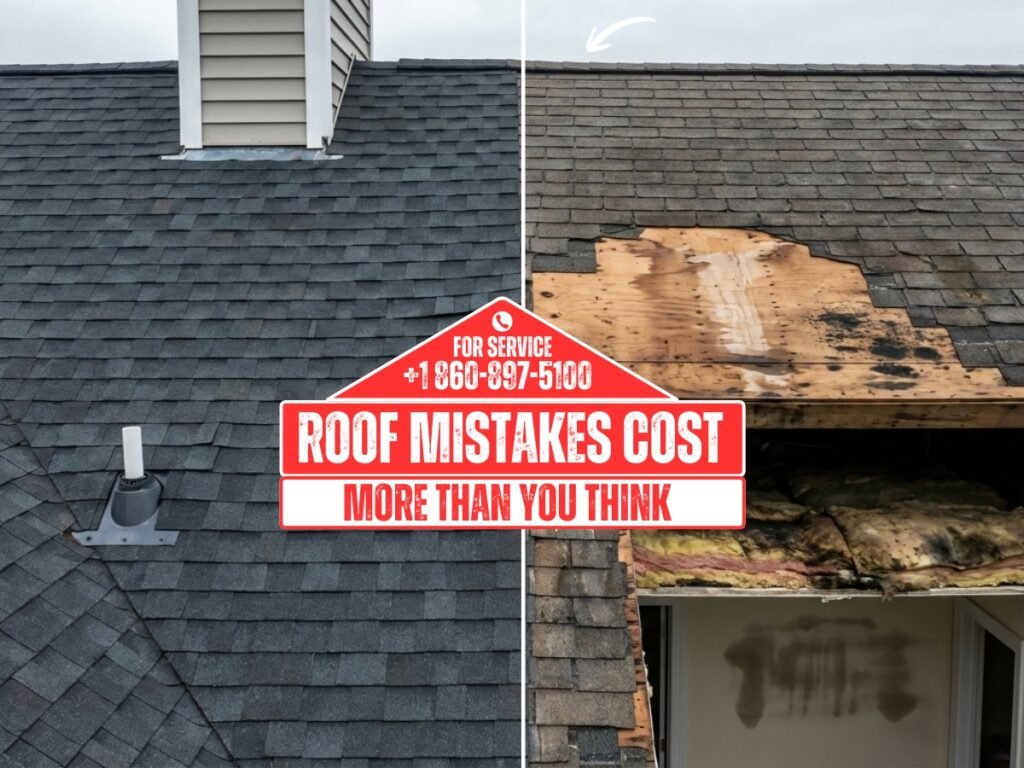
For many homeowners, a new roof feels like a finish line. Once the shingles are on and the job looks complete, the assumption is simple: the roof is done for decades. Unfortunately, that belief is one of the most expensive misunderstandings in homeownership.
At LCM Services LLC, we often inspect roofs that look “brand new” from the street—yet underneath, they’re already failing. Not because of bad materials, but because of what went wrong during installation.
Roof installation is not just about placing shingles. It’s a system, and when one part of that system is misunderstood or rushed, the cost doesn’t show up immediately—it shows up years later, quietly and expensively.
Let’s break down what most homeowners get wrong—and why those mistakes shorten roof life, raise repair costs, and create problems long after installers are gone.
The Biggest Misconception: “All Roof Installations Are Basically the Same”
This is where most trouble starts.
Many homeowners assume:
- If shingles are high quality, the roof will last
- If the installer is licensed, the job will be fine
- If it looks good from the outside, it is good
In reality, roof installation quality varies dramatically, even between professionals.
A roof isn’t a single product—it’s a layered system:
- Decking
- Underlayment
- Ice and water barriers
- Flashing
- Ventilation
- Shingles
If even one layer is mishandled, the entire system suffers.
Mistake #1: Prioritizing Materials Over Installation Quality
Homeowners often focus heavily on:
- Shingle brand
- Color
- Warranty length
But materials don’t fail nearly as often as installations do.
Why this matters:
Premium shingles installed incorrectly will still fail early. We’ve seen:
- Curling shingles within 5–7 years
- Granule loss far ahead of schedule
- Early leaks despite “lifetime” materials
The common denominator? Poor installation practices, not product defects.
Mistake #2: Underestimating the Importance of Roof Ventilation
Ventilation is one of the most misunderstood parts of roof installation—and one of the most costly when ignored.
Poor ventilation leads to:
- Trapped heat in summer
- Moisture buildup in winter
- Ice dam formation
- Premature shingle aging
- Mold and rot in attic spaces
Many roofs are installed without correcting existing ventilation problems. The roof looks new—but it’s aging faster than it should from day one.
At LCM Services LLC, we often explain to homeowners that a roof can fail from the inside out, even when the exterior looks perfect.
Mistake #3: Reusing Old or Damaged Flashing
Flashing protects roof joints, chimneys, valleys, and transitions—areas where water naturally wants to enter.
To save time or money, some installers:
- Reuse old flashing
- Patch around it
- Install new shingles over compromised metal
This is a major mistake.
What happens years later:
- Water slowly seeps behind walls
- Leaks appear far from the roofline
- Interior damage becomes visible only after serious deterioration
Flashing issues are one of the top reasons new roofs fail early.
Mistake #4: Treating Roof Installation as a One-Day Job
Speed is often marketed as a benefit—but faster is not always better.
A rushed installation often means:
- Improper nail placement
- Missed sealing steps
- Poor alignment
- Skipped inspections
While efficiency matters, precision matters more. Roof installation requires patience, weather awareness, and methodical execution.
When corners are cut, the roof pays the price over time.
Mistake #5: Ignoring the Roof Deck Condition
The roof deck is the foundation of the entire system. Yet many homeowners never ask:
- Is the decking inspected?
- Are soft spots replaced?
- Is moisture damage addressed?
Some installers simply cover existing problems instead of correcting them.
The result:
- Nails don’t hold properly
- Shingles loosen prematurely
- Structural issues worsen beneath the surface
A roof is only as strong as what it’s built on.
Mistake #6: Assuming “No Leaks” Means “No Problems”
This is a dangerous assumption.
Many roof installation issues:
- Don’t cause immediate leaks
- Appear only during specific weather conditions
- Progress silently for years
By the time a leak shows inside the home, damage has often been happening for a long time.
This is why post-installation inspections and proper documentation matter far more than homeowners realize.
Mistake #7: Overlooking Local Climate Realities
Roof installation is not one-size-fits-all.
Climate plays a major role in:
- Material selection
- Underlayment choice
- Ice and water shield placement
- Ventilation strategy
Homes exposed to:
- Heavy rain
- Freeze–thaw cycles
- High winds
- Snow loads
require installation methods tailored to those conditions. Ignoring this leads to roofs that technically pass installation—but fail in real life.
Mistake #8: Focusing Only on Upfront Cost
Budget matters—but focusing only on the lowest quote often creates the highest long-term cost.
Cheaper installations often involve:
- Fewer protective layers
- Lower-quality fasteners
- Minimal flashing upgrades
- No ventilation corrections
The homeowner saves upfront—but pays later through:
- Repairs
- Shortened roof lifespan
- Interior damage
At LCM Services LLC, we regularly inspect roofs that cost less initially but required replacement far sooner than expected.
The Long-Term Cost of Installation Mistakes
Poor roof installation doesn’t just shorten roof life—it creates a chain reaction:
- Higher energy bills
- Moisture intrusion
- Mold growth
- Structural wood rot
- Interior ceiling and wall damage
- Reduced home resale value
These costs often appear years after installation, when warranties are harder to enforce and installers are long gone.
Why Professional Oversight Changes Everything
Professional roof installation isn’t about being expensive—it’s about being thorough.
The right approach includes:
✔ Proper evaluation before installation
✔ Correct layering and sealing
✔ Climate-aware design
✔ Attention to details most homeowners never see
✔ Post-installation verification
A well-installed roof doesn’t just protect your home—it protects your future repair budget.
The Quiet Truth About Roof Longevity
Roofs don’t fail suddenly. They fail gradually.
And most failures trace back to:
- Early installation shortcuts
- Ignored details
- Assumptions that “good enough” is enough
A roof installed correctly should age slowly and predictably—not surprise you with problems years later.
Final Thoughts
Most homeowners don’t realize they made a roofing mistake until it’s too late.
The good news? These mistakes are preventable.
Understanding what truly matters in roof installation—beyond materials and appearances—can save years of frustration and thousands of dollars. At LCM Services LLC, we believe the best roof is one you don’t have to think about for decades.
Many issues like poor ventilation or flashing failure cause slow moisture buildup, which only becomes visible after structural damage develops.
Yes. Even brand-new roofs can fail if installed incorrectly, regardless of material quality.
Absolutely. Poor ventilation accelerates shingle aging, traps moisture, and leads to premature roof system failure.
In most cases, yes. Reusing old flashing is a common cause of leaks in newly installed roofs.
Hiring experienced professionals who focus on full roof systems—not just shingles—is the best way to avoid costly long-term issues.