
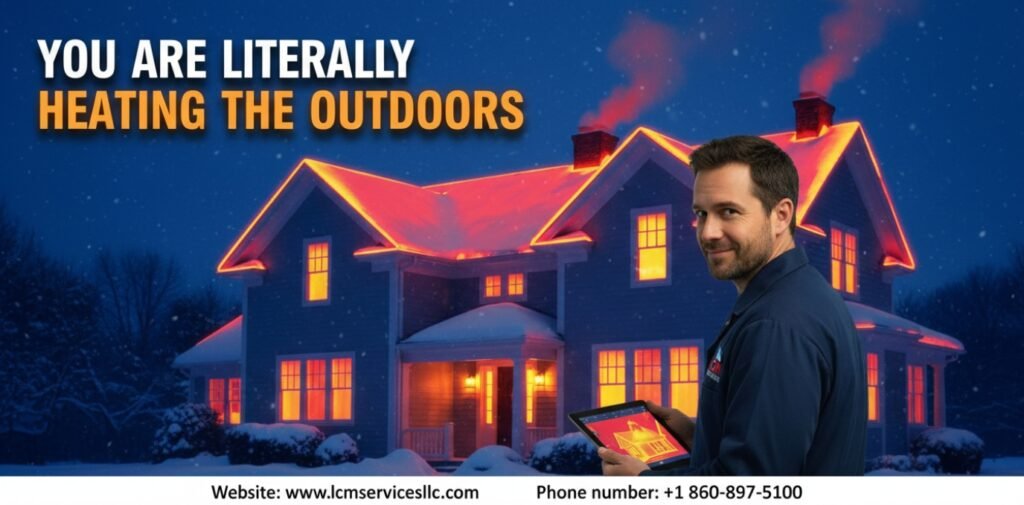
Most Connecticut homeowners notice energy loss the same way — when the utility bill arrives.
The numbers creep higher each season. Heating costs spike in winter. Cooling bills feel unreasonable in summer. Yet nothing looks broken. The walls are intact. The roof seems fine. Windows still open and close.
So where is the energy going?
The truth is uncomfortable but important:
Energy loss is usually invisible — until it becomes expensive.
At LCM Services LLC, one of the most common frustrations we hear from homeowners isn’t about comfort or drafts. It’s about cost. And in nearly every case, rising bills are a symptom of hidden energy loss happening inside the home’s structure.
This blog breaks down where Connecticut homes lose energy, why the damage is rarely obvious, how seasonal weather makes it worse, and what homeowners can do before another expensive bill arrives.
Why Energy Loss Is So Hard to Spot
Energy doesn’t leak the way water does.
There’s no puddle. No stain. No obvious crack shouting for attention.
Instead, energy loss happens through:
- Microscopic gaps
- Aging materials
- Failed seals
- Compressed insulation
- Hidden moisture damage
Homes can lose 30–50% of their conditioned air without any visible warning signs.
That’s why homeowners often assume:
“This is just how much energy costs now.”
In reality, much of that money is leaking straight out of the house.
Connecticut’s Climate Makes Energy Loss Worse
Connecticut homes face unique energy challenges due to:
- Cold winters
- Humid summers
- Freeze–thaw cycles
- Wind-driven rain
- Aging housing stock
Each season stresses the home differently — and every stress point creates opportunities for energy to escape.
What starts as a minor inefficiency often turns into year-round energy waste.
The Biggest Energy Loss Areas Homeowners Never See
1. Attics: The Primary Escape Route
Heat rises — and in Connecticut homes, it often escapes straight into the attic.
Energy loss commonly occurs through:
- Thin or uneven insulation
- Compressed insulation from moisture
- Air gaps around attic penetrations
- Unsealed attic hatches
By the time homeowners feel cold rooms below, the energy has already left the house.
2. Walls: The Hidden Energy Highway
Walls don’t have to look damaged to leak energy.
Inside many Connecticut homes:
- Insulation has settled or degraded
- Moisture has reduced thermal resistance
- Air leaks exist around outlets and framing
These problems stay hidden until energy bills spike.
3. Windows: Where Loss Looks Normal
Old or failing windows are one of the most underestimated sources of energy loss.
Common issues include:
- Failed window seals
- Single-pane or aging double-pane glass
- Drafts that are felt but ignored
- Condensation that signals seal failure
At LCM Services LLC, we often find that windows homeowners “planned to replace someday” are already costing them money every month.
4. Doors and Entry Points
Doors shift over time.
Energy loss occurs when:
- Weather stripping wears out
- Frames expand and contract
- Thresholds loosen
Even small gaps can leak large volumes of conditioned air.
Why Rising Bills Are a Late Warning
Energy loss doesn’t announce itself early.
Before bills rise, homeowners often experience:
- Rooms that never feel comfortable
- Uneven temperatures
- HVAC systems running constantly
- Increased humidity indoors
These are early signals, but they’re easy to dismiss.
By the time utility bills increase noticeably, energy loss is already well established.
How Moisture Makes Energy Loss Much Worse
Moisture and energy loss are closely connected.
When moisture enters walls, attics, or insulation:
- Insulation loses effectiveness
- Air sealing fails
- Thermal resistance drops
- HVAC systems work harder
This creates a vicious cycle:
Moisture causes energy loss → energy loss causes higher humidity → humidity causes more damage.
This is why professional inspections matter — energy problems are often moisture problems in disguise.
The Freeze–Thaw Effect on Energy Efficiency
Connecticut’s freeze–thaw cycles slowly open gaps in the home.
Over time:
- Caulking cracks
- Seals separate
- Framing shifts slightly
- Air leaks increase
None of this happens overnight — which makes it easy to overlook.
But each winter adds another layer of inefficiency.
Why HVAC Isn’t the Real Problem
Many homeowners blame their furnace or AC when bills rise.
In reality:
- HVAC systems often work harder because energy is escaping
- New systems don’t fix leaky homes
- Bigger units increase bills if leaks remain
At LCM Services LLC, we frequently see homes with upgraded HVAC systems still suffering from high energy costs — because the envelope of the home was never addressed.
Energy Loss and Home Value
Hidden energy inefficiencies affect more than monthly bills.
They impact:
- Home resale value
- Inspection reports
- Buyer confidence
- Long-term maintenance costs
Energy inefficiency is increasingly visible during inspections — even if homeowners can’t see it themselves.
Why DIY Energy Fixes Often Fall Short
DIY fixes like:
- Plastic window coverings
- Foam sprays without assessment
- Temporary sealing
- Space heaters
may reduce discomfort, but they rarely address the root problem.
True energy efficiency requires understanding how air, heat, and moisture move together.
What Professional Inspections Reveal

Professional evaluations often uncover:
- Air leakage patterns
- Moisture-compromised insulation
- Window and door failures
- Structural gaps homeowners didn’t know existed
At LCM Services LLC, energy loss is evaluated as part of the entire home system, not just isolated components.
Cost Comparison: Ignoring vs Addressing Energy Loss
| Approach | Result | Long-Term Cost |
| Ignore rising bills | Ongoing loss | High |
| Temporary fixes | Short relief | Medium |
| Targeted improvements | Real efficiency | Lower |
| Early intervention | Maximum savings | Lowest |
Energy efficiency improvements often pay for themselves faster than homeowners expect.
Why Energy Loss Feels “Normal”
Homes don’t fail all at once.
Energy loss feels normal because:
- It increases gradually
- Comfort declines slowly
- Costs rise over time
By the time homeowners act, they’ve already paid for years of wasted energy.
The Emotional Side of Energy Loss
High bills cause:
- Frustration
- Stress
- Hesitation to upgrade
- Discomfort at home
But addressing energy loss restores more than efficiency — it restores control.
What Connecticut Homeowners Can Do Now
Smart first steps include:
- Professional inspections
- Identifying air leaks
- Evaluating windows and insulation
- Addressing moisture sources
Energy efficiency isn’t about quick fixes — it’s about smart priorities.
Why Homeowners Trust LCM Services LLC
LCM Services LLC understands Connecticut homes, weather patterns, and construction styles. Our approach focuses on long-term performance, not surface-level solutions.
Energy loss doesn’t have to remain invisible — once it’s identified, it can be controlled.
Final Thoughts
Rising energy bills aren’t random.
They’re your home telling you something is wrong.
The sooner homeowners listen, the easier — and less expensive — the solution becomes.
FAQs
Hidden air leaks, insulation loss, and moisture issues often cause silent energy loss.
Yes. Failed window seals and outdated glass are major energy loss sources.
Absolutely. Wet insulation loses effectiveness quickly.
No. HVAC upgrades won’t help if energy continues escaping.
As soon as bills rise or comfort becomes inconsistent.