
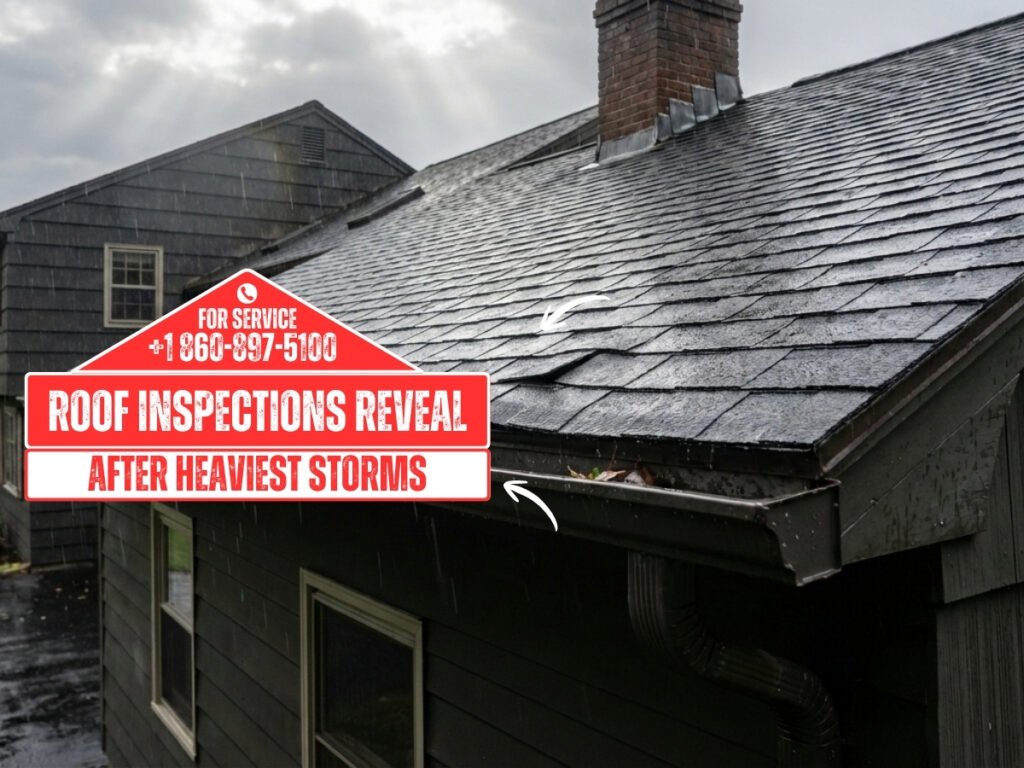
Connecticut storms don’t always arrive with dramatic warnings. Sometimes it’s just a long night of heavy rain. Other times, it’s high winds, snowmelt, or a sudden temperature swing that stresses your roof in ways most homeowners never see.
What does come after those storms, however, is often far more revealing.
Professional roof inspections conducted after severe weather events consistently uncover hidden damage that wasn’t visible before — and in many cases, damage homeowners didn’t even know was possible. At LCM Services LLC, post-storm roof inspections regularly tell a deeper story than missing shingles or obvious leaks.
This blog breaks down what roof inspections actually reveal after Connecticut’s heaviest storms, why problems often stay hidden at first, and how early discovery can prevent major structural and financial consequences.
Connecticut Storms Stress Roofs Differently
Connecticut’s climate is uniquely harsh on roofing systems. Homes here face:
- Heavy rainfall over short periods
- Freeze–thaw cycles
- Snow accumulation and ice dams
- High winds during seasonal storms
- Sudden temperature shifts
Each of these elements attacks roofing materials in a different way. A storm doesn’t have to tear shingles off to cause damage — sometimes it only needs to push water where it doesn’t belong.
Why Storm Damage Isn’t Always Obvious
Many homeowners expect storm damage to be dramatic. In reality, the most costly damage is often subtle.
After storms, roof inspections frequently reveal:
- Loosened flashing that still “looks fine”
- Shingles lifted just enough to allow water intrusion
- Nail pops caused by pressure and expansion
- Sealant failures around vents and chimneys
- Moisture intrusion without visible leaks
These issues don’t always cause immediate interior damage — which is exactly why they’re dangerous.
The First Thing Roof Inspectors Look For
A professional roof inspection after a storm follows a systematic approach, not guesswork.
At LCM Services LLC, inspections typically begin with:
1. Roof Surface Integrity
Inspectors look for:
- Lifted or creased shingles
- Granule loss
- Hairline cracks in aging materials
- Soft spots indicating trapped moisture
Even small shifts in shingle alignment can signal deeper problems beneath the surface.
Flashing: The Most Common Storm Casualty
Flashing protects roof transition points — chimneys, skylights, vents, valleys, and roof edges.
After heavy storms, inspections often reveal:
- Bent or loosened flashing
- Sealant washed away by prolonged rain
- Corrosion accelerated by moisture exposure
Flashing failures are responsible for a large percentage of post-storm leaks — and they rarely announce themselves immediately.
Wind Damage Doesn’t Always Remove Shingles
High winds don’t need to rip shingles off to cause problems.
What inspections often uncover:
- Shingles lifted and reseated improperly
- Broken adhesive seals
- Micro-tears beneath shingle tabs
- Exposed fasteners
These vulnerabilities allow water to enter during future storms — long after the original weather event has passed.
The Attic Tells the Real Story
One of the most revealing parts of a post-storm roof inspection is the attic.
Inside the attic, inspectors often find:
- Darkened roof decking
- Damp insulation
- Water trails along rafters
- Early mold growth
- Increased humidity levels
By the time water reaches the ceiling drywall, it has usually traveled through multiple layers of the home.
How Water Travels After a Storm
Water does not drip straight down.
After storms, inspections frequently reveal that water:
- Enters at one roof point
- Travels horizontally along framing
- Collects in insulation
- Appears far from the original entry
This is why homeowners are often confused when leaks appear in rooms nowhere near the roof damage.
Ice Dams: Storm Damage That Appears Later
Winter storms introduce a different kind of risk.
Roof inspections after snow events often uncover:
- Ice dam formation
- Water forced backward under shingles
- Soaked insulation near roof edges
- Structural moisture that appears weeks later
Ice dams are especially damaging because they create hidden water intrusion, not immediate leaks.
Why Ceiling Stains Are a Late Warning Sign
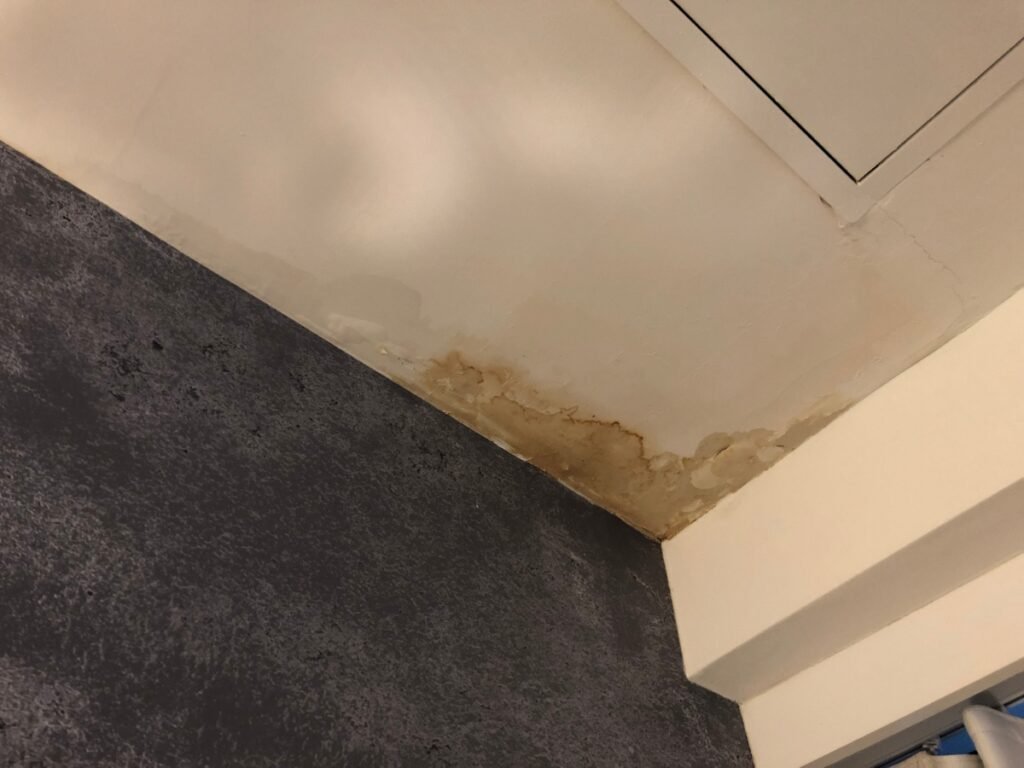
A ceiling stain isn’t the beginning of roof damage — it’s the result.
Post-storm inspections reveal that by the time stains appear:
- Insulation has already absorbed moisture
- Wood framing may be compromised
- Mold growth may have started
- Repair costs have increased
Early inspections catch problems before they reach living spaces.
Structural Shifts After Severe Weather
Storms don’t just bring water — they bring pressure.
Inspections sometimes uncover:
- Minor framing movement
- Fasteners loosening due to expansion
- Decking stress points
- Subtle roof sagging
These issues rarely show up without a trained eye — but they can worsen over time if ignored.
Gutters and Drainage Failures
Roof inspections after storms also evaluate drainage systems.
Common findings include:
- Clogged or overwhelmed gutters
- Improper water flow toward roof edges
- Water pooling near fascia boards
- Overflow directing water behind siding
Poor drainage accelerates roof aging and exterior damage.
Why DIY Post-Storm Checks Miss Critical Issues
Many homeowners climb a ladder and assume:
“Everything looks okay.”
But professional inspections differ because they:
- Examine hidden systems
- Understand water behavior
- Identify early material failure
- Track moisture pathways
At LCM Services LLC, inspections are designed to uncover what storms leave behind — not just what’s easy to see.
Cost Comparison: Inspection vs Delayed Repair
| Scenario | Outcome | Cost Impact |
| Immediate inspection | Minor repairs | Low |
| Delayed inspection | Interior repairs | Medium |
| Ignored storm damage | Structural + mold | High |
| Long-term neglect | Full restoration | Very High |
Post-storm inspections are one of the most cost-effective protections homeowners can invest in.
Why Some Leaks Appear Months Later
One of the biggest surprises homeowners face is delayed damage.
Roof inspections often reveal:
- Moisture trapped after storms
- Slow saturation of insulation
- Gradual wood deterioration
- Leaks appearing long after storms pass
This delayed response is why storm-related damage is frequently underestimated.
What Professional Reports Reveal
A professional inspection provides:
- Documented damage locations
- Moisture indicators
- Repair prioritization
- Preventive recommendations
These reports are invaluable for maintenance planning and future storm preparation.
Protecting Home Value After Storms
Hidden roof damage impacts:
- Energy efficiency
- Structural stability
- Indoor air quality
- Home resale value
Early inspections preserve not just the roof — but the entire home system.
Why Homeowners Trust LCM Services LLC
LCM Services LLC understands Connecticut homes, weather patterns, and roofing systems. Post-storm inspections focus on long-term protection, not temporary fixes.
Storms may be unavoidable — but the damage they cause doesn’t have to be.
Final Thoughts
Connecticut’s heaviest storms don’t always cause roof problems — they reveal them.
The difference between a small repair and a major restoration often comes down to how soon the damage is discovered.
Professional roof inspections turn uncertainty into clarity — and damage into manageable solutions.
FAQs
Yes, especially after heavy rain, snow, or strong winds.
Absolutely. Most storm-related damage starts hidden.
Within days, before moisture spreads or dries invisibly.
Yes — attics reveal damage long before ceilings do.
Early detection significantly reduces long-term repair costs.