
In Connecticut, windows don’t just frame views. They protect homes from harsh winters, humid summers, driving rain, and decades of seasonal stress. Yet many homeowners continue to see window replacement as a cosmetic upgrade rather than what it often becomes over time: a structural and performance necessity.
At LCM Services LLC, we regularly inspect homes where window issues are no longer about looks or energy efficiency. They’re about moisture intrusion, rising repair costs, failed inspections, and comfort problems that can’t be ignored.
This guide explains when window replacement stops being optional, why Connecticut homes reach that point faster than many owners expect, and how delaying the decision often makes things worse.
Why Windows Do More Than You Think
Windows aren’t isolated components. They’re part of a larger system that includes:
- Wall assemblies
- Insulation
- Exterior siding
- Flashing and drainage
- Interior finishes
When windows fail, the damage doesn’t stay at the glass. It spreads into surrounding materials—quietly at first.
A window that no longer seals properly can compromise:
❌ Energy efficiency
❌ Moisture control
❌ Structural integrity
❌ Indoor comfort
At that point, replacement isn’t about preference—it’s about protection.
Why Connecticut Homes Reach This Point Faster
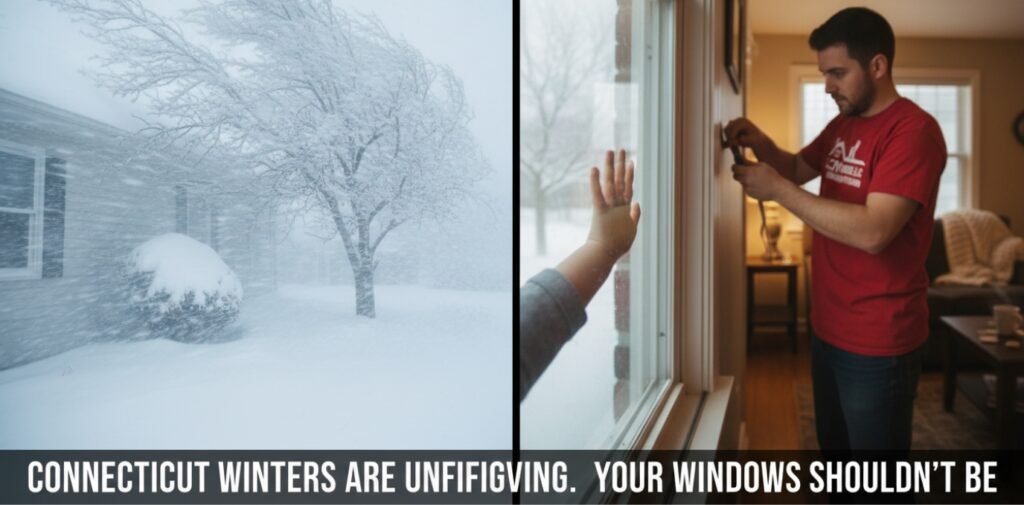
Connecticut’s climate is especially demanding on windows.
Environmental Pressures
✔️ Freeze–thaw cycles
✔️ Heavy seasonal rain
✔️ High humidity in summer
✔️ Cold winter winds
✔️ UV exposure year-round
Older windows weren’t designed to handle decades of this stress. Even newer windows can fail early if installed incorrectly.
Freeze–Thaw Cycles: The Window Killer
Small gaps around windows allow moisture in. When winter arrives:
- Moisture freezes and expands
- Frames shift and separate
- Sealants crack
- Flashing loosens
Over time, this cycle repeats until the window assembly can no longer perform its job.
This is one of the main reasons Connecticut windows age faster than homeowners expect.
Signs Window Replacement Is No Longer Optional
Here’s when window replacement becomes a necessity, not an upgrade.
🔹 Persistent Drafts
If you feel cold air even when windows are closed, the seals have likely failed.
🔹 Condensation Between Panes
This means the insulated glass unit has failed—there’s no repair for this.
🔹 Soft or Rotted Window Frames
Wood rot signals long-term moisture exposure and structural compromise.
🔹 Water Stains or Bubbling Paint
Moisture is already reaching interior materials.
🔹 Difficulty Opening or Closing
Frame movement often points to deeper structural or moisture issues.
When multiple signs appear together, replacement is usually unavoidable.
Moisture: The Hidden Reason Replacement Becomes Necessary
Moisture is the most expensive factor in window failure.
Poorly performing windows can:
- Allow water behind siding
- Trap moisture in wall cavities
- Saturate insulation
- Promote mold growth
At LCM Services LLC, we often find that window-related moisture damage extends far beyond the visible trim.
By the time homeowners notice stains or smells, the damage has usually been developing for years.
What Happens Behind the Walls
Once moisture gets past a failing window, it doesn’t stop.
Behind the wall, it can cause:
- Insulation breakdown
- Wood rot in framing
- Mold growth
- Rusted fasteners
- Interior drywall damage
Replacing the window alone may not be enough if the damage has spread—another reason delays become costly.
Why Repairs Stop Working
Many homeowners try:
- Re-caulking
- Temporary sealing
- Patch repairs
- Storm windows
These fixes can help briefly, but they don’t restore the original window system.
Repairs stop working when:
❌ Frames are warped
❌ Seals are permanently broken
❌ Flashing systems have failed
❌ Moisture pathways already exist
At that point, replacement is the only durable solution.
The Cost Difference: Early vs. Late Replacement
| Timing | Typical Scope | Relative Cost |
| Early replacement | Window + trim | $$ |
| Delayed replacement | Window + wall repair | $$$ |
| Long-term delay | Structural + interior repairs | $$$$ |
Waiting rarely saves money—it just shifts costs into worse categories.
Older Connecticut Homes Face Extra Risks
Many homes across Connecticut were built with:
- Single-pane windows
- Wooden frames
- Minimal flashing
- No modern moisture barriers
Layered renovations over decades often hide failing windows until major issues appear.
At LCM Services LLC, older homes frequently reveal:
- Multiple generations of patchwork
- Hidden rot behind trim
- Incompatible materials
These conditions make replacement a necessity, not a choice.
Energy Bills Are a Clue
Rising heating and cooling costs often point to window failure.
Poor-performing windows:
- Leak conditioned air
- Increase HVAC workload
- Create uneven room temperatures
When energy loss becomes persistent, replacement is usually more cost-effective than continued repairs.
Home Inspections Turn Windows Into Deal-Breakers
During inspections, windows are closely evaluated.
Inspectors flag:
- Rot
- Moisture intrusion
- Failed seals
- Safety issues
Buyers often walk away—or renegotiate heavily—when windows show signs of long-term failure.
Many sellers end up replacing windows under pressure, at higher cost, because they waited too long.
What Professional Replacement Does Differently
Professional window replacement isn’t just about installing new units.
Experienced contractors like LCM Services LLC:
✔️ Evaluate wall systems
✔️ Address moisture pathways
✔️ Install proper flashing
✔️ Ensure drainage and ventilation
✔️ Match materials to Connecticut’s climate
This ensures windows perform as part of the home—not as isolated features.
When Window Replacement Is Truly an Upgrade

Replacement is an upgrade when:
✔️ Windows are still structurally sound
✔️ There’s no moisture damage
✔️ Performance issues are minimal
It becomes a necessity when:
❌ Moisture is present
❌ Structural materials are compromised
❌ Repairs no longer hold
❌ Inspections flag issues
Understanding this difference helps homeowners act at the right time.
Final Thoughts
In Connecticut homes, windows don’t fail alone.
They fail:
- Alongside moisture
- With seasonal stress
- In connection with walls and insulation
Once window failure reaches that stage, replacement isn’t about aesthetics—it’s about protecting the entire home.
The best time to replace windows is before they become unavoidable.
About LCM Services LLC
LCM Services LLC helps Connecticut homeowners evaluate window performance, identify hidden risks, and implement long-term solutions built for New England conditions.
FAQs
If you see rot, condensation between panes, or recurring moisture issues, replacement is usually the better option.
Not always, but failing seals and flashing significantly increase moisture risk over time.
If inspections flag window issues, replacement often prevents buyer walkaways or price reductions.
Yes. Moisture intrusion can lead to mold growth behind walls and trim.
Freeze–thaw cycles, moisture, and older construction methods accelerate wear.