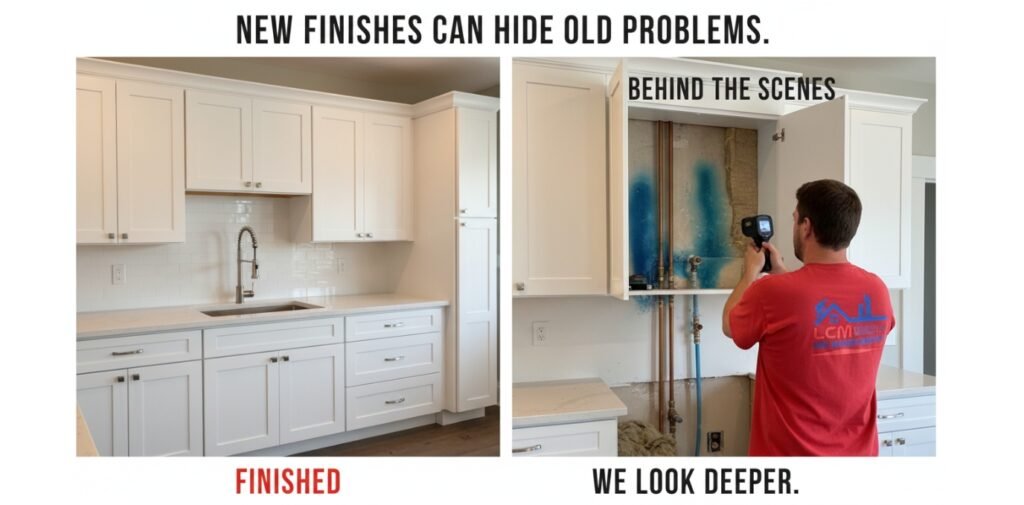
Budget remodels often start with good intentions. Homeowners want to improve their space, refresh a tired room, or prepare a home for resale — all without overspending. And on the surface, budget remodels can look like a success.
Fresh paint. New fixtures. Updated finishes.
Everything feels new again.
But behind the walls, under the floors, and inside structural systems, many budget remodels quietly plant the seeds for long-term repairs.
At LCM Services LLC, we frequently step into homes where a “cost-saving remodel” has already failed — sometimes within a year, sometimes just long enough to pass inspection before problems surface.
This blog explains why budget remodels so often lead to bigger repairs later, what shortcuts actually cost homeowners over time, and how to recognize the difference between smart spending and expensive compromise.
Budget Remodels Don’t Fail Immediately — They Age Poorly
One of the biggest misconceptions about budget remodeling is that failure happens quickly. In reality, most budget remodels fail slowly.
They look fine at first because:
- Materials are new
- Damage is hidden
- Systems haven’t been stressed
- Moisture hasn’t accumulated yet
But homes are dynamic systems. They move, breathe, expand, contract, and react to weather and daily use.
Budget remodels often ignore this reality — and that’s where long-term repairs begin.
The Difference Between “Cheaper” and “Lower Quality”
Not all cost savings are bad. The problem is where corners are cut.
Budget remodels often reduce costs by:
❌ Using thinner materials
❌ Skipping prep work
❌ Avoiding system upgrades
❌ Ignoring compatibility with older structures
❌ Rushing installation
These decisions don’t show up on day one — they show up months or years later, when repairs become unavoidable.
What Budget Remodels Usually Skip First
1. Proper Preparation
Prep work isn’t glamorous, but it’s foundational.
Budget remodels often skip:
- Subfloor leveling
- Wall reinforcement
- Moisture testing
- Structural assessment
Without proper preparation, new finishes are installed over old problems — guaranteeing future failure.
2. Moisture Management
Moisture control is one of the most expensive areas to “do right” — and the first thing budget remodels sacrifice.
Common shortcuts include:
- Inadequate waterproofing
- Poor ventilation planning
- Cheap sealants
- No vapor barriers
🚨 Moisture damage doesn’t stay contained. Once trapped, it spreads.
At LCM Services LLC, many long-term repair projects start with moisture issues hidden behind budget remodel finishes.
3. Structural Compatibility
Older homes, especially in areas like Waterbury, weren’t built for modern materials and layouts.
Budget remodels often:
- Attach new materials to old framing incorrectly
- Ignore load paths
- Overlook seasonal movement
The result? Cracks, separation, warping, and failure that looks “mysterious” — but isn’t.
Budget Bathrooms & Kitchens: Repair Time Bombs
Bathrooms and kitchens are the most remodeled spaces — and the most vulnerable to budget shortcuts.
Common Budget Mistakes:
- Tile installed without proper underlayment
- Incorrect slope toward drains
- Inadequate waterproof membranes
- Cheap fixtures incompatible with old plumbing
These spaces see daily moisture and use. When done cheaply, damage accelerates.
💧 By the time homeowners notice an issue, repairs often involve removing the entire remodel.
Electrical & Plumbing Shortcuts Create Hidden Risks
Upgrading finishes without upgrading systems is one of the most expensive mistakes homeowners make.
Budget remodels often:
- Work around outdated wiring
- Ignore undersized plumbing
- Skip code upgrades
- Avoid permits
This leads to:
⚠️ Fire hazards
⚠️ Water leaks
⚠️ Failed inspections
⚠️ Insurance complications
What looks like savings can become liability.
How Budget Remodels Lower Long-Term Home Value
Ironically, budget remodels can reduce home value — even when they look good.
Why?
- Inspectors find shortcuts
- Buyers sense inconsistency
- Repairs are inevitable
- Trust is lost
Buyers today are cautious. A cheap remodel raises questions rather than confidence.
Budget Remodel vs Smart Remodel Over Time
| Category | Budget Remodel | Smart Remodel |
| Upfront Cost | Lower | Higher |
| Prep Work | Minimal | Thorough |
| Moisture Control | Inadequate | Properly engineered |
| System Upgrades | Skipped | Included |
| Longevity | Short-term | Long-term |
| Repair Costs | High | Lower |
| Home Value | Often reduced | Often increased |
Why Repairs Always Cost More Than Doing It Right
Budget remodels fail because repairs compound.
One small shortcut leads to:
- More damage
- More tear-out
- More labor
- More material waste
Homeowners end up paying for:
💰 The original remodel
💰 The damage it caused
💰 The correct repair
That’s triple spending.
Older Homes Amplify Budget Mistakes
In older homes, budget remodels fail even faster.
Why?
- Aging materials are less forgiving
- Structural movement is ongoing
- Moisture paths already exist
- Systems are outdated
Older homes require strategy, not speed.
This is why LCM Services LLC approaches remodels with long-term performance in mind — not just appearance.
Why Budget Remodels Feel “Good Enough” at First
Psychologically, budget remodels succeed early because:
- Homeowners want to believe they saved money
- Problems are invisible
- The space looks improved
But homes don’t reward optimism — they reward proper planning.
Months later, reality catches up.
The Repair Jobs Contractors See Most Often
Contractors frequently repair:
- Failed tile installations
- Mold behind showers
- Warped flooring
- Cracked countertops
- Electrical overloads
- Plumbing leaks
Almost all trace back to cost-cutting decisions, not material defects.
Smart Remodeling Is About Timing and Priorities
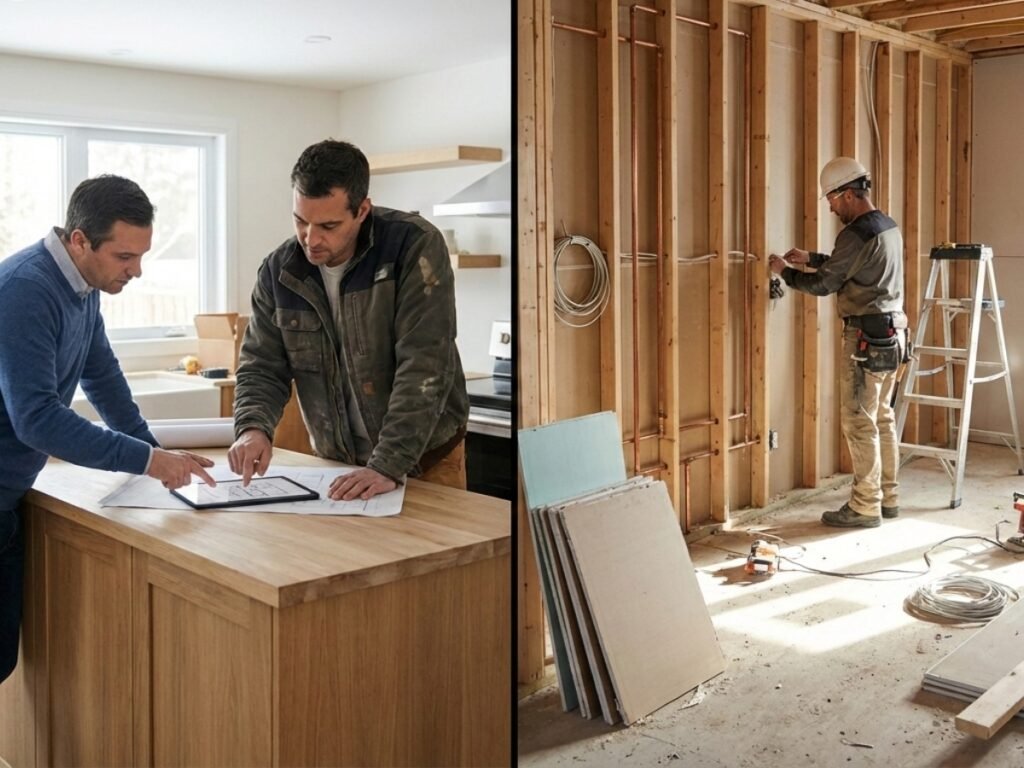
Smart remodeling doesn’t mean unlimited budgets. It means:
✔️ Spending where it matters
✔️ Saving where it’s safe
✔️ Planning for longevity
✔️ Respecting the home’s structure
Professional remodels prioritize:
- Moisture control
- Structural stability
- System compatibility
- Code compliance
That’s what prevents long-term repairs.
When Budget Remodels Turn Into Structural Repairs
Some budget remodels don’t just fail — they damage the home.
Examples include:
- Rotting framing from trapped moisture
- Cracked foundations from added load
- Wall separation from improper attachment
These repairs are far more expensive than the remodel ever was.
How Professionals Prevent Long-Term Repairs
Experienced professionals:
- Identify hidden risks early
- Choose compatible materials
- Plan for movement and moisture
- Follow local codes
- Think in decades, not months
This approach costs more upfront — but saves money long-term.
That’s the philosophy behind LCM Services LLC projects.
The Most Expensive Remodel Is the One You Redo
There’s a saying in construction:
“Do it cheap, pay twice.”
In reality, many homeowners pay three times.
Budget remodels aren’t bad because they’re affordable — they’re bad because they ignore how homes actually work.
Final Thoughts
A remodel should improve a home’s function, safety, and value — not quietly undermine it.
Budget remodels create long-term repairs because they focus on appearance over performance.
Homes remember shortcuts.
Walls reveal mistakes.
Moisture never forgets.
Choosing a smarter approach today prevents expensive regret tomorrow. That’s why homeowners who work with LCM Services LLC don’t just remodel — they protect their investment
FAQs
Budget remodels often skip proper prep work, moisture control, and structural compatibility, which leads to costly repairs later.
Not always, but using low-quality materials in high-stress areas usually shortens the lifespan of the remodel significantly.
Some issues appear within months, while others surface years later during inspections, leaks, or seasonal weather changes.
Yes, experienced contractors like LCM Services LLC can identify hidden issues and repair them properly before damage spreads.
In most cases, professional remodeling reduces repeat repairs, improves durability, and protects overall home value over time.