
This is a question we hear often from homeowners across Waterbury, CT, especially in neighborhoods like Atwood Ave, Town Plot, East End, and Oakville:
“Ever since we installed vinyl siding, our house sounds louder.”
Sometimes it’s traffic noise. Sometimes it’s wind, rain, or even creaking sounds. The siding looks great—but the home feels different.
The truth is, vinyl siding changes more than appearance. It affects airflow, sound transmission, and insulation behavior—especially in older Waterbury homes.
This article explains why noise changes after vinyl siding installation, what’s normal, what’s not, and when sound is a warning sign that needs professional attention.
What “Louder” Actually Means (Sound Changes Explained)
When homeowners say their home sounds louder, they usually mean:
- Traffic noise is more noticeable
- Wind sounds sharper or hollow
- Rain sounds louder on exterior walls
- Interior rooms echo more
- Occasional popping or movement sounds
Not all noise changes are bad—but understanding the cause matters.
How Vinyl Siding Interacts With Sound
Vinyl siding is not a soundproof barrier. Instead, it’s a cladding system designed to:
- Shed water
- Allow airflow
- Expand and contract
Unlike solid masonry or wood siding, vinyl:
- Floats on the wall
- Has built-in air gaps
- Relies on insulation behind it
This design affects sound transmission.
Why Some Waterbury Homes Get Louder After Vinyl Siding Installation
1. Insulation Gaps Become More Noticeable
Older Waterbury homes often have:
- Minimal wall insulation
- Settled or missing insulation
- Inconsistent insulation coverage
When vinyl siding is installed:
- Old insulation remains unchanged
- Air movement behind siding increases
- Sound travels more easily through gaps
🔍 Result: You notice noise that was already there—but now has a clearer path.
2. House Wrap and Airflow Changes
Modern vinyl siding installations include:
- House wrap
- Drainage planes
- Ventilation gaps
These are good for moisture—but they also:
- Change how sound moves
- Create hollow sound chambers
- Amplify wind or rain noise
This is especially noticeable on wind-exposed Waterbury homes.
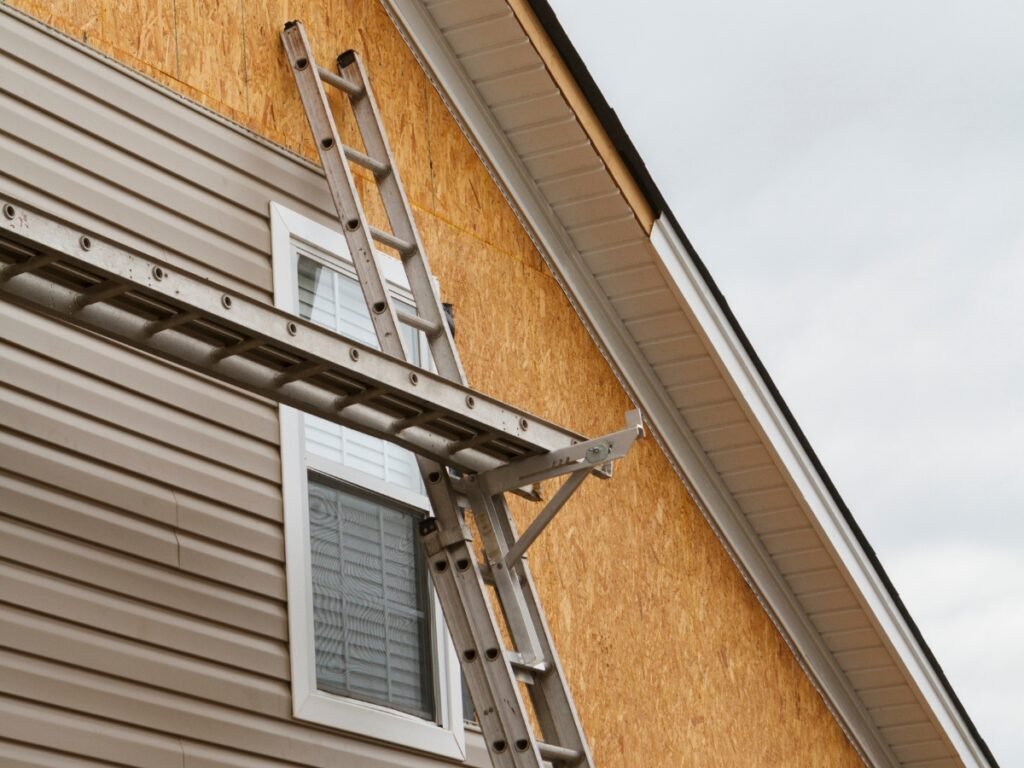
3. Loose or Improperly Installed Panels
Vinyl siding must be installed with:
- Correct nail spacing
- Proper expansion allowance
If installed too tightly or too loosely:
- Panels move excessively
- Wind causes rattling
- Temperature changes create popping sounds
⚠️ This is not normal and should be corrected.
4. Older Wall Construction in Waterbury Homes
Many Waterbury homes were built:
- Before modern sound control standards
- With thinner sheathing
- Without exterior foam insulation
Vinyl siding doesn’t add mass—it adds flexibility.
👉 Less mass = more sound transmission.
5. Neighborhood Density & Traffic Exposure
Waterbury neighborhoods are:
- More compact
- Closer to roads
- Near bus routes and delivery paths
Vinyl siding doesn’t block sound the way brick or stone does, so environmental noise becomes more noticeable.
Real Local Example: Atwood Ave Vinyl Siding Inspection
A homeowner near Atwood Ave contacted us after installing vinyl siding.
Concerns:
- Traffic sounded louder
- Wind noise during storms
- Clicking sounds at night
Inspection revealed:
- Missing insulation in wall cavities
- Panels nailed too tightly
- No exterior foam board
After correction:
- Noise reduced
- Wall performance improved
- Comfort restored
The siding wasn’t defective—the installation needed adjustment.
Normal Sounds vs Warning Signs
Not all sounds are a problem.
✅ Normal After Vinyl Siding Installation
✔ Light expansion noises
✔ Rain sound changes
✔ Slight wind noise
⚠️ Warning Signs
⚠️ Constant rattling
⚠️ Loud popping
⚠️ Panels visibly moving
⚠️ Drafts indoors
Warning signs mean inspection is needed.
How Vinyl Siding Noise Develops (Step-by-Step)
- Siding installed over older wall
- Airflow behind panels increases
- Insulation gaps allow sound transfer
- Panels move with wind or temperature
- Noise becomes noticeable indoors
🧠 Noise is often a symptom, not the problem itself.
Noise Issues vs Proper Installation
| Issue | Cost Impact |
| Inspection | Low |
| Panel adjustment | Low |
| Insulation upgrades | Moderate |
| Full siding reinstallation | Higher |
| Long-term energy loss | Expensive |
Fixing noise early saves money later.
Why Waterbury Homes Are More Affected (Local Factors)
Older Housing Stock
Many homes lack modern insulation.
Freeze–Thaw Cycles
Temperature swings increase siding movement.
Dense Neighborhoods
More ambient noise exposure.
Wind Corridors
Certain streets experience stronger gusts.
Waterbury conditions magnify sound issues.
Waterbury vs Nearby Areas (GEO Section)
Oakville & Watertown
- Slightly better insulation
- Less traffic density
Wolcott
- Higher elevation
- More wind, less traffic noise
Cheshire & Middlebury
- Newer construction
- Better sound buffering
Waterbury’s combination makes noise more noticeable.
Common Homeowner Mistakes
❌ Assuming noise is “just vinyl”
❌ Ignoring insulation quality
❌ Hiring non-local installers
❌ Skipping post-install inspections
❌ Choosing price over expertise
Local experience matters.
How to Reduce Noise After Vinyl Siding Installation
✔ 7 Professional Recommendations
- Inspect panel fastening
- Add exterior foam insulation
- Seal air gaps
- Improve interior wall insulation
- Ensure proper ventilation balance
- Address drafts immediately
- Use local vinyl siding experts
Small changes can make a big difference.
Safety & Comfort Warning
⚠️ Loose siding can detach in storms
⚠️ Noise may indicate air leaks
⚠️ Air leaks increase moisture risk
Noise is sometimes the first warning sign.
When to Call a Professional in Waterbury, CT
Call a professional if:
- Noise appeared immediately after installation
- Panels visibly move
- Drafts increase
- Energy bills rise
- Home feels less comfortable
Early inspection prevents bigger problems.
Why Choose Us for Vinyl Siding Services in Waterbury, CT

At LCM Services LLC, we understand Waterbury’s housing structure and climate.
What Sets Us Apart
✔ Local installation experience
✔ Sound & insulation awareness
✔ Honest assessments
✔ Code-compliant installs
✔ Long-term performance focus
We don’t just install siding—we optimize the whole exterior system.
Final Thoughts
If your home in Waterbury, CT sounds louder after vinyl siding installation, don’t ignore it.
👉 Contact LCM Services LLC today for a professional siding inspection to ensure your home is quiet, efficient, and properly protected.
FAQs
Some sound change is normal, but loud or constant noise is not.
No, it relies on insulation behind it.
Yes, proper insulation significantly reduces sound transmission.
Yes, due to outdated wall construction.
Yes, especially during storms.