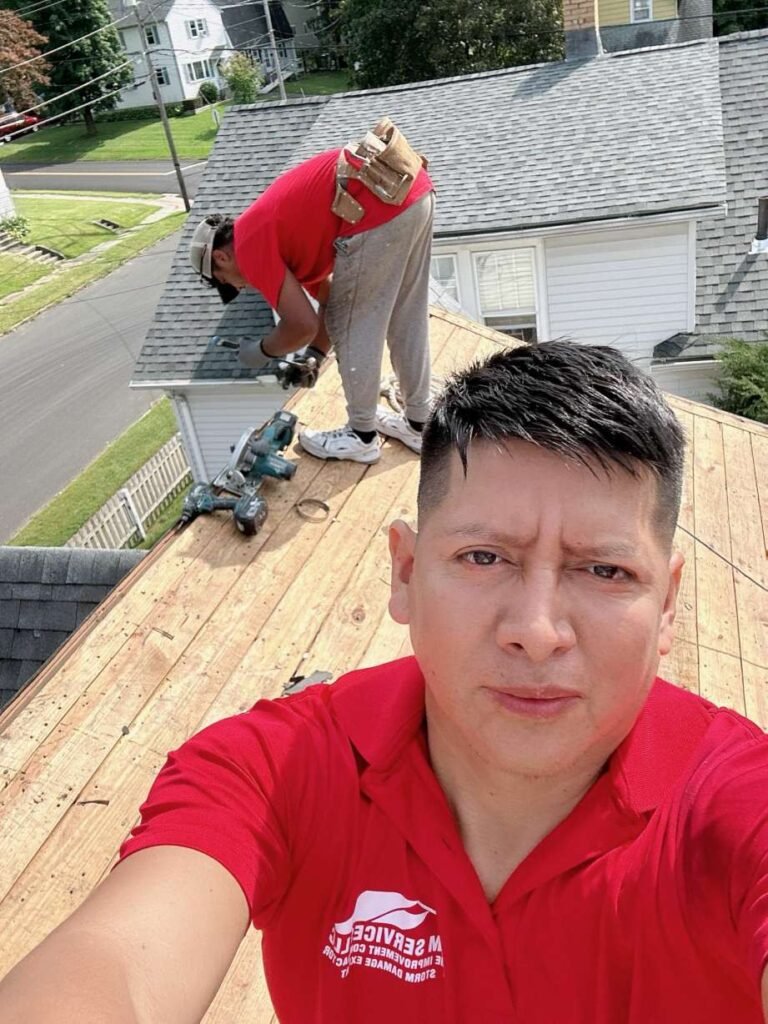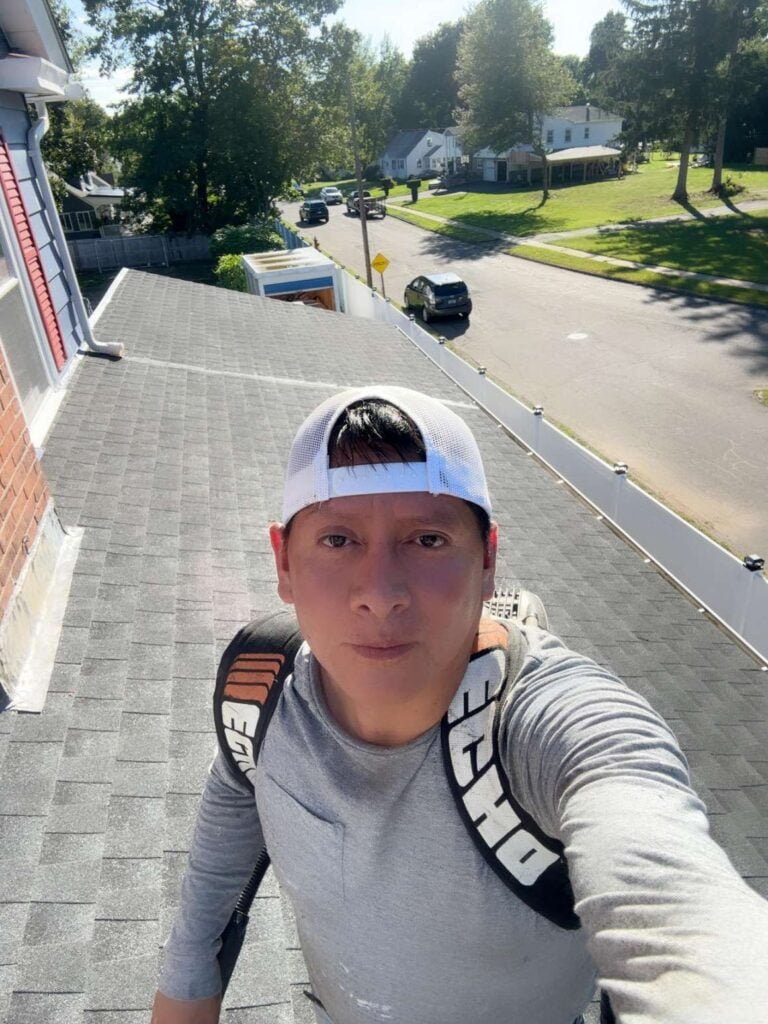


As a contractor working daily across Waterbury, CT, one pattern stands out clearly: homes along Atwood Ave tend to need roof repairs or replacements earlier than similar homes just a few streets away. This isn’t coincidence — it’s the result of location-specific stress factors that many homeowners don’t realize are affecting their roof.
If your home is on or near Atwood Ave, East End Waterbury, or nearby high-traffic corridors, understanding why roof wear happens faster can help you prevent leaks, interior damage, and costly emergency repairs.
What “Faster Roof Wear” Actually Means
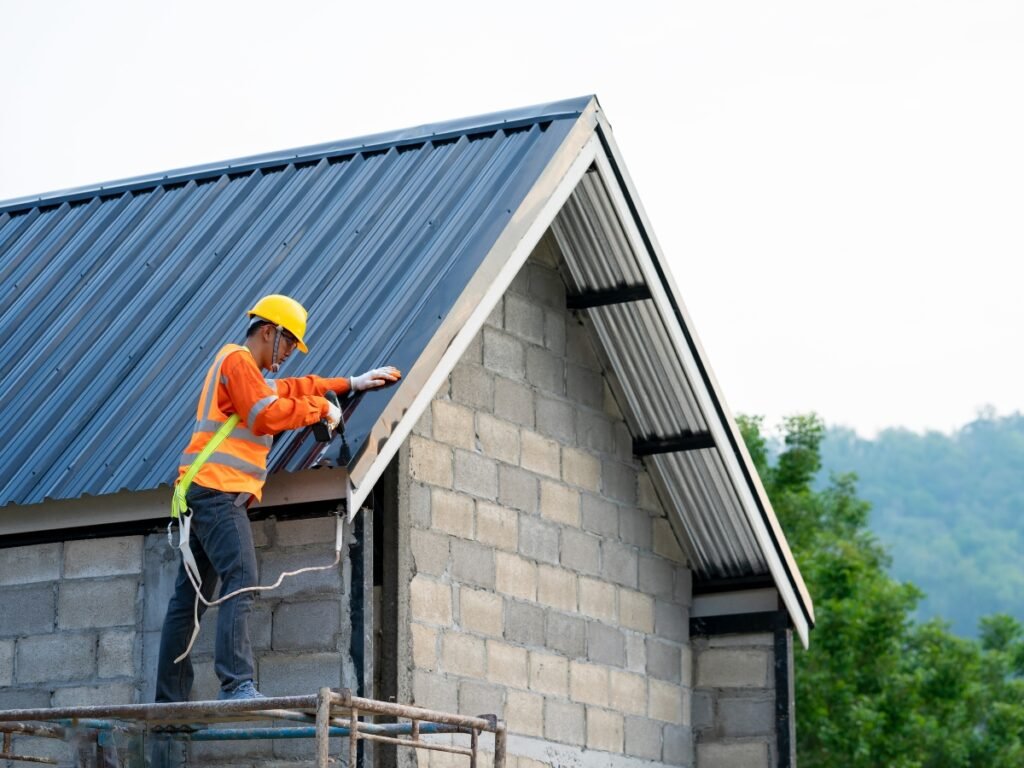
Before diving deeper, let’s clarify what roof wear looks like in real terms.
Faster roof wear refers to:
- Shingles cracking or curling years before their expected lifespan
- Granule loss visible in gutters or downspouts
- Flashing pulling away near chimneys or roof edges
- Small leaks appearing after moderate rain
- Roof decking soft spots during inspection
In many Atwood Ave homes, we see these issues 5–8 years earlier than in quieter parts of Waterbury.
Why Atwood Ave Roofs Deteriorate Faster Than Nearby Streets
1. Heavy Traffic Vibration Impacts Roof Structure
Atwood Ave is a busy connector road with constant traffic, delivery trucks, buses, and commercial vehicles.
Why this matters for your roof:
- Repeated vibration loosens fasteners over time
- Shingles shift microscopically, breaking seal strips
- Flashing around chimneys and vents separates faster
This effect is subtle but cumulative — especially for older homes built before modern roofing standards.
2. Older Housing Stock with Outdated Roofing Systems
Many homes along Atwood Ave were built 40–70+ years ago.
Common issues we find:
- Roof decking thinner than current code standards
- Inadequate attic ventilation
- Old underlayment not designed for modern weather extremes
Even if shingles were replaced once, the support system underneath often wasn’t upgraded.
3. Poor Drainage and Water Runoff Patterns
Atwood Ave properties frequently sit:
- Closer to the roadway
- On shallow slopes
- Near older storm drainage systems
This leads to:
- Water pooling near roof edges
- Ice dams in winter
- Faster rot of fascia and soffits
Water damage is one of the top reasons Atwood Ave roofs fail early.
4. Connecticut’s Freeze–Thaw Cycle Hits These Homes Harder
Waterbury experiences frequent winter temperature swings.
On Atwood Ave, we often see:
- Ice forming near roof edges
- Snow melting unevenly due to heat loss
- Refreezing that lifts shingles
Over time, this breaks the roof’s waterproof seal.
5. Higher Exposure to Airborne Debris
Traffic, nearby trees, and roadside dust create:
- Faster granule erosion
- Clogged gutters
- Abrasion on shingles
This combination shortens shingle life significantly.
Real Example from Atwood Ave
A recent client on Atwood Ave near the East End called us for a “small ceiling stain.” Upon inspection:
- Shingles were only 12 years old
- Underlayment was original (over 40 years old)
- Ice dam damage had gone unnoticed for years
Result: What could have been a simple repair turned into a partial roof replacement — entirely preventable with earlier inspection.
Common Mistakes Atwood Ave Homeowners Make
- Assuming traffic doesn’t affect roofing
- Waiting for visible leaks before calling a professional
- Skipping annual roof inspections
- Ignoring gutter maintenance
- Replacing shingles without addressing ventilation
What Faster Roof Wear Means Financially
Roof wear directly affects your budget.
Typical Waterbury roofing costs:
- Minor roof repair: lower range
- Leak repair with decking damage: moderate
- Full roof replacement: higher investment
Homes along Atwood Ave often require:
- Repairs sooner
- Additional underlayment work
- Improved ventilation upgrades
Early inspections usually save thousands over time.
How Atwood Ave Compares to Nearby Areas (GEO Section)
Oakville & Watertown
- Less traffic vibration
- Slightly newer homes
- Slower roof wear on average
Wolcott
- Higher elevation
- More wind exposure but less vibration
- Ice damage more common than wear
Cheshire & Middlebury
- Better drainage patterns
- Newer construction standards
- Longer average roof lifespan
This comparison explains why Atwood Ave roofs age differently even within the same city.
Prevention Tips for Atwood Ave Homeowners
5 Proven Ways to Extend Roof Life
- Schedule annual professional inspections
- Upgrade attic ventilation
- Clean gutters twice per year
- Address flashing issues early
- Replace underlayment during shingle replacement
Small steps make a big difference in high-impact areas like Atwood Ave.
Safety Warning for Homeowners
Walking on a compromised roof can be dangerous.
Avoid:
- DIY inspections on steep slopes
- Walking on icy or wet shingles
- Ignoring soft spots
Falls and hidden structural damage are real risks.
When to Call a Professional in Waterbury, CT
Call a local roofing professional if you notice:
- Ceiling stains or peeling paint
- Shingle debris in gutters
- Drafts or temperature changes upstairs
- Ice buildup along roof edges
- Roof age over 15 years
Early action prevents structural damage.
Why Choose Us for Roofing Services in Waterbury, CT

At LCM Services LLC, we understand Waterbury-specific roofing challenges because we work here every day.
What sets us apart:
- Local experience on Atwood Ave and surrounding neighborhoods
- Honest inspections — no unnecessary upsells
- Knowledge of Connecticut weather patterns
- Proper repairs, not temporary fixes
- Clear communication and reliable scheduling
We don’t guess — we inspect, explain, and solve the problem correctly.
Final Thoughts
If your home is along Atwood Ave or anywhere in Waterbury, CT, don’t wait for a leak to become a major repair.
👉 Schedule a professional roof inspection today with LCM Services LLC and protect your home before small issues turn into costly damage.
FAQs
Because of traffic vibration, older homes, drainage issues, and Connecticut freeze–thaw cycles.
At least once per year, and after major storms.
No, many issues can be repaired if caught early.
Yes, long-term vibration loosens materials over time.
Yes, especially near flashing and roof edges.