Many Waterbury homes experience premature siding failure, moisture intrusion, and exterior repair issues because older framing methods were never designed to support modern exterior systems. When today’s materials are installed on yesterday’s framing, small structural movements and moisture pathways can quietly undermine the entire exterior envelope.
This mismatch between old framing and modern exteriors is one of the most overlooked causes of recurring exterior problems in Waterbury, CT.
Why This Issue Is Unique to Waterbury Homes
Waterbury has a large concentration of homes built long before modern exterior systems existed. These houses were framed for durability using the standards of their time—not for airtightness, engineered drainage, or lightweight cladding systems.
At LCM Services LLC, we regularly work on homes where:
- The exterior looks new
- The siding was replaced recently
- But failures keep returning
The root cause is often what’s behind the siding, not the siding itself.
Understanding Older Framing Methods in Waterbury
Balloon Framing
Many older Waterbury homes use balloon framing, where wall studs run continuously from foundation to roof.
This creates:
- Long vertical cavities for air and moisture movement
- Fewer natural stopping points for water
- Increased pressure differences across walls
Modern siding systems were never designed for this.
Early Platform Framing
Some homes use early platform framing with:
- Non-standard stud spacing
- Rough-sawn lumber
- Irregular wall thickness
These inconsistencies affect how modern materials sit and fasten.
Heavier, Less Uniform Lumber
Older framing lumber was:
- Denser
- Less kiln-dried
- More prone to seasonal movement
This movement continues decades later and conflicts with rigid modern materials.
How Modern Exterior Systems Are Designed
Today’s exterior systems assume:
- Uniform framing
- Predictable movement
- Engineered moisture barriers
- Precise fastening points
Modern siding, trim, and flashing depend on tight tolerances—something older framing rarely provides.
Where the Conflict Begins
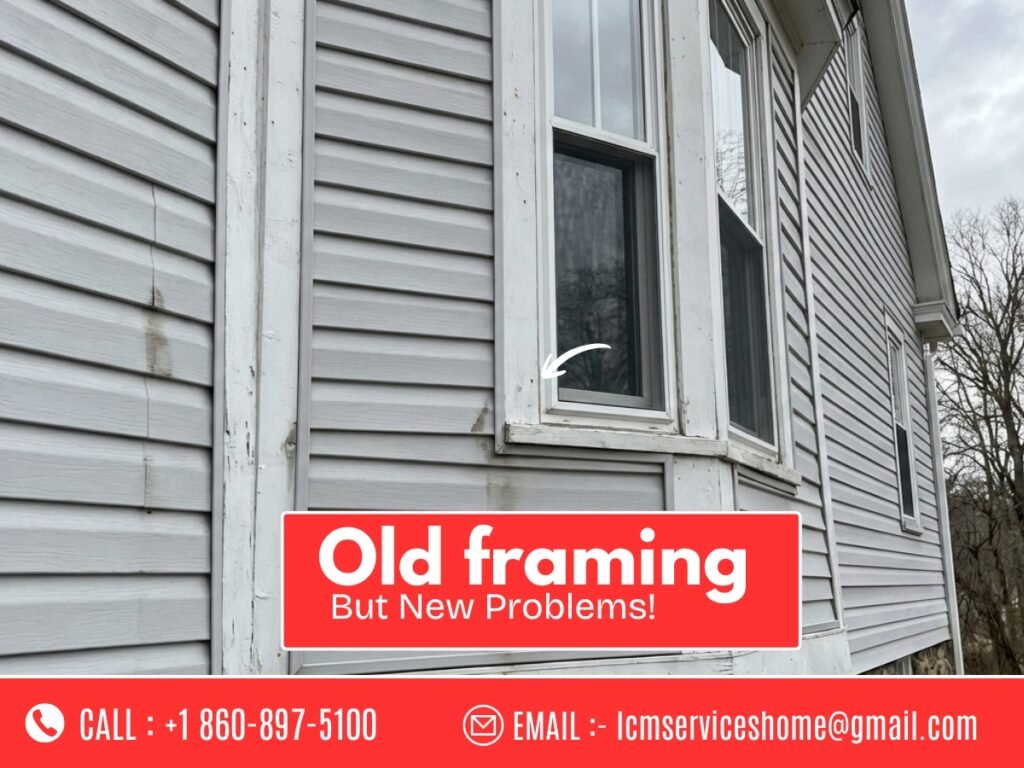
Uneven Wall Planes
Older framing often creates walls that aren’t perfectly flat.
When modern siding is installed:
- Panels flex unnaturally
- Locking edges stress
- Fasteners loosen
This leads to early failure even when installation appears correct.
Fastener Pull-Out
Older framing can be brittle or inconsistent.
Fasteners may:
- Miss solid wood
- Split framing members
- Loosen as wood shifts
This causes panels to move, especially during Waterbury’s wind-driven storms.
Moisture Movement: Old Framing vs Modern Materials
No Designed Drainage Path
Older homes weren’t built with modern drainage planes.
Water that gets behind siding:
- Has nowhere to exit
- Moves laterally and upward
- Saturates sheathing and framing
Modern systems assume water will drain—not linger.
Capillary Action in Older Materials
Older wood framing absorbs moisture more readily.
This moisture:
- Expands the wood
- Pushes against siding
- Breaks seals and joints
The damage compounds slowly.
Common Exterior Failures Linked to Old Framing
Repeated Siding Movement
Homeowners notice siding that:
- Shifts seasonally
- Won’t stay aligned
- Rattles in wind
This is often blamed on poor installation, but framing movement is the real cause.
Trim Separation and Cracking
Trim boards attached to moving framing:
- Pull away from walls
- Crack at joints
- Expose underlying materials
Water enters through these gaps.
Window and Door Seal Failure
Older framing shifts around window openings.
This causes:
- Failed caulking
- Drafts
- Interior moisture stains
Replacing the window alone doesn’t solve the issue.
Why Problems Appear Years After Renovation
Many Waterbury homeowners renovate exteriors and feel confident—for a while.
But over time:
- Framing continues to move
- Moisture accumulates
- Modern materials fatigue
Failures often appear 3–7 years after installation, long after warranties expire.
How Waterbury’s Climate Makes It Worse
Freeze–Thaw Cycles
Moisture inside framing freezes, expands, and shifts materials.
Seasonal Humidity
Older wood absorbs and releases moisture more dramatically.
Heavy Tree Coverage
Shade prevents drying, increasing moisture retention.
These conditions accelerate conflicts between old and new systems.
Common Homeowner Mistakes
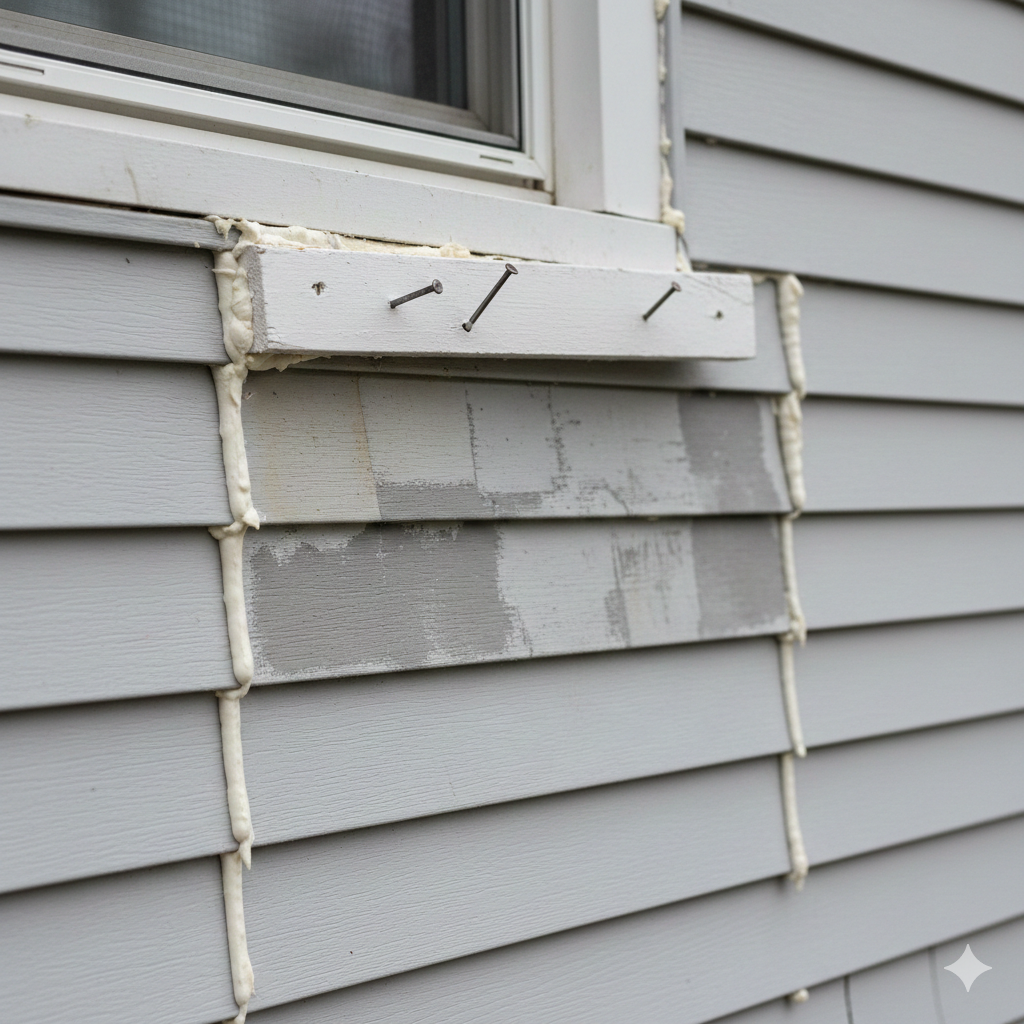
At LCM Services LLC, we frequently see:
- Replacing siding without addressing framing issues
- Assuming new materials eliminate old problems
- Ignoring subtle movement or noise
- Relying on caulking as a permanent solution
These mistakes lead to repeat repairs.
Why Cosmetic Fixes Don’t Work
Painting, caulking, or patching:
- Doesn’t stop framing movement
- Doesn’t redirect moisture
- Often traps water inside walls
True solutions must account for structural behavior, not just surface appearance.
Ignoring the Framing Factor
| Scenario | Long-Term Outcome |
| Siding-only replacement | Repeated failures |
| Patch repairs | Escalating costs |
| Framing-aware exterior repair | Long-term stability |
| Delayed correction | Structural damage |
Understanding framing saves money over time.
How Professionals Adapt Modern Systems to Old Framing
At LCM Services LLC, our approach includes:
- Evaluating framing movement patterns
- Reinforcing attachment points
- Improving drainage paths
- Allowing controlled expansion
- Using compatible fastening methods
This adaptation is critical in older Waterbury homes.
Dedicated GEO Section: Nearby Areas with Similar Issues
We see the same framing-related exterior problems in:
- Watertown
- Wolcott
- Naugatuck
- Middlebury
- Cheshire
Homes built during similar eras face identical challenges.
Prevention Tips for Waterbury Homeowners
- Inspect siding movement seasonally
- Watch trim joints closely
- Address moisture early
- Avoid cosmetic-only fixes
- Hire professionals familiar with older homes
Early awareness prevents major repairs.
When to Call a Professional in Waterbury, CT
Call a professional if:
- Exterior repairs keep failing
- Siding shifts or loosens repeatedly
- Moisture appears without clear leaks
- Renovations didn’t solve old issues
LCM Services LLC specializes in bridging the gap between old framing and modern exterior systems.
Why Choose LCM Services LLC in Waterbury
We understand:
- Historic framing methods
- Local housing patterns
- Modern material behavior
- Waterbury’s climate impact
Our repairs are designed for:
- Long-term performance
- Structural compatibility
- Moisture control
- Real-world conditions
We don’t force modern systems onto old homes—we make them work together.
Final Thoughts
Waterbury’s older framing methods aren’t flawed—they were simply built for a different era. Problems arise when modern exterior systems are installed without accounting for how these homes move, breathe, and handle moisture.
Understanding this relationship is the key to preventing repeated failures, protecting your investment, and keeping your home structurally sound for decades to come.
FAQs
Yes, movement and moisture behavior conflict with modern materials.
No, siding alone doesn’t address structural movement.
Because framing movement continues over time..
Yes, especially pre-1970 construction.
Yes, older materials absorb and transfer moisture more easily.