
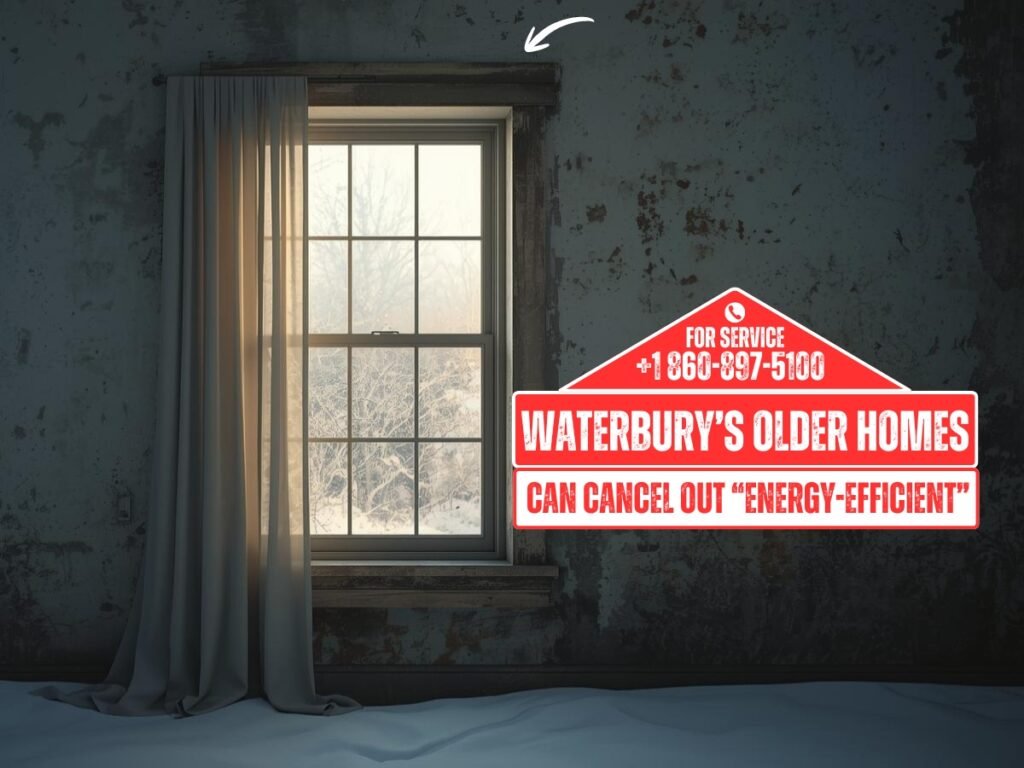
Homeowners in Waterbury often invest thousands of dollars in energy-efficient window replacements, expecting lower heating bills, warmer rooms, and improved comfort.
But after installation, many are left confused.
The windows are new.
The glass is labeled “energy efficient.”
Yet the home still feels cold in winter — and cooling costs barely improve in summer.
At LCM Services LLC, this situation comes up frequently, especially in older Waterbury homes. The truth is uncomfortable but important:
Even the best energy-efficient windows can fail to perform when installed into older homes without addressing deeper structural issues.
This article explains why older Waterbury homes can cancel out energy-efficient window upgrades, what homeowners often overlook, and how to plan window replacements the right way.
Why Energy-Efficient Windows Don’t Work Alone
Energy-efficient windows are designed to reduce:
- Heat transfer through glass
- Air leakage at the sash
- UV penetration
However, they are only one part of the home’s energy system.
If the surrounding structure leaks air, lacks insulation, or shifts seasonally, the window becomes a weak point — no matter how advanced the glass is.
The Reality of Waterbury’s Older Housing Stock
Many homes in Waterbury were built:
- Before modern insulation codes
- Without air barriers
- Using framing methods no longer used today
Common characteristics include:
- Balloon framing
- Minimal or no wall insulation
- Settled materials
- Hidden air pathways
These homes were never designed to be airtight.
Older Walls Move Air — Even When Windows Don’t
One of the biggest misconceptions is that drafts always come through windows.
In older homes, air often:
- Enters through basements or attics
- Travels inside wall cavities
- Escapes around window openings
So even when a window is perfectly sealed, cold air can still emerge near it — making it feel like the window is failing.
In reality, the wall system is bypassing the window entirely.
Why Energy Ratings Don’t Reflect Real-World Performance
Energy ratings assume:
- Proper installation
- Adequate insulation
- Continuous air barriers
Older Waterbury homes rarely meet these conditions.
This creates a performance gap between:
- What the window should do
- What it actually does once installed
Homeowners then assume the product failed — when the structure did.
Air Leakage Around the Window Opening
When old windows are removed, installers often expose:
- Gaps between framing members
- Crumbling insulation
- Uneven rough openings
If these areas aren’t sealed and insulated properly, the new window is surrounded by air leaks.
This completely undermines its efficiency.
At LCM Services LLC, window replacement planning includes inspecting and correcting these hidden issues — not just installing a new unit.
Thermal Bridging in Older Construction
Older homes often contain:
- Solid wood framing
- Uninsulated headers
- Metal fasteners without thermal breaks
These materials conduct cold directly into the home.
Even energy-efficient glass can’t stop heat loss caused by thermal bridging in the surrounding structure.
The Problem With “Insert” Window Replacements
Insert replacements are popular because they’re fast and less invasive.
But in older Waterbury homes, they often:
- Leave original frames untouched
- Trap existing air leaks
- Reduce insulation opportunities
This means energy loss continues — just hidden behind new trim.
Insulation That No Longer Works
Many older homes technically have insulation — but it’s no longer effective.
Over time:
- Insulation settles
- Gaps form
- Moisture reduces performance
Replacing windows without upgrading insulation is like installing a new door on a broken wall.
Pressure Imbalances Make Drafts Worse
Older homes are more affected by:
- Stack effect
- Wind pressure
- Seasonal temperature swings
These forces push cold air toward window openings, even when the windows are airtight.
This is why draft issues often feel worse during:
- High winds
- Extreme cold snaps
- Temperature changes
Why Utility Bills Don’t Drop After Replacement
Homeowners often expect immediate savings.
But when:
- Walls leak air
- Insulation is weak
- Sealing is incomplete
Energy loss continues elsewhere — canceling out the window upgrade.
The result: disappointment and confusion.
The Missing Step: Whole-Opening Evaluation
Energy-efficient windows should never be installed in isolation.
Proper replacement in older Waterbury homes should include:
- Air-sealing wall cavities
- Insulating rough openings
- Addressing framing gaps
- Evaluating how the home moves air
This is where experience with older homes matters.
How Professional Planning Makes the Difference
At LCM Services LLC, energy-efficient window replacement isn’t treated as a cosmetic upgrade.
Each project considers:
- The age of the home
- Wall construction
- Existing insulation
- Seasonal performance challenges
This approach ensures new windows actually deliver the comfort and efficiency homeowners expect.
Signs Your Home Is Canceling Out Your New Windows
| Symptom | Likely Cause |
| Cold air near windows | Wall cavity air leaks |
| Condensation on frames | Thermal bridging |
| No energy savings | Insulation failure |
| Uneven room temperatures | Pressure imbalance |
| Drafts only in winter | Stack effect |
These issues point to structural problems — not defective windows.
Why Fixing the Structure Matters Long-Term
Ignoring these issues leads to:
- Ongoing comfort problems
- Higher energy costs
- Moisture damage
- Shortened window lifespan
Addressing them during replacement saves money over time.
Final Thoughts
Energy-efficient windows are powerful — but only when paired with a home that supports them.
In older Waterbury homes, hidden structural issues often cancel out even the best window upgrades.
Understanding this helps homeowners:
- Set realistic expectations
- Choose the right replacement approach
- Get real performance from their investment
FAQs
Yes — but only when installation addresses air sealing and insulation.
Cold air often comes from wall cavities, not the window itself.
Absolutely. Insulation is critical to comfort and efficiency.
Often yes, because it allows access to sealing and insulation.
Persistent drafts, condensation, and uneven temperatures are warning signs.