
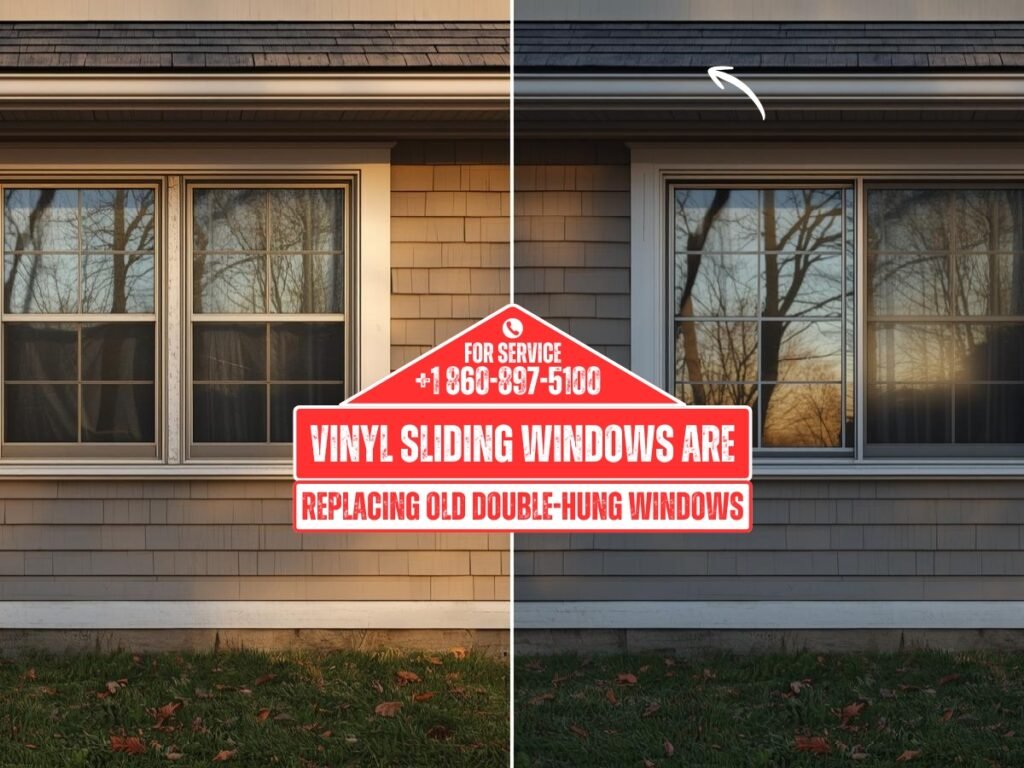
Homeowners across Connecticut are making a change—often without announcing it, posting about it, or even realizing it’s a trend. While double-hung windows have long been the default choice in older New England homes, vinyl sliding windows are quietly taking their place 🪟.
This shift isn’t about style alone. It’s about performance, durability, energy efficiency, and practicality—especially in a state where homes endure freezing winters, humid summers, and constant freeze–thaw cycles. Many homeowners don’t notice the switch happening until they walk into a newly renovated home and feel the difference.
So why is this happening now? And why are vinyl sliding windows becoming the preferred solution for Connecticut homes?
Let’s break it down.
The Legacy of Double-Hung Windows in Connecticut Homes
Double-hung windows have deep roots in Connecticut architecture. Found in Colonials, Capes, Victorians, and mid-century homes, they became popular because they were:
- Easy to manufacture
- Familiar to installers
- Compatible with traditional home designs
But many of those windows were installed decades ago. And while the style remains classic, the functionality hasn’t aged as well.
Over time, homeowners begin to notice:
- Drafts even when windows are closed
- Difficulty opening or keeping sashes in place
- Condensation buildup between panes
- Higher heating and cooling costs
What once felt “normal” starts to feel inefficient.
Why Connecticut’s Climate Exposes Window Weaknesses
Connecticut homes experience extreme seasonal stress. A window that performs well in mild climates often struggles here.
Seasonal Challenges Include:
- Freezing winters that cause frames to expand and contract
- Humid summers that affect seals and materials
- Heavy rain and wind-driven moisture
- Snow accumulation and ice dam runoff
Double-hung windows rely on multiple moving parts, balance systems, and vertical tracks. Over time, these components loosen, warp, or fail—allowing air and moisture to creep in.
Vinyl sliding windows, on the other hand, are built to handle these stressors more efficiently.
What Makes Vinyl Sliding Windows Different?
Vinyl sliding windows operate horizontally instead of vertically. That single design difference creates multiple advantages.
Key Structural Differences:
| Feature | Double-Hung Windows | Vinyl Sliding Windows |
| Movement | Vertical (up/down) | Horizontal (side-to-side) |
| Moving Parts | Multiple balances & sashes | Fewer mechanical components |
| Seal Type | Gravity-dependent | Compression sealing |
| Frame Material | Often wood/aluminum | Insulated vinyl |
| Maintenance | Higher | Lower |
Less complexity means fewer failure points—a big deal in older Connecticut homes.
Energy Efficiency Is Driving the Shift
Energy bills are one of the biggest motivators behind window replacement decisions.
Why Sliding Windows Perform Better:
- Compression seals close tighter than gravity-based seals
- Vinyl frames resist heat transfer better than wood or aluminum
- Wider glass areas allow more natural light
- Modern low-E glass options reduce heat loss
Many homeowners don’t realize their old double-hung windows are constantly leaking air, even when locked.
Sliding windows provide a tighter seal—helping homes stay warmer in winter and cooler in summer.
Older Homes Need Simpler, Stronger Solutions
Connecticut has no shortage of aging homes. Many were built long before modern energy codes existed.
In these homes:
- Window openings may no longer be perfectly square
- Structural settling affects sash alignment
- Wood frames absorb moisture over time
Double-hung windows struggle in these conditions. Vinyl sliding windows are more forgiving because:
- They rely on track systems instead of gravity
- Vinyl resists moisture, rot, and insects
- Frames remain stable through temperature changes
This makes them especially appealing for renovation and retrofit projects.
Maintenance: The Silent Deciding Factor
Homeowners don’t always think about maintenance when choosing windows—but they feel it later.
Common Double-Hung Issues:
- Broken sash cords
- Windows that won’t stay open
- Peeling paint or rotting wood
- Difficult cleaning on upper floors
Vinyl sliding windows simplify life:
- No painting required
- Easy-to-remove sashes for cleaning
- Fewer mechanical repairs
- Smooth operation year after year
For busy homeowners or rental properties, this matters—a lot.
Noise Reduction and Comfort Improvements
Connecticut neighborhoods often deal with:
- Traffic noise
- Construction sounds
- Seasonal storms and wind
Vinyl sliding windows typically offer larger uninterrupted glass panes and stronger sealing, which helps reduce sound transmission.
Many homeowners report:
- Quieter rooms
- More consistent indoor temperatures
- Fewer cold spots near windows
These comfort improvements often surprise people after installation 😊.
Why This Change Is Happening “Quietly”
Unlike kitchen remodels or bathroom upgrades, window changes aren’t flashy. They don’t demand attention—but they deliver results.
Homeowners often:
- Replace windows one section at a time
- Choose sliding windows based on contractor recommendations
- Realize the benefits only after living with them
Once experienced, the preference sticks. That’s why vinyl sliding windows are replacing double-hung windows without much noise—but with lasting impact.
Where Vinyl Sliding Windows Make the Most Sense
While every home is different, sliding windows are especially popular in:
- Living rooms with wide wall openings
- Bedrooms where ease of use matters
- Finished basements
- Additions and remodeled spaces
They also work well in homes where original window proportions no longer align with modern needs.
Design Has Come a Long Way
Older sliding windows had a reputation for being plain. That’s no longer true.
Today’s vinyl sliding windows offer:
- Multiple frame colors
- Slimmer profiles
- Grid options to match traditional styles
- Custom sizing for older homes
This allows homeowners to preserve character while upgrading performance.
A Smarter Long-Term Investment
While initial costs may be similar, vinyl sliding windows often provide:
- Lower lifetime maintenance costs
- Fewer repair calls
- Better energy savings over time
For Connecticut homeowners planning to stay put—or preparing a home for resale—this adds measurable value.
The Bottom Line
Double-hung windows aren’t disappearing—but their dominance is fading.
Vinyl sliding windows are quietly winning over Connecticut homeowners because they:
✔ Handle the climate better
✔ Seal tighter and last longer
✔ Require less maintenance
✔ Improve comfort and efficiency
The change may not be loud—but it’s happening home by home, season by season.
FAQs
Yes. They adapt well to settling structures and provide stronger seals than many older window styles.
In most cases, yes—due to compression seals and insulated vinyl frames.
No. Many models allow easy sash removal, making cleaning simpler than traditional double-hung windows.
Modern options include grids, colors, and slim frames that blend well with classic Connecticut architecture.
Absolutely. With fewer moving parts and weather-resistant materials, they often outlast older window systems.