
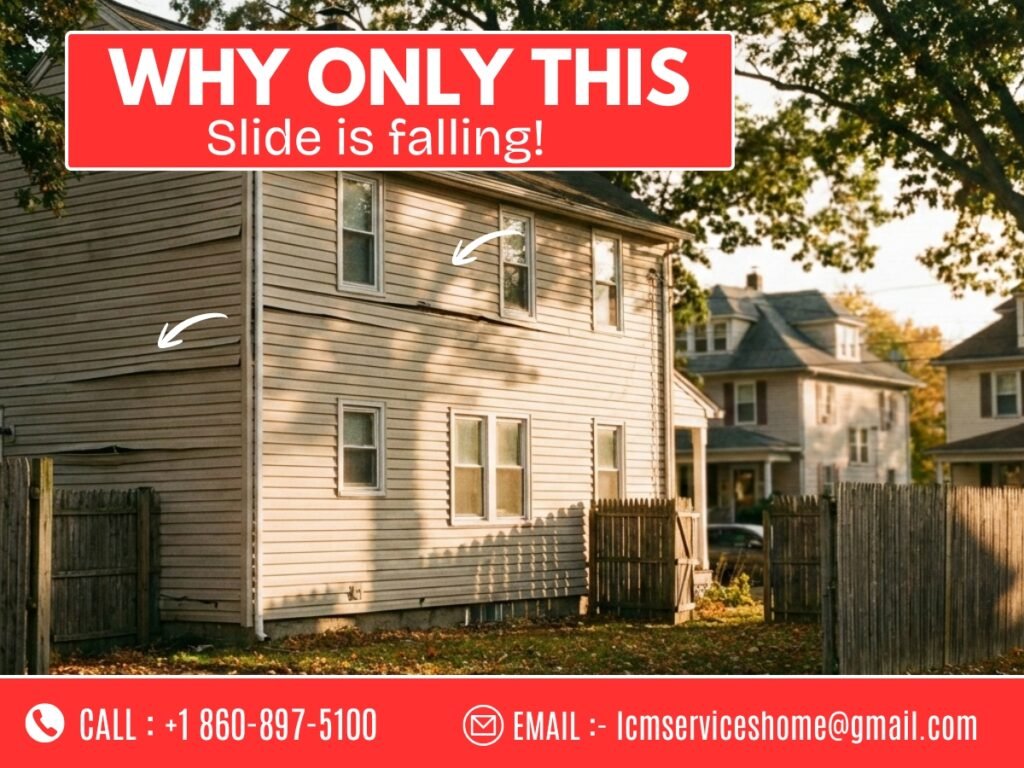
Vinyl siding panels on Waterbury homes usually separate on one side first because that side experiences uneven stress from sun exposure, moisture patterns, wind pressure, and older construction methods. These forces cause subtle movement behind the siding, which slowly pulls panels apart long before homeowners realize structural conditions—not the siding itself—are responsible.
This issue is extremely common in Waterbury, especially on older homes and properties with unique lot layouts or partial shade.
What “Siding Separation” Really Means (And Why It’s Misunderstood)
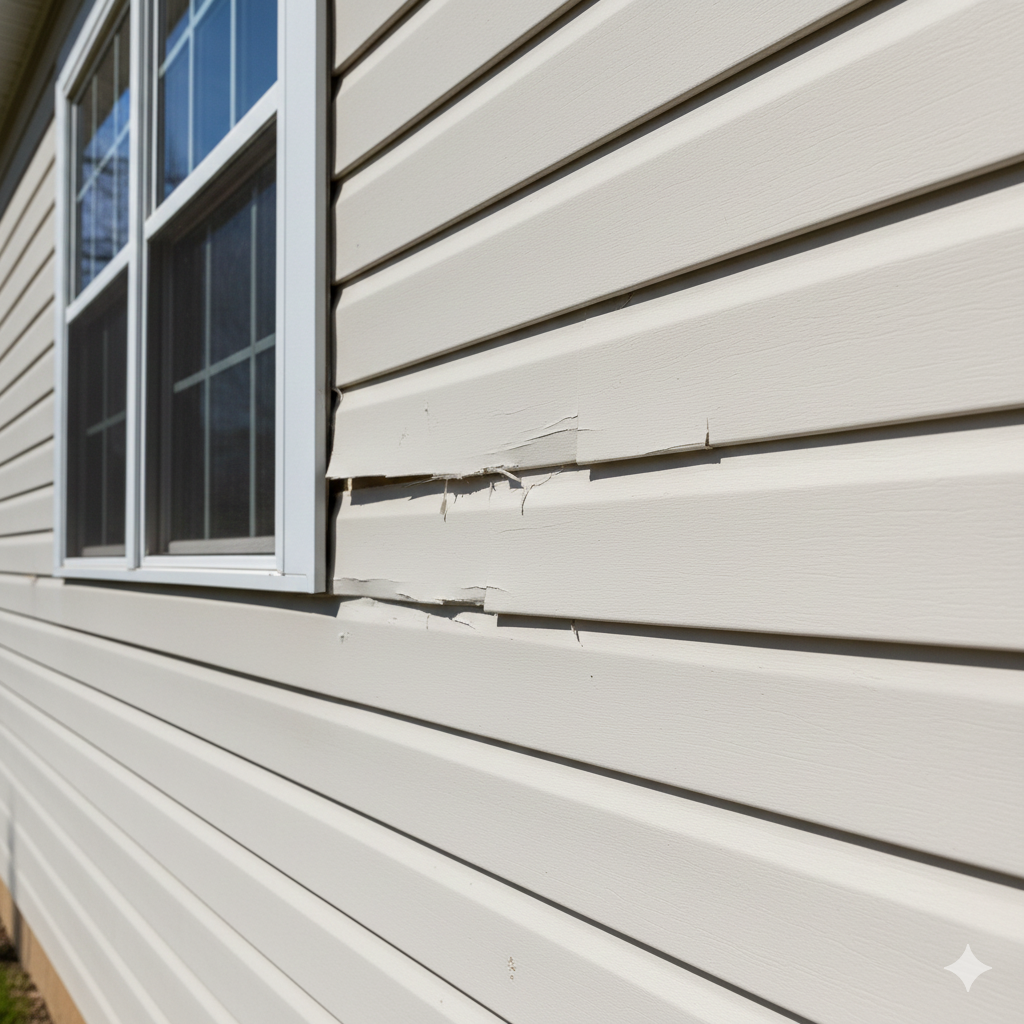
When homeowners notice vinyl siding panels pulling apart, most assume:
- The siding was installed incorrectly
- The material is defective
- Nails are loose
While installation mistakes do happen, true one-side separation is usually a symptom, not the cause.
Vinyl siding is designed to expand, contract, and move slightly. When only one side of a home shows separation, it’s a signal that the structure behind the siding is reacting differently on that side.
Why This Happens So Often in Waterbury Homes
Waterbury homes are uniquely vulnerable due to:
- Older framing methods
- Uneven lots and hillsides
- Dense tree coverage
- Mixed sun and shade exposure
- Freeze-thaw cycles
- Renovations done decades apart
These factors rarely affect all four sides of a home equally.
The #1 Reason: Uneven Sun Exposure by Orientation
South- and West-Facing Walls Take the Most Abuse
In Waterbury, the side of the home facing south or west often experiences:
- Stronger UV exposure
- Greater daily temperature swings
- Faster material expansion and contraction
Vinyl siding expands in heat and contracts in cold. When this happens repeatedly on only one side, panels begin to shift.
What Homeowners Notice First
- Small gaps at panel seams
- Slight buckling near corners
- Panels that “won’t lock” anymore
This is not random—it’s directional.
Moisture Patterns: The Silent Divider
Why One Side Stays Wetter Longer
Waterbury homes often have one side that:
- Receives less sun
- Faces prevailing winds
- Sits closer to neighboring properties
- Has downspouts or runoff nearby
That side stays damp longer after rain.
What Moisture Does Behind Vinyl Siding
Even though vinyl doesn’t absorb water:
- Sheathing swells
- Framing expands
- Fasteners shift
- House wrap deteriorates
Over time, this movement pushes siding panels out of alignment.
Older Framing Methods Create Uneven Wall Movement
Many Waterbury homes were built before vinyl siding even existed.
Older framing often includes:
- Dimensional lumber that expands more
- Inconsistent stud spacing
- Non-engineered headers
- Settling from decades of soil movement
When vinyl siding is added later, it’s attached to walls that move unevenly.
Why Separation Happens on One Side — Not Everywhere
Structural Movement Is Directional
Homes don’t move evenly. They shift based on:
- Soil moisture
- Drainage paths
- Sun exposure
- Load distribution
That’s why one side separates while others look fine.
Wind Pressure and Waterbury’s Local Weather Patterns
Waterbury experiences strong directional winds, especially during storms.
On certain streets:
- Wind repeatedly hits the same wall
- Siding flexes outward
- Locking tabs loosen over time
This is especially common on elevated or corner lots.
The Role of Improper Nailing (But Not How You Think)
Yes, nailing matters—but not always because it’s “wrong.”
Common Situations We See at LCM Services LLC
- Siding nailed correctly for flat walls, but walls later shifted
- Nails placed properly, but framing moved
- Repairs done without accounting for expansion
Vinyl siding needs room to move—but the wall behind it must be stable.
Why Patch Repairs Almost Always Fail
Many homeowners try to:
- Re-snap panels
- Add fasteners
- Replace a few pieces
This works temporarily—but separation returns.
Why?
Because the underlying cause—movement, moisture, or pressure—was never addressed.
At LCM Services LLC, we see repeat repairs fail all the time when siding is treated as the problem instead of the warning sign.
Hidden Damage That Often Exists Behind Separated Panels
When one side of siding separates, we often discover:
- Rotted sheathing
- Mold growth
- Rusted fasteners
- Soft framing
- Compromised insulation
None of this is visible from the street.
Waterbury Neighborhood Factors That Increase Risk
Certain local conditions make separation more likely:
- Homes built into slopes
- Properties near wooded areas
- Tight lot spacing
- Older drainage layouts
- Homes renovated in stages
Two houses on the same street can behave very differently.
How Separation Leads to Bigger Problems Over Time
If ignored, separated siding can cause:
- Water intrusion
- Pest entry
- Insulation loss
- Energy inefficiency
- Interior wall damage
What starts as a cosmetic issue becomes structural.
What Homeowners End Up Paying
| Issue | Typical Cost Range |
| Panel reattachment | Short-term fix |
| Partial siding replacement | $1,500–$4,000 |
| Sheathing repair | $2,500–$7,500 |
| Structural wall repair | $8,000+ |
Early evaluation saves thousands.
Common Homeowner Mistakes
- Assuming siding quality is poor
- Ignoring small gaps
- Replacing panels without inspection
- Hiring installers unfamiliar with older Waterbury homes
- Delaying professional evaluation
These mistakes compound damage.
How Professionals Diagnose the Real Cause
At LCM Services LLC, we never guess.
We evaluate:
- Wall flatness
- Moisture readings
- Framing movement
- Drainage patterns
- Fastener integrity
- Siding expansion clearance
Only then do we recommend repairs.
Prevention Tips for Waterbury Homeowners
- Inspect siding seasonally
- Watch one side more closely
- Keep soil and mulch below siding
- Ensure proper drainage
- Address moisture issues early
- Avoid cosmetic-only fixes
When to Call a Professional in Waterbury, CT
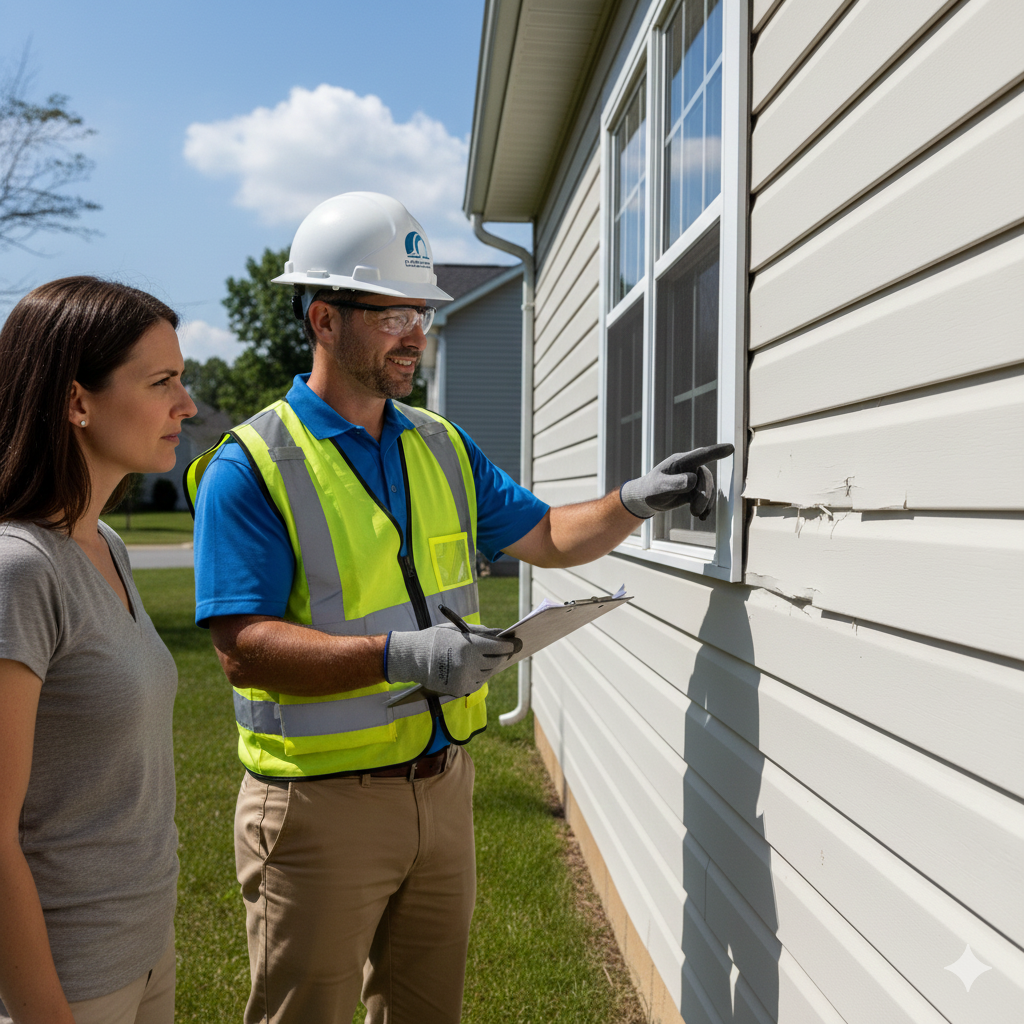
Call a local expert if:
- Separation keeps returning
- One side worsens each year
- Panels won’t stay locked
- You see interior moisture signs
- You’re preparing for resale or inspection
Why Choose LCM Services LLC for Vinyl Siding Issues in Waterbury
At LCM Services LLC, we specialize in understanding Waterbury homes—not just installing materials.
What Makes Us Different:
- Local experience with older construction
- Root-cause diagnostics
- Drainage-aware siding solutions
- Long-term repair strategies
- Honest, practical recommendations
We don’t just fix siding—we fix why it failed.
Final Thoughts
When vinyl siding panels separate on one side of your Waterbury home, it’s not bad luck—and it’s rarely just installation.
It’s your home responding to years of environmental pressure, movement, and moisture.
Ignoring it won’t make it go away. Understanding it—and fixing it correctly—will protect your home for decades.
FAQs
Because sun exposure, moisture, wind pressure, and structural movement affect each side of a home differently.
Not always—many cases are caused by wall movement or moisture issues behind properly installed siding.
Yes, moisture behind siding can cause framing and sheathing to expand, forcing panels out of alignment.
Temporary fixes often fail unless the underlying cause is properly diagnosed and corrected.
A local expert like LCM Services LLC can identify the real cause and provide long-term solutions.