
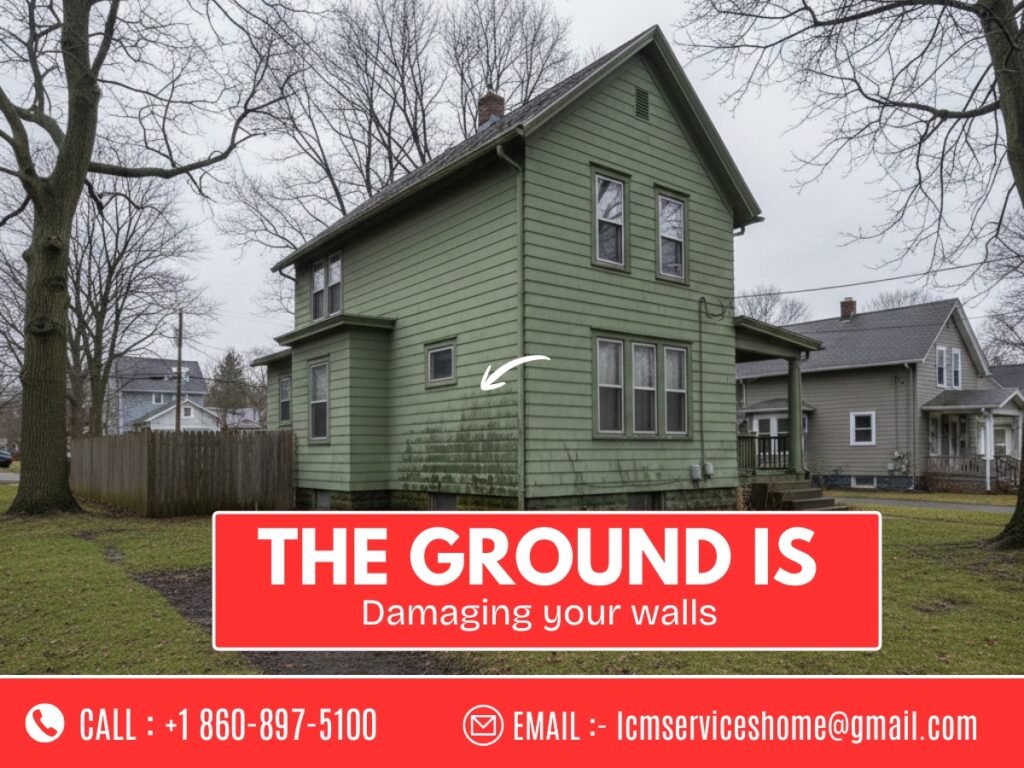
Uneven lot grading causes exterior wall damage in Waterbury homes by directing water toward foundations instead of away from them. Over time, this hidden moisture pressure weakens siding, rots framing, cracks masonry, and leads to interior damage—often long before homeowners realize grading is the real cause.
Most Waterbury homeowners blame siding age, poor materials, or bad weather. In reality, the ground around the home is often doing the damage silently, every time it rains.
What Uneven Lot Grading Actually Means (And Why It’s So Common in Waterbury)
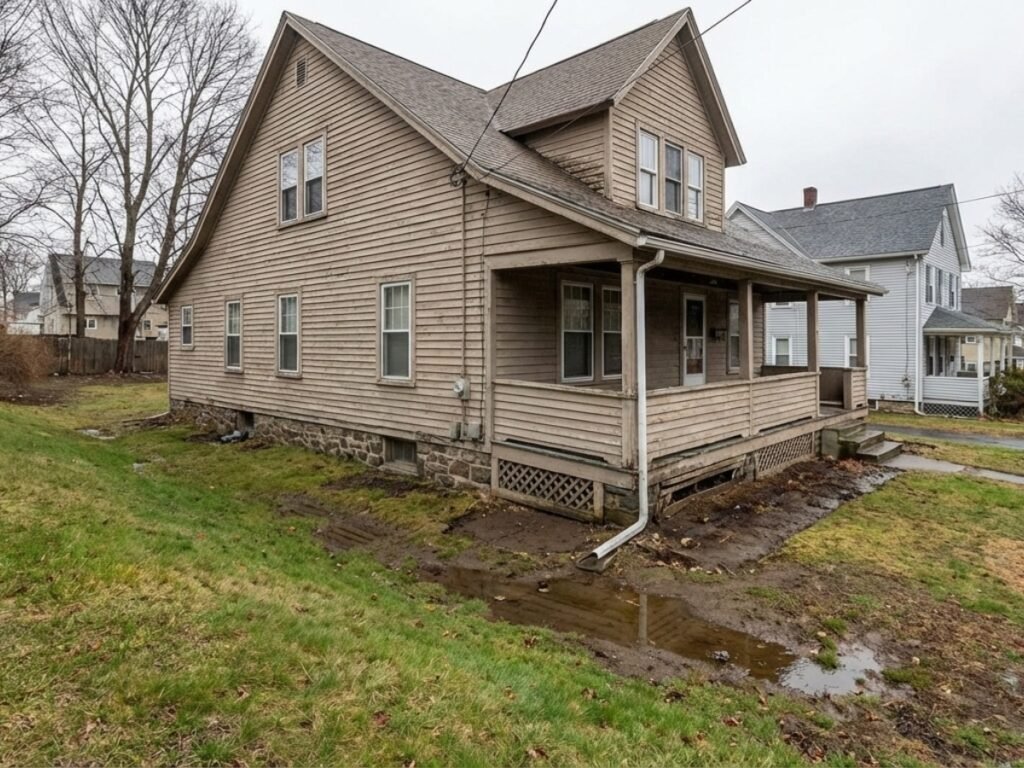
Lot grading refers to how the soil around a home slopes. Proper grading slopes away from the house. Uneven or negative grading slopes toward the structure or creates low spots where water pools.
In Waterbury, uneven grading is extremely common due to:
- Older neighborhoods developed before modern drainage codes
- Hilly terrain and terraced lots
- Settling soil after decades of freeze-thaw cycles
- DIY landscaping that unintentionally traps water
- Utility trenching that disrupts soil compaction
Many Waterbury homes were built when drainage standards focused on foundations—not long-term exterior wall protection.
Why Exterior Walls Suffer First (Not the Basement)
Most homeowners expect grading issues to cause basement leaks. What surprises many Waterbury residents is that exterior walls often fail first.
Here’s why:
- Water splashes repeatedly against siding and masonry
- Saturated soil keeps exterior walls damp for days
- Capillary action pulls moisture upward into wall systems
- Trapped moisture accelerates material breakdown
Exterior walls are designed to shed water—not withstand constant saturation from below.
How Water Moves Against Exterior Walls in Poorly Graded Lots
Step-by-Step Damage Process
- Rainfall hits the yard
- Water flows toward low points near the house
- Soil becomes saturated and holds moisture against walls
- Splashback hits siding, trim, and lower wall sections
- Moisture enters through seams, cracks, or porous materials
- Wall systems stay wet long after rain ends
- Damage compounds over months or years
This process happens quietly—often without visible leaks.
Common Exterior Wall Damage Caused by Uneven Grading in Waterbury
1. Siding Warping and Buckling
Vinyl and wood siding absorb repeated moisture exposure near ground level. In Waterbury, this often shows up as:
- Warped lower panels
- Loose siding courses
- Discoloration or fading near the bottom
- Mold behind siding
2. Masonry and Brick Deterioration
Brick and stone walls suffer from:
- Spalling (surface flaking)
- Mortar joint erosion
- White efflorescence stains
- Cracks caused by freeze-thaw expansion
3. Rotting Sheathing and Framing
Once moisture passes the exterior surface:
- OSB and plywood swell and weaken
- Framing absorbs moisture
- Structural integrity declines silently
This is often discovered only during major repairs or inspections.
Why Waterbury’s Soil Makes the Problem Worse
Waterbury soil tends to be clay-heavy, especially in older residential areas. Clay soil:
- Drains poorly
- Expands when wet
- Holds moisture against walls
- Shrinks when dry, causing movement
This constant expansion and contraction places stress on exterior wall systems year after year.
Real Waterbury Examples Homeowners Miss
As local exterior repair specialists, we frequently see patterns like:
- One side of the home deteriorating faster than others
- Damage concentrated near corners or downspouts
- Repeated siding repairs that never last
- Moisture stains that return after every rainy season
In nearly every case, grading—not materials—is the root cause.
The Connection Between Grading and Foundation Movement
Uneven grading doesn’t just damage walls—it destabilizes foundations.
When soil stays wet:
- Pressure increases against foundation walls
- Micro-movements occur
- Exterior wall attachments loosen
- Cracks open in siding, masonry, and trim
Exterior walls are often the first visible casualty of deeper ground issues.
Why Patch Repairs Fail When Grading Isn’t Fixed
Many Waterbury homeowners replace siding or patch masonry without addressing grading. This leads to:
- Repeated repairs in the same locations
- Shortened lifespan of new materials
- Higher long-term costs
- Frustration with “bad workmanship” that isn’t the real issue
No exterior wall system can outperform bad drainage.
Signs Uneven Grading Is Destroying Your Exterior Walls
Look for these warning signs:
- Damage only on lower portions of walls
- Splash marks or soil stains on siding
- Persistent dampness near exterior base
- Efflorescence on masonry
- Mulch or soil touching siding
- Repaired areas failing again
If multiple signs are present, grading is likely involved.
Why Waterbury Homes Are Especially Vulnerable
Waterbury’s combination of:
- Aging housing stock
- Hilly terrain
- Seasonal freeze-thaw cycles
- Older drainage designs
creates the perfect conditions for grading-related wall damage.
Homes built 40–100 years ago were never designed for modern landscaping, dense soil compaction, or today’s exterior materials.
How Grading Issues Increase Exterior Repair Expenses
| Issue | Typical Cost Impact |
| Repeated siding repairs | 2–3x normal cost |
| Hidden rot repairs | $2,500–$10,000 |
| Masonry restoration | $3,000–$15,000 |
| Structural wall repairs | $8,000+ |
Correcting grading early is almost always cheaper than repeated exterior repairs.
Prevention Tips for Waterbury Homeowners
Simple Steps That Make a Big Difference
- Maintain positive slope away from the house
- Keep soil and mulch 6–8 inches below siding
- Extend downspouts at least 6–10 feet
- Avoid planting water-hungry plants near walls
- Regrade low spots annually
- Inspect exterior walls after heavy rain
Small adjustments prevent major damage.
Common Homeowner Mistakes
- Assuming wall damage is “normal aging”
- Replacing siding without checking drainage
- Overwatering landscaping near the house
- Ignoring soil settling after yard work
- Trusting cosmetic fixes instead of root causes
These mistakes quietly compound damage.
When to Call a Professional in Waterbury, CT
You should call a local exterior specialist if:
- Wall damage keeps returning
- One side of the home deteriorates faster
- Repairs fail within a few years
- You see moisture signs without leaks
- You’re preparing for inspections or resale
Professional evaluation identifies grading issues before structural damage escalates.
Why Choose LCM Services LLC for Exterior Repairs in Waterbury

At LCM Services LLC, we don’t just repair what’s visible—we investigate why damage occurs.
What Sets Us Apart:
- Local Waterbury experience
- Understanding of older home construction
- Drainage-aware exterior repair strategies
- Long-term solutions, not temporary patches
- Honest assessments and preventative guidance
We fix the cause, not just the symptom.
Final Thoughts
Uneven lot grading doesn’t announce itself with dramatic leaks or floods. Instead, it works quietly—softening materials, weakening walls, and shortening the lifespan of your home’s exterior.
By the time damage becomes obvious, repairs are often far more extensive than homeowners expect.
Addressing grading early protects not just your exterior walls—but your entire home.
FAQs
Uneven lot grading occurs when soil slopes toward the house instead of away, allowing water to collect against exterior walls.
Yes, water can repeatedly soak exterior walls and siding without ever entering the basement.
Older construction methods, settling soil, and outdated drainage designs make uneven grading widespread in Waterbury.
Recurring lower-wall damage, moisture stains, and repairs that keep failing are strong indicators of grading issues.
A local exterior specialist like LCM Services LLC can identify grading problems and repair damage correctly.