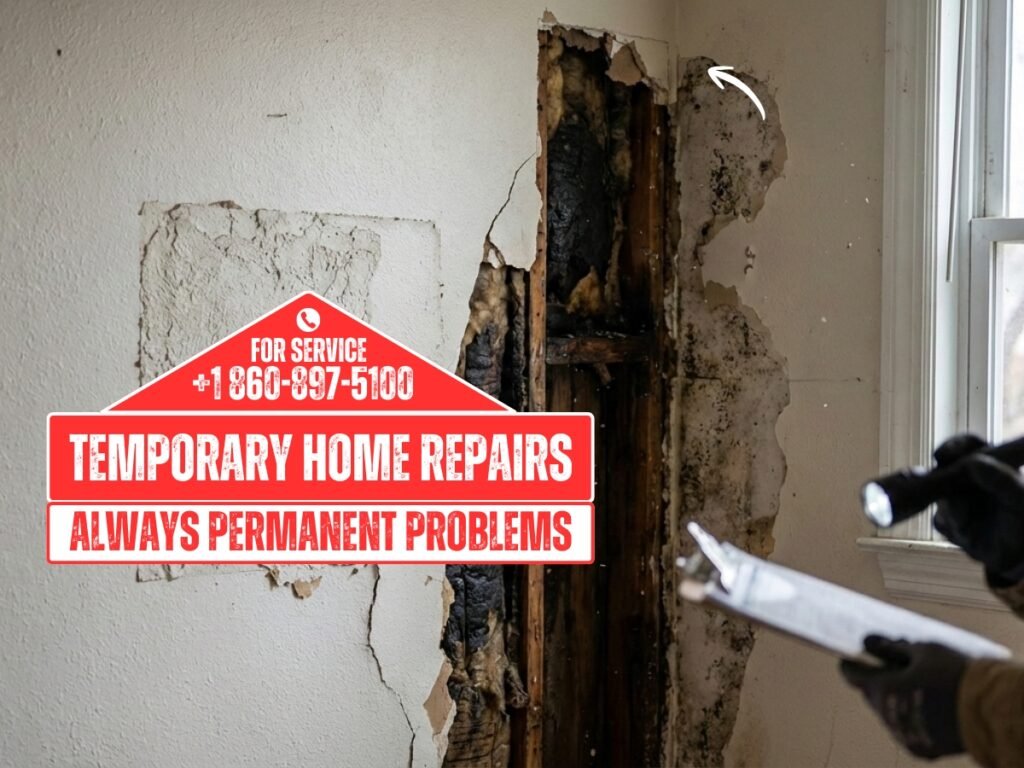
Every homeowner has done it at least once.
A quick patch.
A short-term fix.
A repair meant to “get through the season.”
The intention is harmless—but the outcome rarely is.
At LCM Services LLC, we often hear homeowners say:
“This was supposed to be temporary.”
Yet years later, that temporary fix has become a permanent problem—one that’s more expensive, more invasive, and more frustrating than the original issue ever was.
This blog explains why temporary home repairs almost always fail, how they quietly escalate damage, and why addressing problems correctly the first time saves homeowners far more money in the long run.
Why Temporary Repairs Feel So Appealing
Temporary repairs feel smart in the moment because they:
- Cost less upfront
- Take less time
- Seem to solve the visible issue
- Offer immediate relief
They provide psychological comfort, even when they don’t provide real protection.
But homes don’t operate on intentions—they operate on physics, moisture, and time.
The Core Problem With Temporary Repairs
Temporary fixes usually address:
- Symptoms
❌ Not causes
They cover what you can see while ignoring what’s happening underneath.
Examples:
- Painting over water stains
- Caulking without sealing entry points
- Patching drywall without fixing leaks
- Shimming instead of repairing structure
These repairs don’t stop damage—they delay discovery.
How Temporary Repairs Quietly Make Problems Worse
1. They Trap Damage Where You Can’t See It
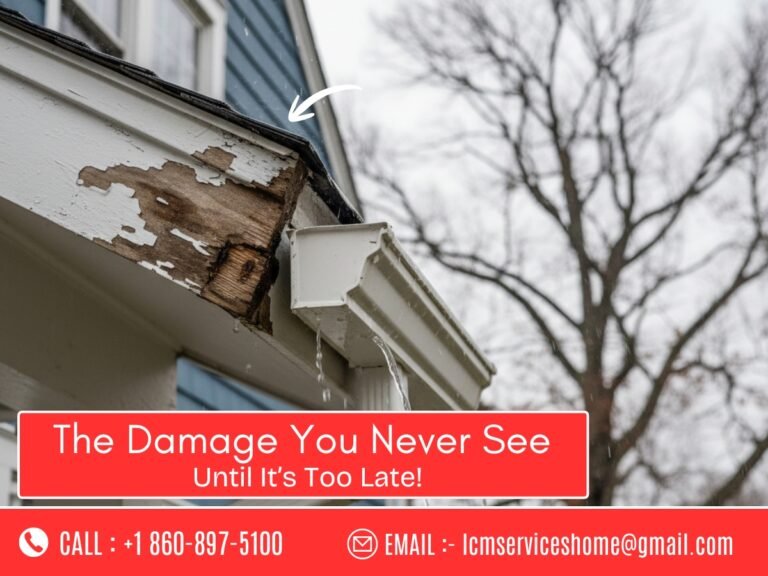
When a surface is patched, the underlying issue keeps working.
Moisture continues to:
- Spread through framing
- Soak insulation
- Weaken materials
- Encourage mold growth
By the time the repair fails, damage has multiplied.
2. They Change How Damage Travels
Temporary fixes often redirect problems instead of stopping them.
Water, air, and pressure find new paths—sometimes into:
- Adjacent rooms
- Lower levels
- Structural systems
🔍 At LCM Services LLC, we often find damage far from the original repair site.
3. They Create a False Sense of Security
Once something “looks fixed,” homeowners stop monitoring it.
That false confidence allows:
- Longer exposure
- Greater deterioration
- Larger repair scopes later
Temporary fixes delay urgency—until urgency becomes unavoidable.
Common Temporary Repairs That Become Permanent Problems
Roof Patches
A tar patch or quick shingle fix may hold briefly—but storms exploit weaknesses.
🧱 Result:
- Wet decking
- Insulation damage
- Interior ceiling repairs
Caulking Over Gaps
Caulk dries, shrinks, and cracks.
Without correcting:
- Flashing
- Framing gaps
- Drainage
Water simply returns.
Painting Over Moisture Stains
Paint hides evidence—not damage.
Moisture continues behind walls, often leading to:
- Mold
- Rot
- Odor issues
DIY Plumbing Fixes
Temporary fittings or sealants often fail under pressure.
What starts as a drip becomes:
- Wall demolition
- Subfloor damage
- Structural repair
Flooring Cover-Ups
Installing new flooring over uneven or damaged subfloors only delays collapse.
Why Temporary Repairs Cost More Over Time
The Cost Compounding Effect
Temporary repairs:
- Increase repair scope
- Increase labor hours
- Increase material replacement
- Increase secondary damage
💸 What could’ve been a targeted fix becomes a multi-system repair.
Insurance and Inspection Issues
Temporary repairs can:
- Complicate insurance claims
- Fail inspections
- Raise red flags during resale
Buyers and inspectors notice patched work—and question everything else.
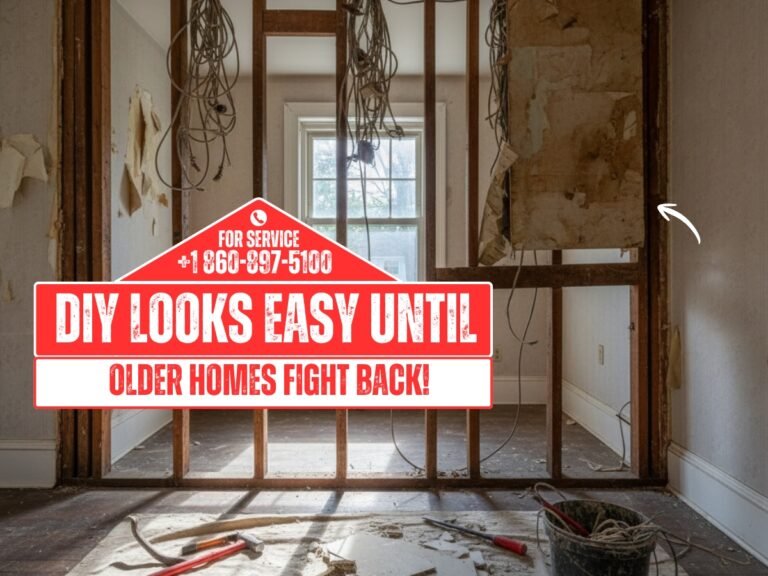
Why Older Homes Are Especially Vulnerable
Older homes already face:
- Aging materials
- Previous patchwork
- Outdated methods
- Multiple repair layers
Temporary fixes stack on top of past shortcuts, creating fragile systems.
Connecticut’s weather only accelerates this process.
Why Homeowners Don’t Realize the Risk
Temporary repairs don’t fail loudly.
They fail:
- Slowly
- Quietly
- Invisibly
By the time signs appear, damage has already spread.
The Professional Difference: Fixing Root Causes
At LCM Services LLC, we approach repairs differently.
Our process focuses on:
✔ Identifying the source
✔ Understanding damage pathways
✔ Correcting structural or moisture causes
✔ Preventing recurrence
We don’t patch symptoms—we fix systems.
When Temporary Repairs Make Sense (Rarely)
Temporary solutions are appropriate only when:
- Used to stabilize until proper repair
- Clearly documented
- Time-limited
- Followed by professional correction
Without follow-up, they become liabilities.
How to Tell If a “Temporary” Repair Is Failing
Watch for:
- Recurring stains
- Musty odors
- Warping materials
- Soft surfaces
- Repeated fixes in the same area
These are warning signs—not inconveniences.
The Long-Term Value of Doing It Right Once
Professional repairs:
- Protect home value
- Reduce repeat costs
- Improve energy efficiency
- Prevent hidden damage
In most cases, the most expensive repair is the one done twice.
Final Thoughts
Temporary home repairs feel like solutions—but they’re usually delays with interest.
Homes remember shortcuts.
And eventually, they collect.
If you want repairs that don’t come back to haunt you, fixing the root cause—not the surface—is the only strategy that truly works. LCM Services LLC helps homeowners replace temporary fixes with permanent solutions that protect their homes and their finances.
Because they treat visible symptoms instead of fixing the underlying cause of the problem.
Only as short-term stabilization before a permanent professional repair is completed.
Yes. They often trap moisture and structural issues behind walls and surfaces.
Absolutely. Patchwork repairs are common inspection red flags during resale.
LCM Services LLC identifies root causes and delivers permanent solutions—not surface-level patches.