
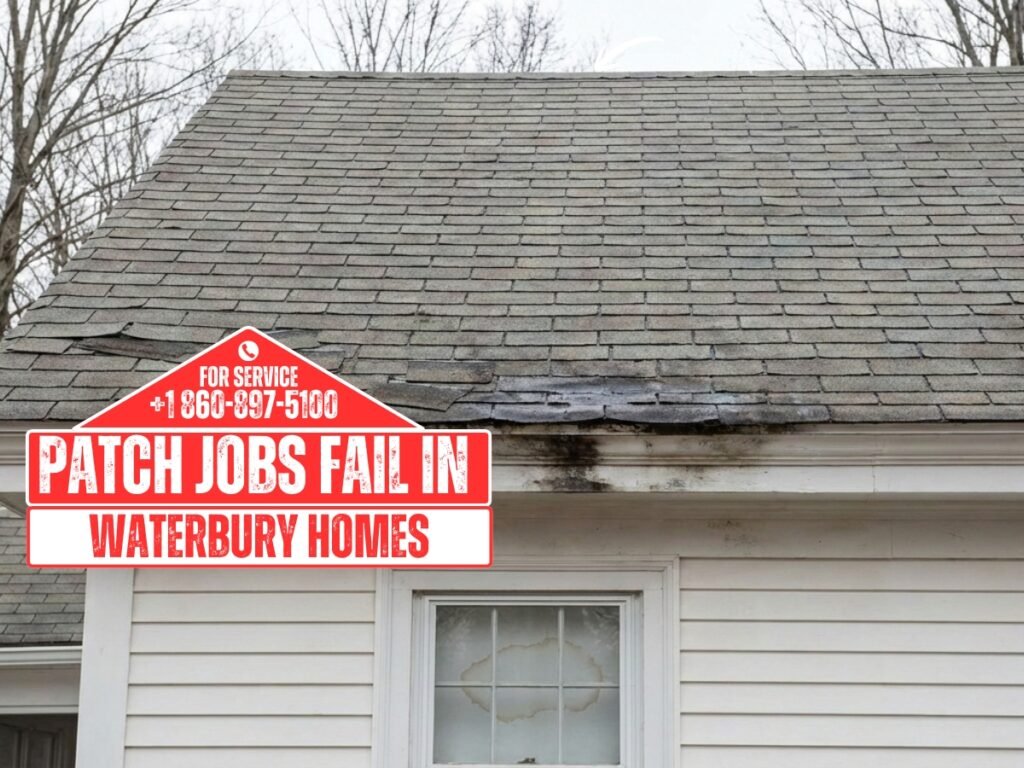
A roof leak appears.
A contractor patches a spot.
The problem seems solved.
Until the next storm.
For homeowners across Waterbury, CT, especially in established neighborhoods near Atwood Ave, this cycle is frustratingly common. A patch job feels like the logical fix — fast, affordable, and minimally invasive. But months later, the stain returns, the attic smells damp again, or a new leak appears somewhere else.
This isn’t bad luck.
It’s a misdiagnosis problem.
Without proper roof leak detection, most patch jobs in Waterbury homes are fixing symptoms — not causes. And in a climate defined by freeze-thaw cycles, heavy rain, and aging housing stock, that mistake almost always leads to repeat failures.
At LCM Services LLC, we see it every season: roofs that have been patched multiple times, yet still leak. The reason is rarely the patch itself — it’s what was never found.
The False Sense of Security Patch Jobs Create
Patch repairs are appealing because they feel decisive. Something was done. The visible damage is covered. The ceiling dries out.
But roofing systems are layered and interconnected. Water doesn’t respect straight lines, and it doesn’t stop at the first opening it finds.
A patch can temporarily block one visible entry point, while water continues to enter through another, unseen area nearby — or even several feet away.
In Waterbury homes, this false sense of security is especially dangerous because seasonal changes can hide leaks for months before they reappear.
Why Roof Leaks Rarely Start Where You Think They Do
One of the biggest misconceptions homeowners have is assuming the leak is directly above the stain or drip.
In reality, water often:
- Enters through flashing
- Travels along roof decking
- Moves across rafters
- Pools in insulation
- Finally appears far from its source
This is why patching the “obvious” area often fails.
Commonly Misidentified Leak Sources
- Chimney flashing
- Roof valleys
- Vent pipe boots
- Skylight edges
- Ice dam–affected roof lines
Without professional leak detection, patching becomes educated guesswork — and guesswork is expensive over time.
The Waterbury Factor: Why Local Homes Are More Vulnerable
Roof patch failures happen everywhere, but Waterbury homes face unique challenges.
Local Conditions That Complicate Roof Leaks
Freeze-thaw cycles expand tiny gaps repeatedly
Wind-driven rain enters at unconventional angles
Older homes with layered roof repairs
Seasonal temperature swings stressing sealants
Many homes near Atwood Ave were built decades ago, often with materials and flashing systems no longer standard today. Over the years, roofs may have been repaired multiple times without fully addressing underlying vulnerabilities.
Each patch adds another layer — and another opportunity for water to find a new path.
Patch Jobs vs. Roof Leak Detection: What’s the Difference?
Homeowners often assume patching is part of leak detection.
It isn’t.
| Patch Job | Roof Leak Detection |
| Fixes visible damage | Identifies moisture pathways |
| Reactive | Diagnostic |
| Often surface-level | Examines hidden layers |
| Short-term solution | Long-term prevention |
Patch jobs answer the question:
“Where is water showing up?”
Leak detection answers the real question:
“Where is water actually getting in?”
Why Patch Repairs Fail After the First Heavy Rain
A patch might survive light rain — but fail during storms.
Why?
Because heavy rain exposes:
- Secondary leak points
- Wind-driven intrusion paths
- Saturated materials that were already compromised
In Waterbury, many homeowners report leaks that only appear during heavy or prolonged rainfall. That’s a red flag indicating that the original leak source was never properly identified.
At LCM Services LLC, we often find that the patched area wasn’t leaking at all — it was simply where water finally surfaced.
The Hidden Damage Patch Jobs Don’t Address
Even when a patch temporarily stops visible leaking, damage may already be spreading.
Common Hidden Issues Include
- Wet insulation losing effectiveness
- Slow wood rot in roof decking
- Mold growth in enclosed attic spaces
- Corroded fasteners and nails
Patches don’t dry materials.
They don’t reverse damage.
They don’t stop moisture already trapped inside.
Without leak detection, these issues remain undetected until they become structural problems.
Why Repeated Patch Jobs Cost More Over Time
Patch repairs feel affordable — until they aren’t.
Multiple small repairs often add up to more than one properly diagnosed fix.
The Real Cost of Patch-Only Repairs
- Repeated labor costs
- Interior ceiling repairs
- Mold remediation
- Insulation replacement
- Escalation into full roof replacement
Early leak detection reduces repeat work and protects the roof system as a whole.
Older Waterbury Homes: A Perfect Storm for Patch Failure
Older homes are particularly vulnerable to patch failure because:
- Roof lines have settled unevenly
- Flashing may no longer align properly
- Previous repairs altered drainage patterns
- Original materials interact poorly with newer ones
In these homes, leaks are rarely isolated incidents. They’re system issues.
Patch jobs treat leaks as isolated problems — which is why they fail so often in older Waterbury properties.
How Professional Roof Leak Detection Changes the Outcome
Proper leak detection changes everything.
Instead of asking where to patch, professionals ask:
- How is water entering?
- Where does it travel?
- What materials are affected?
- Is the leak active or residual?
This approach allows repairs to be targeted, permanent, and preventative.
At LCM Services LLC, roof leak detection is designed to stop the cycle of repeat repairs — not continue it.
When a Patch Job Is Actually Appropriate
To be clear, patch jobs aren’t always wrong.
They work when:
- The leak source is clearly identified
- Damage is localized
- The roof system is otherwise healthy
But without detection, it’s impossible to know whether those conditions exist.
Patch first, diagnose later — and the problem usually returns.
Signs Your Patch Job Failed Because Detection Was Skipped
⚠️ Watch for these warning signs:
- Stains returning after rainfall
- New leaks appearing elsewhere
- Musty attic odors
- Peeling paint or bubbling drywall
- Leaks that only occur in certain weather
These indicate unresolved moisture intrusion.
Why Waterbury Homeowners Choose Detection First
Homeowners who prioritize leak detection:
- Spend less over time
- Avoid repeated interior repairs
- Preserve roof lifespan
- Prevent mold and structural damage
Detection turns roofing from reaction into prevention.
That’s the difference.
Final Thoughts
Patch jobs fail not because they’re poorly done — but because they’re done without understanding the problem.
In Waterbury homes, where climate, age, and construction style complicate roof systems, guessing is never enough.
Roof leak detection reveals the truth before repairs begin — and that truth is what keeps leaks from coming back.
If a patch didn’t hold, it’s not bad luck.
It’s incomplete information.
FAQs
Only if the true leak source is identified first through proper detection.
Because water often enters from a different area than where it appears inside.
Not inherently, but repeated patches without diagnosis can weaken roofing systems.
It’s usually far less costly than repeated repairs and interior damage.
Yes — accurate detection ensures repairs are effective and long-lasting.