
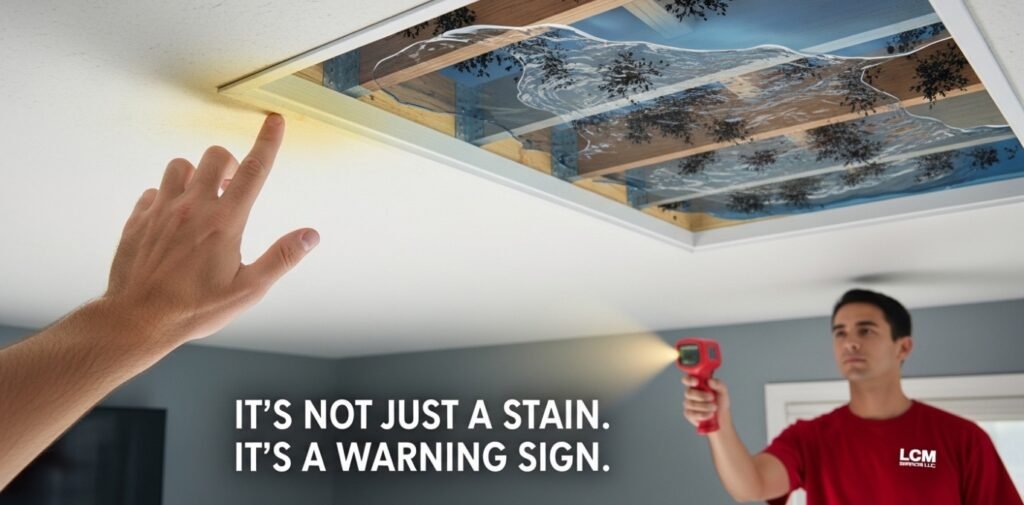
Most serious home damage in Waterbury, CT doesn’t start with a dramatic collapse, flooding, or obvious failure.
It starts quietly.
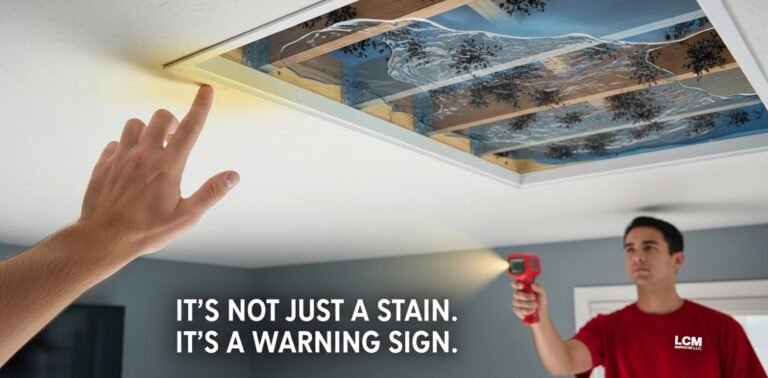
A faint stain on the ceiling.
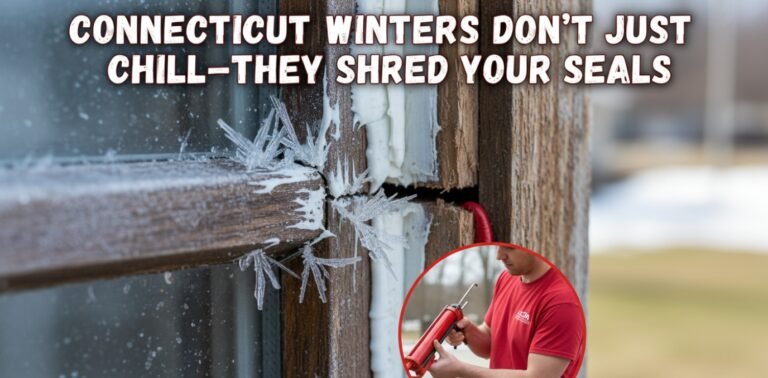
A small crack near a window.
A musty smell that comes and goes.
These subtle signs are easy to ignore—until repairs suddenly become expensive, disruptive, and unavoidable.
At LCM Services LLC, we regularly help Waterbury homeowners who tell us the same thing:
“We noticed something was off, but we didn’t think it was serious.”
This blog reveals the quiet warning signs many homeowners overlook, why they’re especially common in Waterbury homes, and how early action can prevent major damage.
Why Quiet Warning Signs Are So Dangerous
Big problems almost never appear overnight. They grow slowly, hidden behind walls, under floors, and inside structural systems.
Quiet warning signs are dangerous because they:
- Feel harmless at first
- Don’t disrupt daily life
- Are easy to explain away
- Often disappear temporarily
But beneath the surface, damage continues to spread.
Why Waterbury Homes Are Prone to Hidden Problems
Waterbury has a large number of older homes, many built long before modern construction standards.
Local Factors That Contribute:
✔️ Aging plumbing and electrical systems
✔️ Older building materials
✔️ Connecticut’s freeze–thaw cycles
✔️ Seasonal humidity and heavy rainfall
✔️ Past renovations focused on appearance
These conditions allow small issues to turn into major failures quietly.
Warning Sign #1: Small Water Stains
A faint ceiling stain or wall discoloration is one of the most ignored signs.
Homeowners often assume:
- “It was an old leak.”
- “It dried out.”
- “It hasn’t grown.”
What It Often Means:
- Ongoing moisture intrusion
- Past leak that caused structural damage
- Mold growth behind surfaces
At LCM Services LLC, we often discover that a “tiny stain” is just the visible edge of a much larger issue.
Warning Sign #2: Musty or Damp Odors
Smells matter more than people realize.
A musty smell that:
- Appears after rain
- Comes from basements or bathrooms
- Fades with ventilation
…is often a sign of hidden moisture or mold.
Odors don’t come from nowhere—they come from materials breaking down due to moisture.
Warning Sign #3: Hairline Cracks in Walls or Ceilings
Not all cracks are structural—but some are warnings.
Cracks That Deserve Attention:
- Cracks that grow over time
- Cracks near windows or doors
- Cracks paired with moisture stains
These may indicate:
- Foundation movement
- Moisture-damaged framing
- Structural settling accelerated by water
Warning Sign #4: Doors or Windows That Suddenly Stick
When doors or windows stop opening smoothly, homeowners often blame humidity.
But sticking can signal:
- Frame swelling from moisture
- Structural shifting
- Hidden water damage in walls
Especially in older Waterbury homes, this change is rarely random.
Warning Sign #5: Peeling Paint or Bubbling Surfaces
Paint failure isn’t just cosmetic.
Often Indicates:
- Moisture trapped behind walls
- Poor ventilation
- Leaks from exterior walls or roofs
Fresh paint may hide the issue temporarily, but moisture always returns.
Warning Sign #6: Uneven or Soft Flooring
Floors tell stories homeowners don’t always listen to.
Soft spots, slight slopes, or creaking can mean:
- Subfloor water damage
- Rotting joists
- Long-term moisture exposure
These issues often start small—and worsen quietly.
Warning Sign #7: Higher Energy Bills Without Explanation
When insulation becomes damp or damaged, energy efficiency drops.
Unexpected energy increases can indicate:
- Wet insulation
- Air leaks caused by moisture damage
- Structural gaps
This is a silent cost many homeowners miss.
Warning Sign #8: Condensation That Never Fully Goes Away
Condensation on windows or walls may seem harmless—but persistent condensation is a moisture warning.
Common Causes:
- Poor ventilation
- Hidden leaks
- Excess humidity trapped indoors
Long-term condensation feeds mold and material breakdown.
Warning Sign #9: Repeated “Minor” Repairs
If you keep fixing the same issue:
- Repainting the same spot
- Resealing the same area
- Repairing recurring leaks
…it’s not a coincidence.
Repetition usually means the root cause hasn’t been addressed.
Warning Sign #10: A Home That “Feels” Damp or Cold
Many homeowners describe it vaguely:
- “The house feels cold.”
- “It feels damp in certain rooms.”
This sensation often comes from:
- Moisture in walls or floors
- Compromised insulation
- Air infiltration caused by damage
Your comfort instincts are often right.
Why Homeowners Ignore These Signs
Common reasons include:
- Busy schedules
- Repair anxiety
- Cost concerns
- Assuming it’s “normal for older homes”
Unfortunately, delay almost always makes repairs more expensive.
What Happens When Quiet Signs Are Ignored
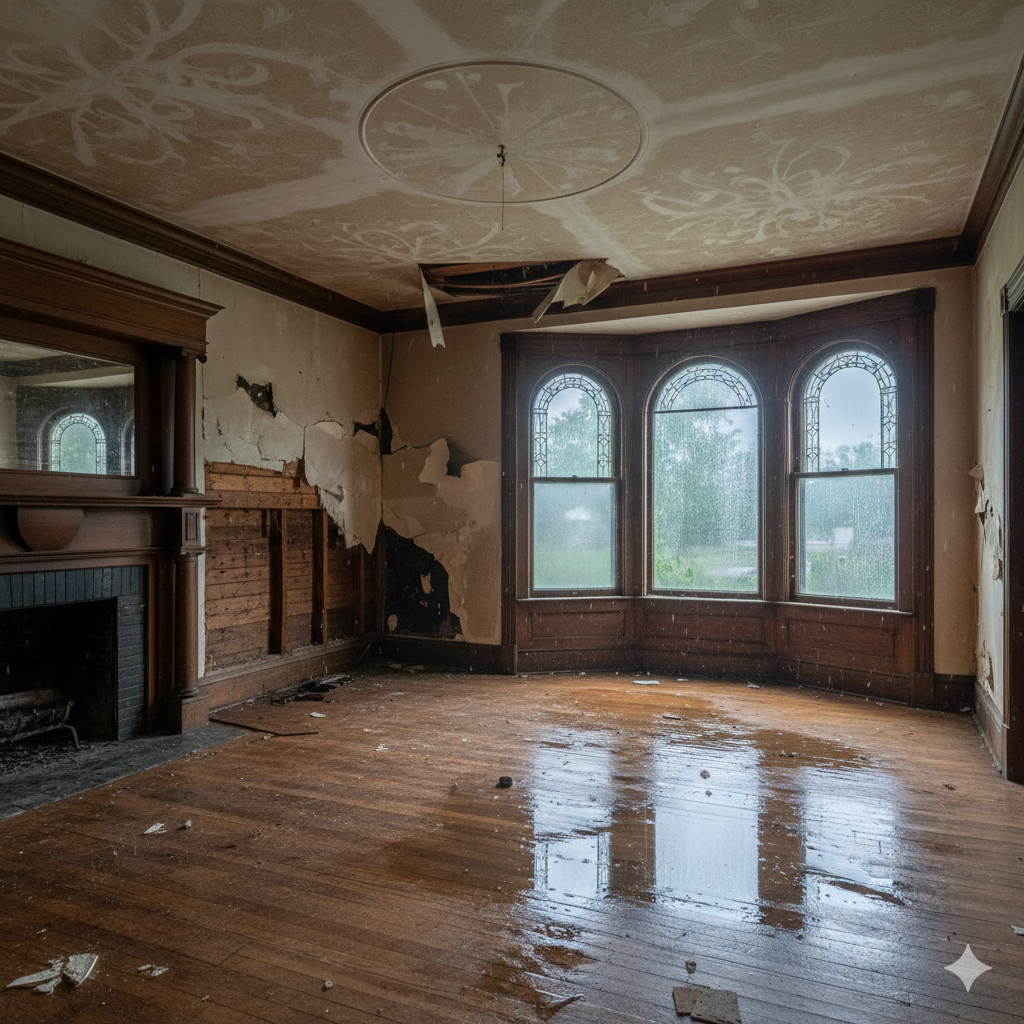
Ignoring early warnings can lead to:
❌ Mold infestations
❌ Structural rot
❌ Electrical hazards
❌ Failed home inspections
❌ Decreased property value
Small problems don’t stay small.
Cost Comparison: Early Action vs Late Repairs
| Timing | Typical Outcome |
| Early detection | Targeted, affordable repairs |
| Moderate delay | Multiple systems affected |
| Long delay | Major reconstruction |
At LCM Services LLC, we’ve seen early repairs save homeowners thousands.
Why These Issues Stay Hidden for So Long
Quiet damage spreads because:
- Walls hide moisture
- Floors mask rot
- Insulation conceals leaks
- Cosmetic updates cover symptoms
Until surfaces are opened, damage continues unnoticed.
When Quiet Signs Become Loud Problems
Eventually, warning signs escalate into:
- Ceiling collapses
- Major leaks
- Mold exposure
- Structural failures
At that point, homeowners wish they had acted sooner.
How Professional Inspections Make the Difference
Professionals know how to:
✔️ Identify subtle warning signs
✔️ Trace problems to their source
✔️ Prevent repeat damage
✔️ Fix issues correctly
At LCM Services LLC, we look beyond surfaces to protect the home long-term.
Why DIY Fixes Often Fail
DIY solutions typically:
- Address symptoms, not causes
- Trap moisture inside walls
- Delay proper repairs
Temporary fixes almost always lead to bigger issues later.
How LCM Services LLC Helps Waterbury Homeowners
Our approach focuses on:
- Identifying root causes
- Repairing damaged materials
- Improving moisture control
- Preventing future issues
We don’t just repair—we protect your investment.
Signs It’s Time to Call a Professional
You should seek professional help if you notice:
- Persistent odors
- Repeating damage
- Moisture-related stains
- Structural changes
- Comfort changes inside your home
Early evaluation saves time, money, and stress.
Final Thoughts
The most expensive home problems in Waterbury often start quietly.
Your home communicates through small changes—smells, stains, cracks, and comfort shifts. Ignoring them doesn’t make them disappear.
By addressing early warning signs and working with experienced professionals like LCM Services LLC, Waterbury homeowners can stop damage before it becomes destructive.
Quiet problems demand loud attention—before it’s too late.
FAQs
Yes. They often indicate hidden damage already in progress
Yes. Age, materials, and weather make them more vulnerable.
No. Moisture problems always worsen if untreated.
Waiting almost always increases repair costs.
Yes. We specialize in identifying and fixing hidden damage in Waterbury homes.