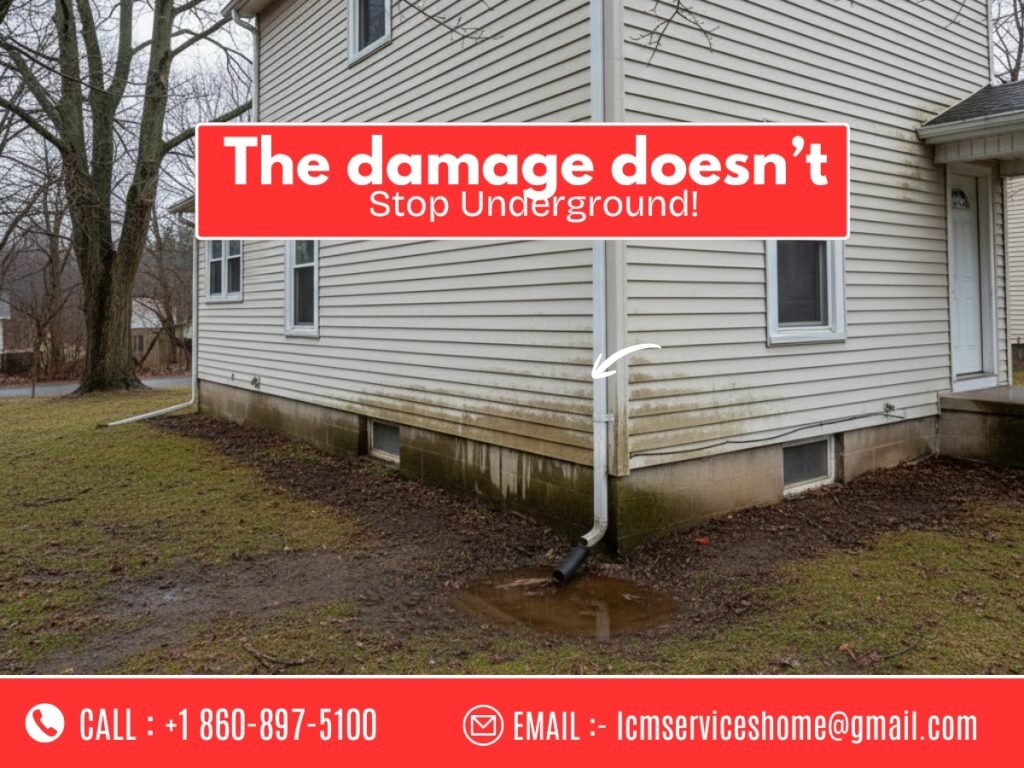
Poor drainage around Waterbury homes doesn’t just damage foundations—it forces moisture upward, leading to siding failure, trim rot, window leaks, roof-edge deterioration, and interior wall damage. When water cannot move away from a home properly, it finds new paths upward, slowly damaging exterior and interior systems homeowners rarely associate with drainage problems.
This issue is especially common in older Waterbury neighborhoods where grading, soil settlement, and outdated drainage designs no longer function as intended.
Why Homeowners Misunderstand Drainage Damage
Most homeowners believe drainage problems only affect basements or foundations. While that’s true, it’s only part of the story.
At LCM Services LLC, we regularly see homes where:
- The basement stays dry
- The foundation looks intact
- Yet siding, trim, and interior walls are failing
The root cause? Poor exterior drainage pushing moisture upward, not flooding from below.
What “Poor Drainage” Really Means
Poor drainage doesn’t always mean standing water.
It can include:
- Soil that slopes toward the home
- Compacted soil that doesn’t absorb water
- Clogged or undersized downspouts
- Water pooling temporarily after rain
- Runoff from neighboring properties
In Waterbury’s dense neighborhoods, drainage issues often develop slowly and quietly.
How Water Moves When Drainage Fails
Water follows the path of least resistance. When it can’t move away from your home, it begins to move laterally and upward.
Capillary Action
Moisture is pulled upward through porous materials like:
- Concrete
- Wood framing
- Masonry
- Sheathing
This allows water to reach siding and wall systems without visible flooding.
Splashback and Saturation
Rain hitting saturated soil splashes water directly onto:
- Siding
- Trim boards
- Door thresholds
- Lower wall assemblies
Over time, this constant moisture exposure breaks down materials.
Why Waterbury Homes Are Especially Vulnerable
Waterbury homes face a unique combination of risk factors:
- Older grading that has shifted over decades
- Clay-heavy soils that hold moisture
- Tight lot spacing limiting runoff paths
- Mature tree roots altering soil flow
- Freeze–thaw cycles worsening soil movement
Many homes were built before modern drainage standards existed.
Above-Ground Damage Caused by Poor Drainage
1. Siding Deterioration
When lower siding stays wet:
- Panels warp
- Fasteners loosen
- Locking edges fail
This creates entry points for wind-driven rain higher up the wall.
2. Trim and Fascia Rot
Trim boards absorb splashback moisture, especially near:
- Door frames
- Corner boards
- Roof edges
Rot often starts behind paint, remaining invisible until advanced.
3. Window and Door Leaks
Poor drainage keeps framing wet, causing:
- Seal failure
- Frame swelling
- Drafts
- Interior wall staining
Homeowners often blame the window—when drainage is the real issue.
4. Roof Edge and Gutter Problems
Saturated soil increases humidity around the home, affecting:
- Fascia boards
- Gutter attachment points
- Roof edge flashing
This leads to premature roof-edge failure.
Interior Damage That Starts Outside
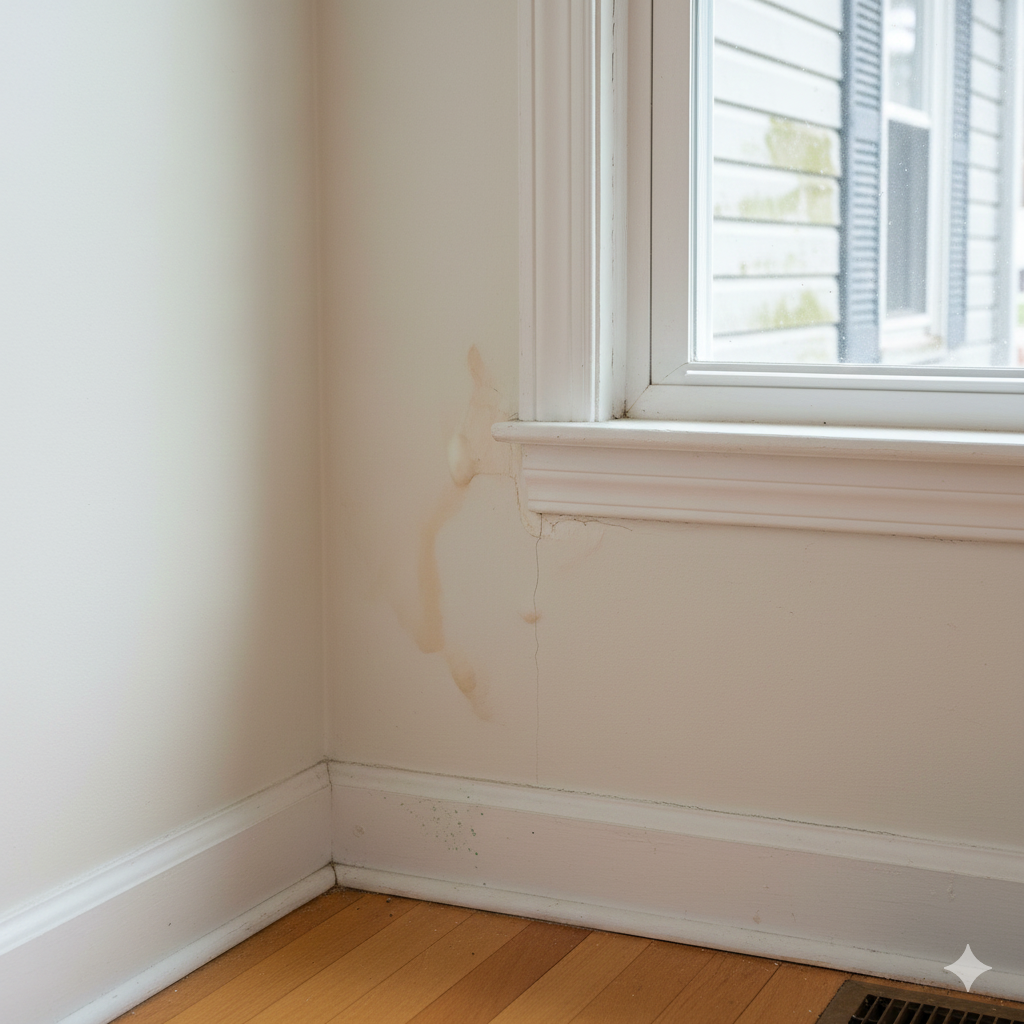
Drainage-related moisture often appears indoors as:
- Bubbling paint
- Peeling drywall
- Musty odors
- Soft wall sections
- Discolored baseboards
These symptoms usually show up far from where water entered.
Why Damage Appears Years After Drainage Fails
Drainage issues work slowly. Moisture exposure doesn’t cause instant failure—it causes material fatigue.
Over time:
- Wood loses strength
- Fasteners loosen
- Sealants degrade
- Structural movement increases
By the time damage is visible, it’s usually extensive.
Common Drainage Mistakes in Waterbury Homes
At LCM Services LLC, we frequently see these issues:
- Downspouts dumping water near the foundation
- Mulch piled against siding
- Concrete walkways sloping toward the house
- Temporary fixes after storms
- Ignoring minor pooling
Each mistake compounds moisture exposure.
Why Cosmetic Repairs Don’t Solve Drainage Damage
Painting over rot or replacing one damaged panel does not stop moisture movement.
Without correcting drainage:
- Repairs fail prematurely
- Moisture spreads to new areas
- Costs increase over time
Drainage must be addressed first—or damage will return.
Early Fix vs Late Repair
| Issue | Early Correction | Delayed Repair |
| Drainage adjustment | Low | N/A |
| Siding repair | Moderate | High |
| Trim replacement | Moderate | High |
| Interior wall repair | N/A | High |
| Structural repair | N/A | Very High |
Addressing drainage early protects every system above it.
Prevention Tips for Waterbury Homeowners
- Ensure soil slopes away from your home
- Extend downspouts several feet
- Avoid piling mulch against siding
- Inspect lower siding annually
- Address pooling immediately
Small changes make a major difference.
When to Call a Professional in Waterbury, CT
Call a professional if:
- Exterior damage keeps returning
- Siding fails near ground level
- Interior walls show moisture without leaks
- You’re planning exterior repairs
At LCM Services LLC, we assess both drainage patterns and exterior systems to stop damage at the source.
Why Choose LCM Services LLC in Waterbury
We understand:
- Waterbury’s soil and lot conditions
- Older home construction methods
- Moisture movement patterns
- Long-term exterior protection
Our approach focuses on:
- Identifying root causes
- Coordinating drainage and exterior repairs
- Preventing repeat failures
- Protecting home value
We don’t just fix damage—we stop it from coming back.
Dedicated GEO Section: Nearby Areas We See This Often
Poor drainage damage is also common in nearby areas such as:
- Wolcott
- Naugatuck
- Watertown
- Middlebury
- Cheshire
Homes with similar soil, grading, and age experience the same above-ground issues.
Final Thoughts
Poor drainage around a home doesn’t stay underground. In Waterbury homes, it slowly pushes moisture upward—damaging siding, trim, windows, roof edges, and interior walls long before homeowners connect the dots.
Fixing drainage isn’t just about protecting your foundation—it’s about protecting everything above it.
FAQs
Yes, constant moisture exposure breaks down siding and fasteners.
Water moves upward through materials via capillary action.
Very common due to outdated grading and soil movement.
Yes, new materials still absorb moisture stress.
No, many homes show damage without basement flooding.