
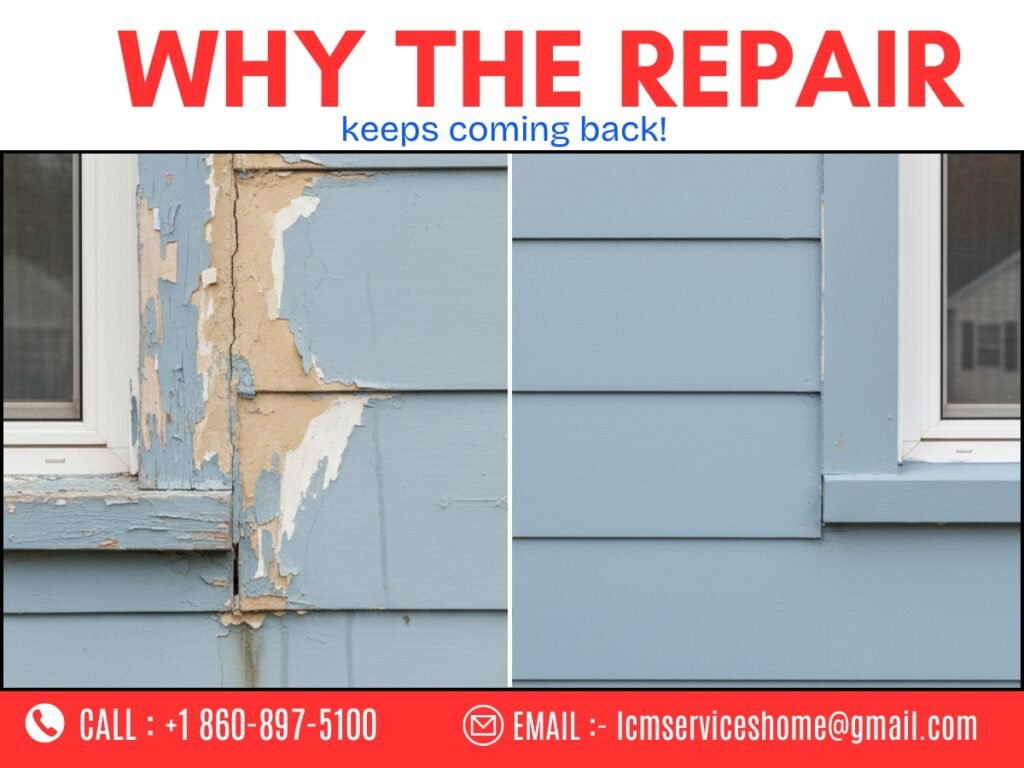
Many Waterbury homeowners share the same frustration:
- The crack came back
- The stain reappeared
- The trim rotted again
- The leak returned after the repair
You paid for the fix. It looked good at first. But months—or sometimes weeks—later, the same problem shows up again.
At LCM Services LLC, this is one of the most common reasons homeowners call us for a second opinion. And almost every time, the issue isn’t poor effort—it’s patch-style repairs that never addressed why the damage happened in the first place.
What “Patch Repair” Really Means
A patch repair focuses on surface-level correction, such as:
- Filling cracks
- Replacing a small section of trim
- Painting over stains
- Re-caulking visible gaps
- Covering damaged siding
These repairs can look successful—but only temporarily.
Patch Repairs Are Reactive
They respond to what you can see, not what’s causing the damage.
Why Patch Repairs Are So Common in Waterbury
Patch repairs aren’t popular because they’re effective—they’re popular because they’re:
- Faster
- Cheaper upfront
- Easier to sell
- Less disruptive
In a city like Waterbury, where many homes are older and layered with past repairs, patching feels like the logical choice.
Unfortunately, it often creates a cycle of repeat failure.
The Real Problem: Symptoms vs. Causes
Think of patch repairs like repainting over a water stain without fixing the leak.
The stain disappears—but the moisture remains.
In Waterbury homes, recurring damage usually traces back to:
- Exterior moisture penetration
- Improper drainage
- Material separation
- Structural movement
- Incompatible past repairs
Until those are addressed, no patch will last.
Moisture Is the #1 Patch Repair Killer
Waterbury’s damp climate quietly undermines patch work.
Moisture:
- Weakens wood fibers
- Breaks down adhesives
- Causes sealants to fail
- Encourages rot beneath surfaces
When patch repairs are applied over moisture-damaged materials, failure is guaranteed.
Why Waterbury Homes Are Especially Vulnerable
Many local homes were built before modern moisture barriers and flashing systems.
Common characteristics include:
- Wood-heavy exteriors
- Older siding assemblies
- Layered renovations over decades
- Inconsistent drainage upgrades
Each past repair may have introduced new seams, gaps, or stress points.
Patch Repairs Don’t Move—Homes Do
Homes are constantly shifting.
Even slight movement causes:
- Caulk to crack
- Filler to separate
- Paint to peel
- Trim joints to open
Patch materials are rigid. Homes are not.
That mismatch causes repeat failures.
The Hidden Role of Drainage
Many patch repairs fail because water is still being directed toward the damaged area.
Common overlooked issues:
- Gutters overflowing above repaired trim
- Downspouts dumping water near walls
- Roof edges shedding water onto siding
- Poor grading at foundations
Fixing the surface without correcting water flow is a short-term fix at best.
Real Waterbury Example
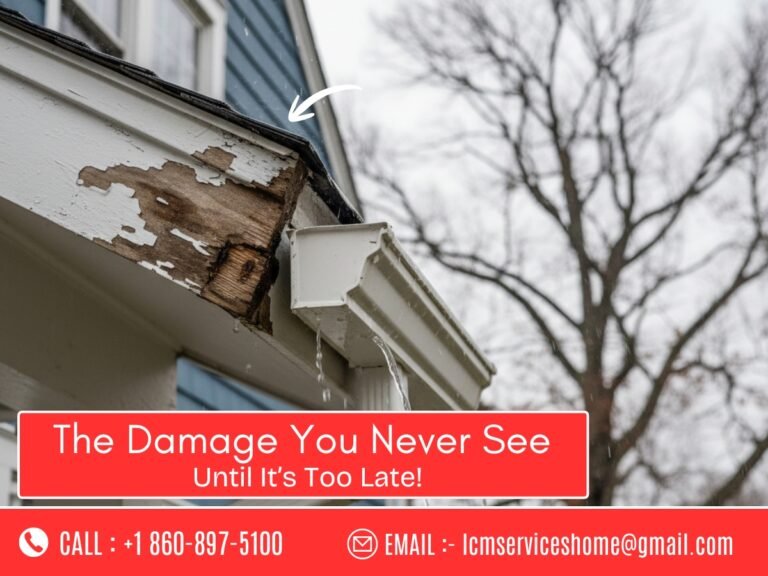
A homeowner near Atwood Ave contacted LCM Services LLC after replacing the same section of exterior trim three times in five years.
Our inspection revealed:
- A leaking gutter seam above the trim
- Constant water saturation during rain
- Rot continuing behind each repair
Once the drainage issue was corrected, the repair lasted permanently.
Why “Matching Materials” Matters
Another common failure point is material incompatibility.
Examples:
- Using generic caulk instead of exterior-rated sealants
- Applying patch fillers to decaying wood
- Painting over flexible joints
- Attaching new materials to compromised substrates
Even high-quality patches fail when applied to unstable surfaces.
Why DIY Patch Repairs Often Fail Faster
DIY repairs aren’t wrong—but they’re often incomplete.
Homeowners typically:
- Repair only what’s visible
- Skip moisture testing
- Miss hidden rot
- Don’t access higher-risk areas
This leads to short-lived results.
Cosmetic Repairs Hide Structural Problems
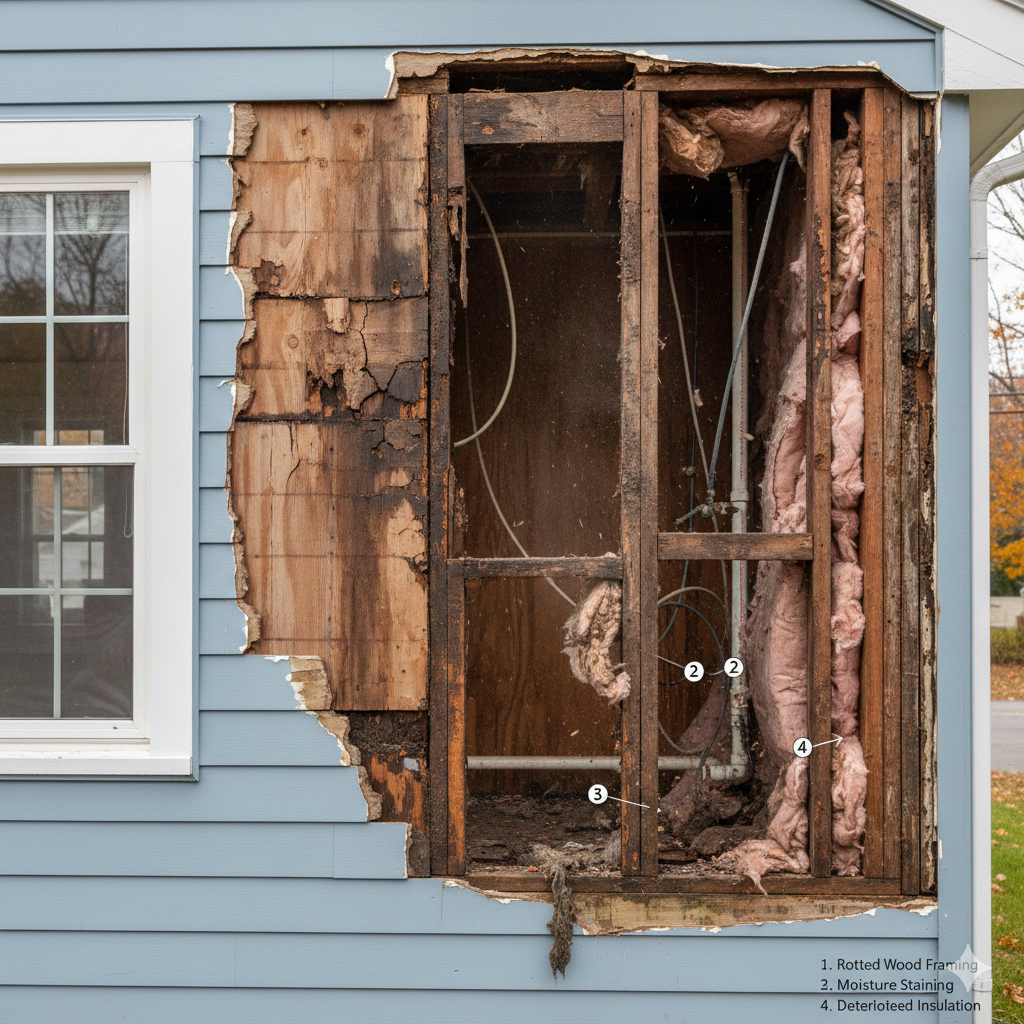
Some of the most dangerous patch repairs are the ones that look perfect.
They can conceal:
- Advancing rot
- Active moisture intrusion
- Pest access points
- Structural weakening
By the time failure is obvious again, damage has spread.
What Actually Fixes the Problem: Root-Cause Repairs
At LCM Services LLC, we take a different approach.
Step 1: Identify the Source
We trace damage back to:
- Moisture pathways
- Drainage failures
- Exposure patterns
- Structural stress points
Step 2: Repair the Cause First
This may involve:
- Gutter and fascia correction
- Proper flashing installation
- Moisture-damaged material removal
- Sealing entry points
- Redirecting water flow
Step 3: Restore the Surface Correctly
Only after stabilization do we:
- Replace trim or siding
- Seal joints properly
- Match materials correctly
- Finish with long-lasting protection
This is why our repairs last.
Why Patch Repairs Keep Costing More Over Time
| Repair Approach | Long-Term Cost |
| Repeated patching | Very High |
| Cosmetic fixes | High |
| Root-cause repair | Lower |
| Preventive maintenance | Lowest |
Short-term savings often lead to long-term expense.
Common Signs Patch Repairs Are Failing Again
Watch for:
- Recurring stains
- Cracks reopening
- Soft or spongy wood
- Peeling paint near repairs
- Musty smells indoors
These are warnings—not inconveniences.
Safety Considerations
⚠️ Rotted materials can collapse
⚠️ Moisture increases mold risk
⚠️ Repeated ladder work raises injury risk
Professional evaluation reduces hazards.
When to Call a Professional in Waterbury, CT
You should call a professional if:
- Repairs keep failing in the same area
- Damage spreads after patching
- Moisture signs return
- Exterior materials feel soft
- Costs keep increasing
These indicate unresolved causes.
Why Choose LCM Services LLC in Waterbury, CT
At LCM Services LLC, we don’t believe in temporary fixes.
What Makes Us Different
✔ Root-cause inspections
✔ Exterior-first repair strategy
✔ Local Waterbury experience
✔ Honest assessments
✔ Long-term solutions
We repair homes the way they should be repaired—not just how they look.
Areas We Serve
We proudly serve:
- Waterbury, CT
- Atwood Ave
- Town Plot
- Oakville
- East End
- Surrounding Connecticut communities
Each area presents unique repair challenges we understand.
Final Thoughts
If patch repairs keep failing, your home is telling you something.
👉 Contact LCM Services LLC today for a professional inspection in Waterbury, CT.
Let’s fix the cause—so you don’t have to keep fixing the same problem.
FAQs
Because the underlying cause was never fixed.
Only when the cause has been resolved first.
Yes, it’s the most common reason.
Yes, especially rot and moisture intrusion.
Yes, due to aging materials and past repairs.