
Roof edges fail first on many older Waterbury, CT homes because they experience the most exposure to moisture, temperature swings, ice buildup, and structural movement. Over time, weakened materials at the roof edge allow water infiltration long before the rest of the roof shows visible damage.
The First Place Roof Problems Begin
Most homeowners think roof problems start in the middle of the roof.
In reality, roof edges are usually the first point of failure—especially in older Waterbury homes.
At LCM Services LLC, we often inspect roofs that “look fine” from the street, only to find:
- Soft roof decking at the edges
- Rotted fascia boards
- Rusted drip edges
- Hidden moisture damage under shingles
These issues quietly begin at the roof perimeter and spread inward.
This blog explains why roof edges are so vulnerable in Waterbury, how older construction methods contribute to early failure, what warning signs to watch for, and how homeowners can protect their roofs before damage becomes expensive.
What Are Roof Edges?
Roof edges include:
- The eaves (bottom edge of the roof)
- Rakes (sloped side edges)
- Drip edges (metal flashing at roof perimeter)
- Fascia boards supporting gutters
These areas form the transition zone between roofing materials and the rest of the home.
🧠 Transition zones are always the weakest points in building systems.
Why Older Waterbury Homes Are Especially Vulnerable
Waterbury has a large number of homes built:
- Before modern roofing standards
- Without proper drip edge flashing
- Using wood materials that absorb moisture
Many older neighborhoods—such as Town Plot, Atwood Ave, East End, and Oakville—share similar construction traits that affect roof longevity.
Constant Water Exposure at Roof Edges
Roof edges handle more water than any other roof section.
They deal with:
- Rain runoff
- Snow accumulation
- Ice melt
- Wind-driven rain
Water slows as it reaches the edge, increasing the chance of backflow under shingles.
Ice Dams: A Major Edge Destroyer
In Waterbury winters, ice dams are one of the biggest threats to roof edges.
How Ice Dams Form
- Heat escapes through the attic
- Snow melts on the roof
- Melted water refreezes at the cold edge
- Ice blocks proper drainage
- Water backs up under shingles
This repeated process saturates roof edge materials.
Older Roofs Often Lack Proper Drip Edge
Many older homes were built:
- Without metal drip edge
- With minimal flashing
- Using wood-only edge protection
Without drip edge:
- Water clings to shingles
- Moisture wicks into decking
- Fascia boards absorb runoff
Modern codes require drip edge for a reason—older homes often don’t have it.
Freeze-Thaw Cycles Break Down Materials
Waterbury experiences frequent freeze-thaw cycles.
At roof edges:
- Moisture freezes and expands
- Materials crack microscopically
- Repeated cycles weaken wood and shingles
This damage accumulates quietly over decades.
Wind Stress Is Strongest at Roof Edges
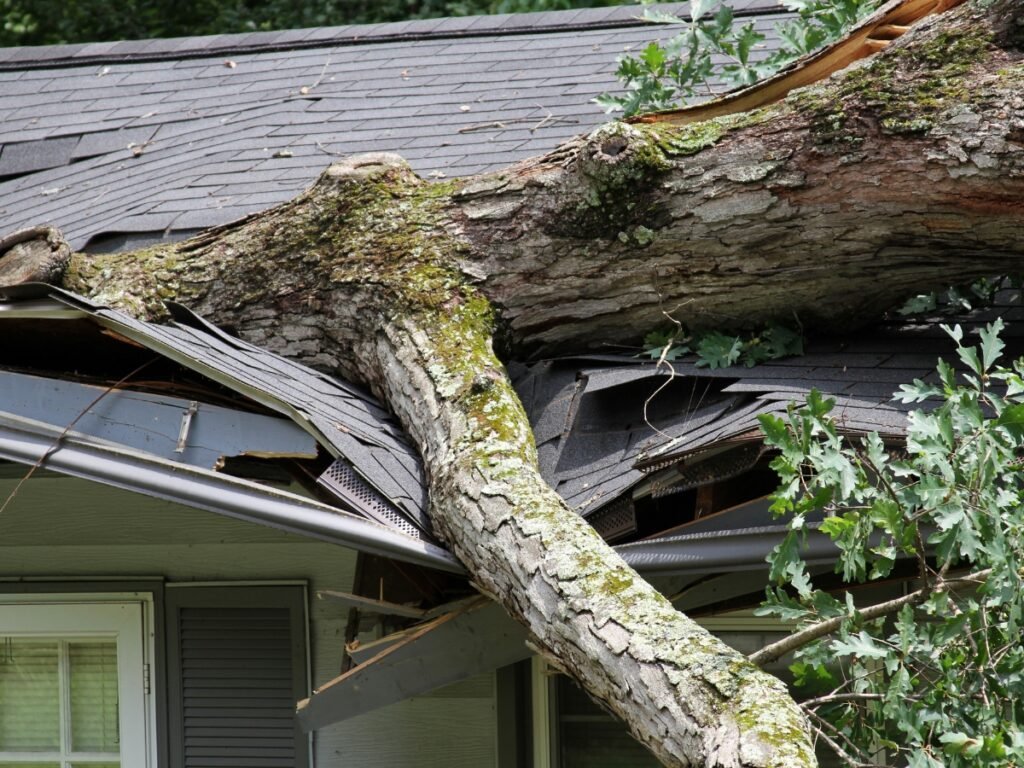
Wind pressure is highest at:
- Roof corners
- Overhangs
- Rakes
Over time, wind:
- Lifts shingles
- Breaks adhesive seals
- Allows water entry
Older shingles are especially vulnerable.
Gutter Systems Add Extra Stress
Gutters attach directly to fascia boards at roof edges.
Problems arise when:
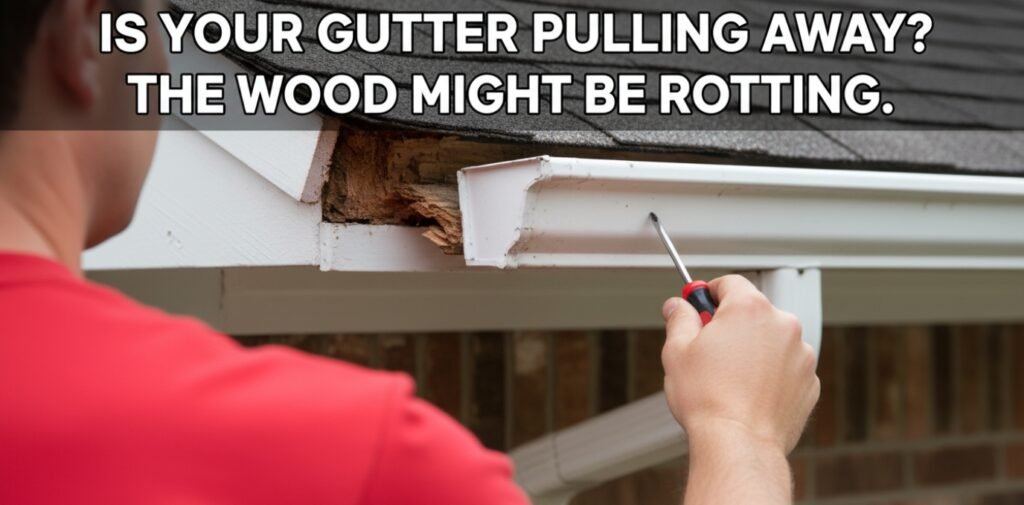
- Gutters pull away
- Ice builds inside gutters
- Fasteners loosen
This movement transfers stress into roof edges, accelerating failure.
Why Edge Damage Often Goes Unnoticed
Homeowners miss roof edge damage because:
- It’s partially hidden by gutters
- Shingles may still look intact
- Damage starts underneath
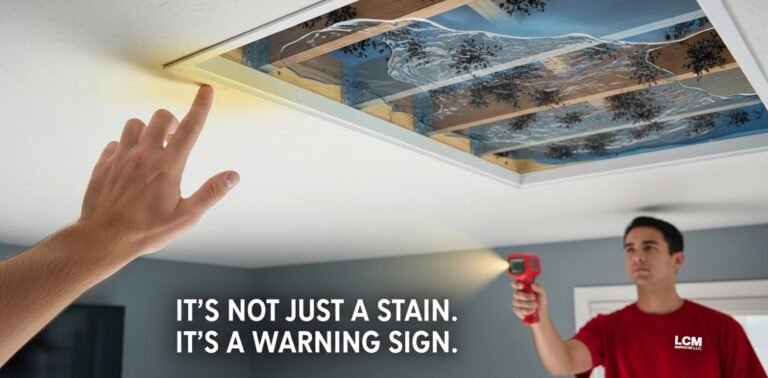
By the time stains appear inside, edge failure has already progressed.
Common Warning Signs of Roof Edge Failure
Look for:
- Curling shingles near the edge
- Peeling paint on fascia
- Soft wood at eaves
- Rusted or missing drip edge
- Ice dams every winter
- Gutters pulling away
⚠️ These signs indicate moisture has already entered the structure.
Real Local Example
A homeowner near Atwood Ave contacted LCM Services LLC after noticing gutter sagging.
Inspection revealed:
- Rotted fascia boards
- Saturated roof decking at edges
- No drip edge installed
The center of the roof was still solid—but the edges were failing first.
How Roof Edge Failure Spreads Inward
Once edges fail:
- Water reaches roof decking
- Insulation absorbs moisture
- Mold risk increases
- Structural repairs become necessary
What starts as a small edge issue can lead to full roof replacement.
Common Homeowner Mistakes
❌ Ignoring ice dam warnings
❌ Replacing shingles without addressing edges
❌ Reattaching gutters to rotted fascia
❌ Painting over soft wood
❌ Assuming leaks start at the roof center
These mistakes delay proper repairs.
Safety Risks of Failing Roof Edges
⚠️ Loose shingles can detach in storms
⚠️ Rotting wood may collapse under snow load
⚠️ Ice buildup increases fall hazards
Roof edge issues are both structural and safety concerns.
Prevention Tips for Waterbury Homeowners
✔ Improve Edge Protection
- Install proper metal drip edge
- Ensure ice-and-water shield at eaves
- Replace rotted fascia promptly
✔ Reduce Ice Dam Risk
- Improve attic insulation
- Seal attic air leaks
- Ensure proper ventilation
✔ Maintain Gutters
- Keep gutters clear
- Correct gutter pitch
- Repair fasteners early
Cost Considerations
| Repair Type | Cost Impact |
| Drip edge installation | Low–Moderate |
| Fascia repair | Moderate |
| Edge decking repair | Moderate–High |
| Ice dam damage repair | High |
| Full roof replacement | Very High |
Early edge repair saves significant money.
When to Call a Professional in Waterbury, CT
Call a professional if:
- Ice dams form yearly
- Shingles curl at roof edges
- Wood feels soft or crumbles
- Gutters won’t stay attached
- Interior stains appear near ceilings
These indicate advanced edge failure.
Why Choose LCM Services LLC in Waterbury, CT
At LCM Services LLC, we specialize in identifying early roof edge failure before it spreads.
What Sets Us Apart
✔ Local Waterbury roofing knowledge
✔ Edge-focused inspections
✔ Structural-first approach
✔ Honest repair recommendations
✔ Long-term solutions
We don’t just look at shingles—we examine the entire roof system.
Areas We Serve
We proudly serve:
- Waterbury
- Atwood Ave
- Town Plot
- Oakville
- East End
- Surrounding Connecticut communities
Each area presents unique roofing challenges.
Final Thoughts
If your roof edges are showing early warning signs, don’t wait for leaks.
👉 Contact LCM Services LLC today for a professional roof edge inspection in Waterbury, CT.
Protecting the edges protects the entire roof.
FAQs
Because they handle the most water, ice, and stress.
Yes, due to outdated construction methods.
Absolutely, they force water under shingles.
Yes, especially when gutters fill with ice.
Yes, water travels inward from edges.