
Most homeowners assume interior moisture means:
- A roof leak
- A plumbing issue
- Basement seepage
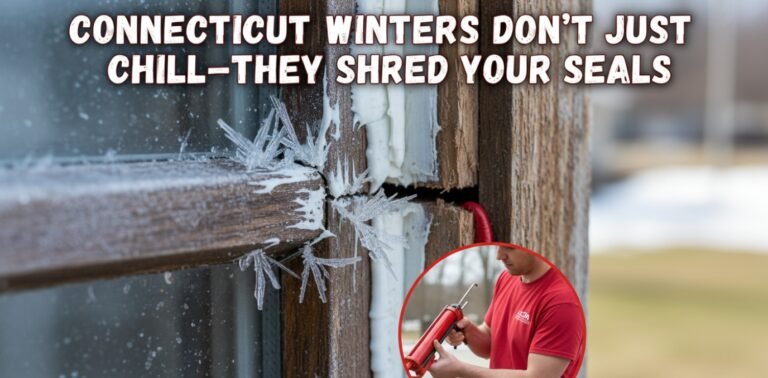
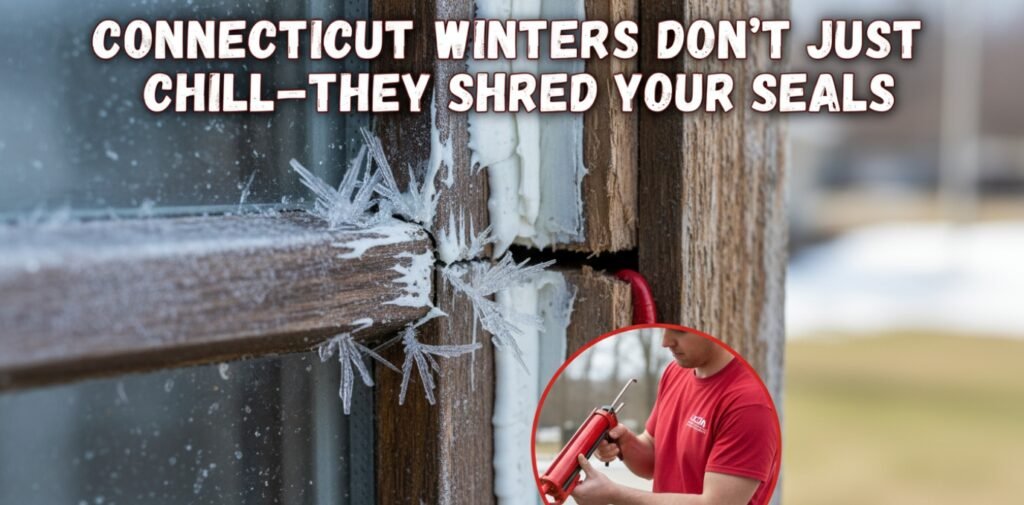
But in Waterbury homes, one of the most overlooked moisture sources is exterior caulking failure.
At LCM Services LLC, we frequently inspect homes where:
- Interior paint is bubbling
- Drywall feels soft
- Windows sweat excessively
Yet no pipes are leaking.
The real problem?
👉 Exterior caulk has failed—and water is sneaking inside silently.
This blog explains how caulking fails, why Waterbury homes are especially vulnerable, how moisture spreads indoors, and what homeowners can do before damage becomes costly.
What Exterior Caulking Actually Does

Exterior caulking is more than cosmetic.
It acts as a:
- Water barrier
- Air seal
- Expansion buffer
Caulking protects joints around:
- Windows
- Doors
- Siding seams
- Trim boards
- Penetrations (vents, pipes, fixtures)
When caulking fails, your home’s outer shell develops invisible entry points for moisture.
Why Waterbury Homes Are Highly Vulnerable
Waterbury’s climate and housing style create the perfect conditions for caulk failure.
Local Contributing Factors
- Freeze–thaw cycles
- High seasonal humidity
- Heavy rain events
- Older construction methods
- Frequent temperature swings
Homes in areas like Atwood Ave, Town Plot, Oakville, and the East End often rely on decades-old caulking that was never designed to last forever.
How Caulking Fails Over Time
Caulking doesn’t fail all at once—it deteriorates gradually.
Common Failure Types
- Cracking
- Shrinking
- Peeling
- Hardening
- Separation from surfaces
Even a hairline gap can let water inside.
💡 Water doesn’t need a hole—it needs a path.
The Most Common Places Caulking Fails
1. Around Windows
Window caulking is under constant stress:
- Sun exposure
- Frame movement
- Temperature shifts
Failed window caulk allows rainwater to enter wall cavities and soak insulation.
2. Door Frames
Doors move slightly with:
- Seasonal humidity
- Foundation settling
This movement pulls caulk away, letting water follow the door frame inward.
3. Siding Joints & Trim
Where siding meets trim is a common weak point.
Water entering here often:
- Travels sideways
- Drops downward inside walls
- Appears far from entry point
4. Exterior Penetrations
Pipes, vents, and fixtures rely heavily on caulk.
Once that seal breaks:
- Wind-driven rain enters
- Moisture follows the penetration inward
How Exterior Moisture Becomes an Interior Problem
Step-by-Step Moisture Migration
- Rain hits exterior wall
- Failed caulk allows entry
- Water moves behind siding
- Moisture follows gravity & airflow
- Condensation forms on cool surfaces
- Interior materials absorb moisture
By the time damage appears inside, the problem has existed for months—or years.
Where Interior Damage Commonly Appears
Interior moisture from caulking failure often shows up in unexpected places.
Typical Signs Include:
- Bubbling or peeling paint
- Soft drywall near windows
- Musty smells
- Staining on ceilings or walls
- Warped trim
⚠️ Damage may appear far from the exterior gap.
Why Homeowners Miss the Warning Signs
Exterior caulk problems are easy to overlook because:
- Gaps are small
- Damage is hidden
- Interior symptoms seem unrelated
Many homeowners repaint or patch drywall—without addressing the source.
Real Waterbury Example
A homeowner near Atwood Ave noticed peeling paint below a living room window.
Inspection by LCM Services LLC revealed:
- Failed exterior caulk above the window
- Water entering behind trim
- Insulation soaked inside the wall
No roof leak.
No plumbing issue.
Just aged caulking quietly letting water in.
Why Caulking Failure Causes Ongoing Moisture
Once moisture enters:
- Insulation holds water
- Wood framing absorbs moisture
- Drying becomes difficult
Repeated wetting leads to:
- Mold growth
- Rot
- Reduced insulation performance
This cycle continues until the exterior entry point is sealed.
The Role of Wind-Driven Rain in Waterbury
Waterbury storms often involve:
- Wind + rain
- Sideways water impact
This forces water into gaps that might stay dry during calm rain.
Homes exposed on:
- Corners
- Elevated lots
- Open streets
Are especially vulnerable.
Cost Impact of Ignoring Exterior Caulking
| Issue | Typical Cost Impact |
| Re-caulking exterior | Low |
| Interior drywall repair | Moderate |
| Mold remediation | High |
| Structural wood repair | Very High |
Early caulking maintenance saves thousands.
Common DIY Mistakes Homeowners Make
❌ Using interior caulk outdoors
❌ Caulking over wet surfaces
❌ Ignoring surface preparation
❌ Using paint to “seal” gaps
❌ Sealing areas that need drainage
Improper repairs can trap moisture inside walls.
How to Tell If Exterior Caulking Has Failed
Look for:
- Visible cracks or gaps
- Caulk pulling away from surfaces
- Hard, brittle texture
- Discoloration or mildew near seams
If caulk is older than 5–7 years, inspection is recommended.
Prevention Tips for Waterbury Homeowners
Smart Caulking Maintenance Steps
- Inspect caulk annually
- Replace cracked or hardened sections
- Use exterior-grade flexible caulk
- Address gaps before repainting
- Focus on windows, doors, and trim
- Maintain siding and flashing together
Small maintenance prevents major repairs.
Safety & Moisture Warnings
⚠️ Hidden moisture can cause mold
⚠️ Structural wood decay weakens walls
⚠️ Sealing incorrectly can trap water
Professional assessment ensures proper sealing without creating new issues.
When to Call a Professional in Waterbury, CT
Call a professional if:
- Moisture keeps returning
- Interior damage appears without leaks
- Mold smells persist
- Exterior gaps are widespread
- Repairs haven’t worked
Why Choose LCM Services LLC in Waterbury, CT

At LCM Services LLC, we understand how exterior failures create interior moisture problems—especially in Waterbury homes.
What Sets Us Apart
✔ Local Waterbury expertise
✔ Exterior-to-interior moisture tracing
✔ Proper sealing methods
✔ Long-term prevention focus
✔ Honest, practical solutions
We don’t just re-caulk—we stop moisture at its source.
Areas We Serve
We proudly serve homeowners across:
- Waterbury
- Atwood Ave
- Town Plot
- Oakville
- East End
- Nearby Connecticut communities
Each neighborhood has unique exposure conditions—and we account for them.
Final Thoughts
If you’re seeing interior moisture with no obvious cause, don’t wait.
👉 Contact LCM Services LLC today for a professional exterior moisture evaluation in Waterbury, CT.
Fixing caulking early protects your walls, air quality, and home value.
FAQs
Yes, it’s a common hidden source.
Absolutely—especially during wind-driven storms.
Yes, moisture travels inside walls.
Every 5–7 years on average.
No, paint is not a waterproof seal.