

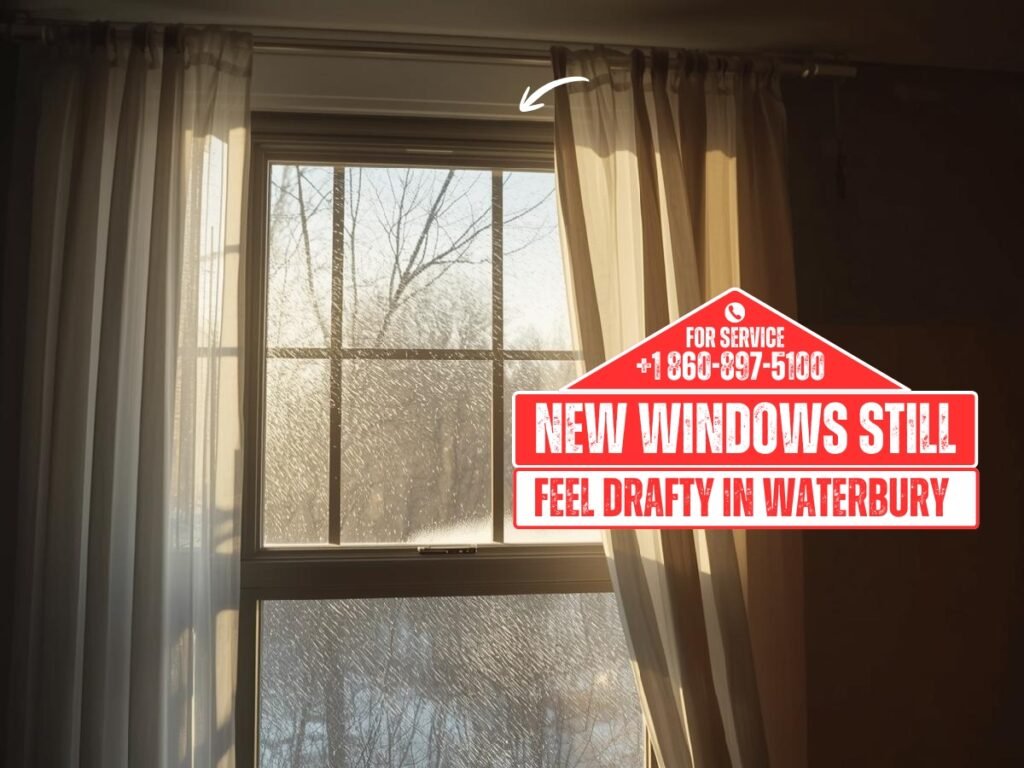
The frames look clean. The glass is new. The installer says everything is sealed.
And yet — when winter hits in Waterbury, Connecticut, the room still feels cold.
You feel air movement near the window. Curtains shift slightly. Heating bills don’t drop the way you expected.
This is one of the most frustrating situations homeowners face after a window replacement.
At LCM Services LLC, we hear this complaint often — and the cause is rarely the window itself. In most cases, the problem lies in what happened (or didn’t happen) during installation, especially in older Waterbury homes.
This article breaks down why new windows can still feel drafty, what commonly goes wrong during replacement, and how homeowners can avoid repeating costly mistakes.
Drafty Doesn’t Always Mean “Defective Window”
Many homeowners assume draftiness means:
- Poor-quality windows
- Manufacturer defects
- Wrong window style
In reality, modern windows rarely fail on their own.
Drafts usually come from:
- Installation gaps
- Old wall construction
- Poor insulation around the opening
- Air leakage paths that were never sealed
A new window installed into an old, unprepared opening can perform no better than the one it replaced.
Why This Problem Is So Common in Waterbury Homes
Waterbury has a large number of:
- Older homes
- Homes with original wall framing
- Properties that have seen multiple partial renovations
Many of these homes were built before air sealing and insulation standards existed.
When windows are replaced without addressing the surrounding structure, drafts remain — or even get worse.
What “Drafty” Really Means in a New Window
A draft doesn’t always feel like a strong breeze.
Homeowners often notice:
- Cold spots near windows
- Temperature differences across the room
- Whistling or subtle air movement
- Condensation forming around frames
These symptoms point to air leakage, not glass failure.
The #1 Issue: Gaps Around the Window Frame
The most common cause of drafty new windows is poor sealing around the frame.
During replacement, the old window is removed, exposing:
- Uneven framing
- Gaps between studs
- Old insulation that has settled or deteriorated
If these gaps aren’t properly sealed and insulated, air flows freely around the new window — even if the window itself is airtight.
Spray foam or backer rod must be used correctly. Too little leaves gaps. Too much can warp the frame.
Older Wall Construction Works Against Modern Windows
Many Waterbury homes have:
- Balloon framing
- Minimal insulation
- No air barrier
Modern windows are designed to work with tight building envelopes. When installed into walls that leak air internally, the window becomes the cold spot — even though it’s not the source.
Air can enter the wall cavity from:
- Basements
- Attics
- Electrical penetrations
Then escape around the window opening.
Replacement Without Addressing Insulation Is a Missed Opportunity
Window replacement is one of the few times installers can access wall cavities.
Yet many installations skip:
- Insulation upgrades
- Air sealing beyond the frame
- Interior trim sealing
This leaves the same problems in place — just with a new window covering them.
At LCM Services LLC, window replacement planning includes evaluating how the surrounding wall performs, not just the window unit.
Improper Shimming and Alignment
Windows must be installed square, level, and plumb.
If they’re not:
- Weatherstripping won’t seal evenly
- Locking mechanisms won’t compress properly
- Micro-gaps form over time
This leads to subtle but persistent drafts — especially during high winds common in Waterbury winters.
Exterior Sealing Mistakes Let Wind In
Exterior sealing is just as important as interior work.
Common issues include:
- Incomplete caulking
- Caulk applied over dirty surfaces
- Skipping flashing tape
- Relying only on trim for protection
Wind-driven air and moisture exploit these weaknesses — often without visible exterior damage.
Drafts From Below or Above the Window
Not all drafts come from the sides.
Cold air often enters from:
- Beneath the window sill
- The header above the frame
- Adjacent wall cavities
If these areas aren’t sealed, the room still feels uncomfortable — even with brand-new windows.
Why Energy-Efficient Windows Don’t Fix Structural Air Leaks
Homeowners are often told that energy-efficient glass will solve comfort issues.
But energy ratings assume:
- Proper installation
- Tight wall systems
- Adequate insulation
When these conditions aren’t met, even high-end windows underperform.
Efficiency starts with the structure — not the sticker.
Signs the Installation Missed Critical Steps
Here are red flags homeowners should watch for:
| Warning Sign | What It Usually Means |
| Cold air near trim | Poor air sealing |
| Condensation around frame | Thermal bridging |
| No improvement in heating bills | Structural air leaks |
| Whistling sounds | Gaps in sealing |
| Drafts only in winter | Pressure-driven air flow |
These are installation or wall-related issues — not window defects.
Why Some Contractors Miss These Problems
Most installers focus on:
- Speed
- Visible finish quality
- Proper operation of the window
What’s often missed:
- Air sealing beyond the frame
- Insulation upgrades
- How older homes move air internally
Window replacement in Waterbury requires building-science awareness, not just carpentry.
How Proper Window Replacement Should Be Done
A draft-free replacement includes:
- Inspecting the rough opening
- Sealing wall cavities
- Using proper flashing systems
- Insulating around the frame correctly
- Sealing interior trim
When done correctly, new windows change how the room feels — not just how it looks.
Why Drafty Windows Get Worse Over Time
Air leaks don’t stay the same.
Over time:
- Materials expand and contract
- Sealants dry out
- Small gaps grow larger
What feels minor now can become a major comfort and energy issue later.
The Long-Term Cost of Ignoring Drafts
Unresolved drafts lead to:
- Higher heating costs
- Moisture problems
- Condensation damage
- Reduced comfort
- Lower window lifespan
Fixing the issue early is far less expensive than living with it for years.
Why Local Experience Matters
Window replacement isn’t just about fitting a window — it’s about understanding how Waterbury homes behave in winter and summer.
At LCM Services LLC, window replacements are approached as part of the home’s entire envelope, not a standalone upgrade.
That’s how draft issues are actually solved.
Final Thoughts
If your new windows still feel drafty, the problem isn’t your imagination — and it’s usually not the window.
In Waterbury homes, drafts are often the result of:
- Old wall construction
- Poor air sealing
- Missed insulation opportunities
- Installation shortcuts
Understanding these factors helps homeowners ask better questions, choose better solutions, and get the comfort they expected in the first place.
FAQs
Yes. Drafts usually come from installation gaps or wall cavities, not the window itself.
Very common. Older construction lacks modern air-sealing methods.
Sometimes temporarily, but deeper air leaks often require proper sealing and insulation.
No. They must be installed into a properly sealed structure to perform as intended.
Yes — especially if comfort issues persist after replacement.